

How To Expand Your Ecommerce Business Into Europe — Nick Penev | Complexities Of The World’s Most Challenging Ecommerce Market, How To Navigate Complex Tax And Policy Landscapes, How To Work With European Distributors, European Vat Registration (#281)
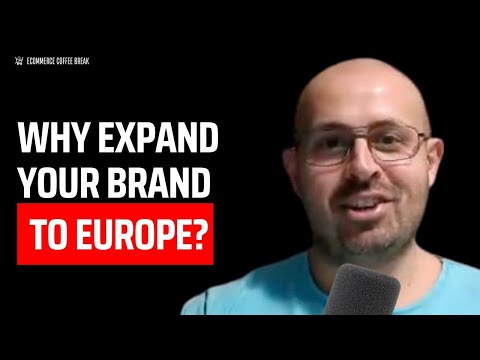


In this podcast episode, we talk about expanding your eCommerce brand into Europe and navigating through the complexities of the world's most challenging eCommerce market. Our featured guest on the show is Nick Penev, Co-founder of Xtreme Power Brands and Scayul.
Topics discussed in this episode:
- How to transform the dream of growing your business in Europe into an executable action plan
- Gain expert advice in navigating complex tax and policy landscapes
- How to connect with consumers on a cultural level for success, including linguistic nuances
- How working with 'accelerators' and European distributors could benefit your business
- Why Germany is the best strategic choice as a launching point for market entry
Chapters/Timestamps:
03:09 Navigating international ecommerce taxes
06:57 Selling across the European Union
14:06 Expanding to the european market
16:46 Consider expanding to Europe
19:29 Options for expanding Business in Europe
23:54 VAT and importing to Europe
Links & Resources
Website: https://hellotax.com/
LinkedIn: https://www.linkedin.com/in/nick-penev-0051791a/
Facebook: https://www.facebook.com/nick.penev/
About Our Podcast Guest: Nick Penev
Nick Penev, Co-founder of Xtreme Power brands (2010), pioneered 20+ Private Label Supplement brands in Europe before a successful exit in 2020. In 2022, he transformed the company into a Partnership as a Service agency, facilitating eCommerce growth through strategic alliances. Nick, a seasoned host and speaker, has participated in 300+ webinars and events, building a network of 1000+ eCommerce partners. Co-founder of Scayul in 2023, he's been fully remote since 2010, ahead of the trend.
Listen & Subscribe on your Favorite Podcast App:
Apple Podcasts | Spotify | Amazon/Audible | Google Podcast | YouTube
Please support the show if you liked today's episode:
- If you love the podcast, please get someone else to listen, too!
- If you enjoyed this episode of the Ecommerce Coffee Break podcast, please head over to Apple Podcasts, leave a rating, write a review, and subscribe.
- Share the podcast with your family, friends, and co-workers.
- Tag the podcast on Instagram @clauslauter and let me know what you like about it.
- If you like the content and would like to support the podcast, you can buy me a coffee here.
- Become a guest on the show or sponsor an episode.
00:00 - Claus Lauter (Host)
This is episode 281 of the ecommerce coffee break podcast. Today we talk about ecommerce expansion into the European market. With me on the show I have Nick Penev. He's the co-founder of Extreme Power Brands in Scayul. So let's get started. But before we get started, a big thank you to our sponsors for supporting today's episode. Loyalty Lion is a leading loyalty platform helping Shopify brands Rocket returning customers with their own loyalty programs. With Loyalty Lion, it's quick and easy to create a program that uses points and rewards to engage shoppers, secure more second purchases and drive up lifetime value. Loyalty Lion has been increasing returning customer rates for thousands of Shopify stores for over 10 years. Visit loyaltylioncom to find out more. Find the link in the show notes. Have you heard about Partner Hero? They're experts in support on the e-commerce industry, known for their outstanding team building skills. Their main pillars quality, people and culture makes them a great fit for your company. Learn more on partnerherocom or click the link in the show notes.
01:27
Hello, and welcome to another episode of the ecommerce coffee break podcast. Today we want to talk about everyone's favorite topic taxes. Obviously not, but most of our listeners are in the US and Canada and lots of the merchants want to go into Europe as a market. But obviously it's a complex market a lot of different countries, different tax systems, different routes and regulations, different policies and it can be complicated coming from the outside, and we want to dive a little bit more into e-commerce expansion into Europe and see what kind of roadblocks you might deal with and how to fight them. Whisper on the show today I have Nick Penev. He's the co-founder of Extreme Power Brands and Scayul. He's also the partner manager at HelloTax and a partnership advisor of more than 40 companies in the e-commerce space and, most importantly, he's fully remote since 2010. So let's welcome him to the show. Hi Nick, how are you today?
02:15 - Nick Penev (Guest)
Hey, Claus, very good, as I told you, I just prepared some potatoes that are in the oven, so we're going to have a nice chat while we're waiting. But of course we're not going to talk about potatoes. We're going to talk about the un-sexy topic of taxes, you know, because regardless of if you want it or not, I mean you cannot avoid those. There is nothing certain like different taxes, like they said in one movie, right?
02:39 - Claus Lauter (Host)
Yeah, very true, very true. And past we talked about taxes in the United States and it's a very different system than what you can expect in Europe. Now, if you want to expand your brand and open new markets and that might be the Netherlands, that might be Germany, that might be France then you have to deal with all of these topics. Now you're helping us in the field for a very, very long time. What is the most common questions that merchants have when they come to you and when they start basically diving into that topic with the idea of expanding into Europe?
03:09 - Nick Penev (Guest)
I used to run an ecommerce business for like over 10 years, from 2010 until 2020. So I did the journey myself. It was very early, we did very well, but the reality is that most people, or most sellers, don't know. Even right now. They don't know what they need, and usually when somebody comes to us at Hello Tax or Extreme Power Brand and they ask okay, nick, who would like to sell in Europe, can we start tomorrow? Unfortunately not, because I mean like in the USA, if you're selling in the States, for example, on Amazon or it's pretty easy you just set up your account. Amazon is going to take care of the taxes. With Shopify or Z2C, you still need to have a VT compliance partner, but it's much, much easier now In Europe. To be honest, I mean, taxes are not the first thing that you should worry about. That's actually a misconception. Most people think that you need taxes first, which is wrong.
03:59
The most important thing before, even before you consider selling in Europe, is the actual product compliance, because in Europe there's multiple countries. They have different product compliance guidelines and usually and sometimes the product compliance check might even take longer than that Up to like six months, depending on what you're selling. So whenever somebody comes to me, I tell them hey, klaus, you want to expand in Europe. Here is your checklist. First, you need to have the product compliance check. I'm going to connect you with one of my partners because you have companies who provide product compliance for health and wellness. We have some partners provide for food and some other stuff, so we have partners for everything, though that's actually one of my business-like extreme power brands. We have a network of 1500 founders who help sellers for anything and everything everywhere. But since we're going to chat about Europe, we have those for the product compliance. So once the product compliance check is done which is the label, certifications, whatever you would need then you have the green light to go ahead and take care of your taxes, and the taxes in Europe are called VAT. That's the only thing that you should worry about. You don't need to set up a company in Europe. To be honest, a lot of people think that you need to set up a company here. That's not true and, as a matter of fact, the US companies have a priority when they expand in Europe. I'm going to give you more details for that, but let's just go through the checklist. So the second thing is taxes. Vat components are the abbreviation, which is value-added tax. So each of the countries where you're planning to sell in Europe and if you're planning to hold stock, they would require you to have a VAT number. If you hold stock only in one single country in Europe, you would need one VAT. So I'm going to talk about the easiest expansion way in Europe. So the easiest expansion way to Europe is the following you select a country.
05:51
We usually recommend the home country of Klaus, germany for a few different reasons, by the way. First, the German market is the biggest one in Europe and the Amazon, which is the biggest marketplace, is actually the biggest, second biggest one in Germany, but besides that, that's the biggest economy in Europe. Also, for all the English speaking listeners, which I think are most of you guys in Germany, they don't require documents translation, so you can provide your documents in English and you're gonna just do it without. They wouldn't require to translate those in German. Another reason why we recommend Germany In Germany, non-eu companies don't need fiscal representative insurance.
06:32
The fiscal representative insurance is an insurance which some countries in Europe require when you have VAT registration in case you decide to skip and not pay the VAT. So this is the insurance which is gonna cover the YBD. So Germany, they don't require that, so they're not gonna ask you to pay extra. And another reason why Germany would be the goal to market is because they're located in the center of Europe. So if you guys are in the States imagine Texas Austin Center location you make deliveries across the whole European Union from your location there using like free pay or whatever you want. And, to be honest, I'm based in Bulgaria. I order from Amazon and other like marketplace and I have my stuff delivered from Germany in two to three days. And this is the only thing you would need, because if you go to an advisor or like Shopify or Amazon a lot of times you're gonna tell okay, you will need to set up the so-called AVEB model on Amazon I'm not sure how it's called in Shopify, but like multi-workhouse distribution, this would require you to do multiple VATs. So don't listen to those guys. You don't need multiple VATs, you just need one warehouse. You start selling from Germany.
07:43
If you want a cheaper option, then Germany can go to Czech Republic as Slovakia, because they're neighboring countries and also don't require fiscal representation. So you can set up a warehouse there and you can start selling across the European Union. So we're just going from VAT to the next step, which is logistics. You would need to set up a warehouse where you're gonna sell your stock. So customs we have partners who can help with that and logistics, which is the next step For anybody who is D2C. You would need to have a reliable partner who is gonna deliver your products across Europe. Ideally, you should select a company which has multiple free pills across Europe, because at the beginning I recommend because I'm a cheap guy in a positive way. I've done this stuff, I've made mistakes, so I always start small and expand. So start with Germany, slovakia or Czech Republic. Use a free pill. Ideally now we can recommend several ones which work with. If not, ask a friend who is gonna recommend somebody who is reliable. Set up your order there. Start selling across the European Union.
08:45
Once you see that you have huge demand and you have a lot of sales lets say, in France, in UK, in Italy then it would make sense to set up a second warehouse in the country where you have the most sales. When you do that, you would be required to do a VAT registration. But I like to say this is the smart way Follow the demand. If nobody is buying your product in, let's say, in Romania or Bulgaria, there is no need to do any VAT compilator. And somebody would say, if people are gonna say, okay, nick, but what happened with the VAT threshold? This was a thing that whenever you hit the threshold, you're required to do VAT registration regarding, regardless of that, if you hold your stock or not in this country. So this is the good news, guys In 2021, the VAT regime was changed and something new was actually announced, which is called one stop shop, or the so called OSS.
09:41
Whenever you know you're selling in Europe and you have a single storage location, you can use the OSS to fulfill orders from this location to all the B2 sequence across the European Union. And the good thing is the following let's say you use the case with Germany you have one VAT in Germany. Then, once you reach 10,000 Euro, which is the threshold, you would have the option to register for VAT. If you don't do that, eventually you would be forced to register for VAT in all the countries where you hit the threshold. So my advice is register for the OSS.
10:16 - Claus Lauter (Host)
And now a quick break to thank the sponsors of today's episode. Tired of watching customer drift away after their first purchase, then it's time to rocket your return in customer rates and drive six times more second purchases with LoyalityLine. As a leading loyalty platform in the Shopify space, loyalityline exists to make it as easy as possible for you to launch and manage your own loyalty program. They'll even build your Loyality page for you. With LoyalityLine, you unlock everything you need to engage shoppers with points and rewards and integrate loyalty data into your email, sms and help desk platforms. You also get a five star support, as shown by the customer reviews on the Shopify App Store and G2. Visit LoyalityLinecom to find out more and start your loyalty journey. Find the link in the show notes.
11:00
As a prominent player in the e-commerce support arena, partner heroes specialize in delivering personalized customer experience solutions With a clear focus on helping you not just meet, but exceed your goals and requirements. They have become experts in e-commerce support. Their commitment to tailoring solutions to your unique needs ensures that your support experience is nothing short of exceptional. Partner Hero is more than a CX company. They are your partner in success. Visit their website and learn more on partnerherocom.
11:26
That makes perfect sense. Now this whole process obviously opens the gates to the whole European Union, so that's like 20-something countries or something like that. And I've made the same experience like you. I was in Cyprus and I was ordering from Amazon in Germany and I got there like in three days or something like that. But deal was made with the German company, with the German seller, so there were no tax implications at all from my side. Now if you're based in the US and you have your VAT registration, obviously at some point you need to do your tax filing in the US. What kind of reporting do you need to prove from your sales in Europe back into the US? How does that work?
12:05 - Nick Penev (Guest)
This is how it works. Now, when you set up the UNICEF in Europe, what the Hello Tax does for you, for example, is a Hello Tax does the VAT registration, which takes two to three months. Sometimes it might take a little longer, like in Spain Spain is notorious for taking longer than the rest of Europe. Once you have the VAT number, Hello Tax is going to file the reports on your behalf. So what you would be required to do is, whenever we file the reports, we're going to get the VAT return, which is the amount that you would need to pay to the tax authority. So those are the returns that you pay, usually monthly, and besides those stuff, all those documents are actually stored in our dashboard, in our software. So those are the things that you would need to provide to your local accountant.
12:49
So my advice here is to hire an e-commerce accountant, because accounting and e-commerce accounting are totally different things now, because it's much different. Now see what? I'm not an expert in accounting, because accounting and bookkeeping and expansions are two different things. Because, first, to sell in Europe, you need to be VAT compliant, because your accounting is done wherever your company is registered, but this doesn't have to do anything with the VAT. Vat is where you're selling your products, not where you have your company registered. So, to be honest, I have some great experts which can cover the e-commerce accounting topic, but, in simple terms, no, this is the least that you should worry about. Vat compliance is the one thing that is most important when you expand in Europe.
13:35 - Claus Lauter (Host)
You said the process can vary. Obviously you have to. You did the product compliance as the first step and you said that might take even longer. How long can that take?
13:42 - Nick Penev (Guest)
I've heard that up to six months. Sometimes it takes quicker, but six times is like the worst case scenario. Think on what you're trying to sell in Europe. So that's why you do the product compliance check first and then, once this is cleared or you know the time when you're going to get that, then you can apply for the VAT. In the meantime, of course, you can arrange the import of stock if your supplier is not in the EU.
14:06
Probably the last thing that people must do and a lot of them are not doing correctly is the localization and translation. Because now, let's say, you're based in the States. I finished high school in the States, I went to the university, so British English and American English are totally different. Unless you optimize your website for British English, people are not going to connect with what you're selling, like practice and training, I think, in its practice and the States is training in Europe, or vice versa. I forgot that. So the result of what you're like you're not going to. If you're trying to sell soccer balls on Amazon, couk, you're not going to sell anything, or soccer jerseys, so you need to walk away that. We have partners who specialize with that. They don't use software. This is something that AI still cannot do. Yet you need to speak the local language in the course, as they speak German. But of course there is big difference between, like I guess it's German, austrian, swiss, right. There is specific words that can differentiate. So if you guys are not because, keep in mind, e-commerce is competitive you know if you do all the steps correctly, you're going to do very well. But if you think that you're just going to fly without doing anything, it's not going to happen, and we see that a lot with big brands Now, brands doing millions. They think that they just turn on and start selling. That's not how it works. I mean you need to go through the steps. Ideally, you should do the smart way, like explained. No, start small, because I've seen the opposite Companies go to Amazon or to some advisor. They set them up with seven VATs. Two of those VDS are ready. Three of those are not ready, so they got frustrated. So, start small.
15:46
Even though it's a big market, you need to consider each country, the separate market. Of course, before we do all the unsexy stuff with taxing components, you should do your product research. There is a lot of tools out there which can use to see where is the opportunity, because sometimes there might be huge opportunities, sometimes there might not be. The good thing about Europe is that, even though it's a big market, which is around 750 million this how much is the population? 450 of those are over 18. Europe has the highest average order of value in the world, which means that if Chinese servers, which are a big mess for a lot of servers they cannot compete with you because they're actually usually are very strong in the low cost products, if you have a good quality product selling for a higher order value of over 50, you're going to do very well in Europe, because Europe values quality. They're customer centric.
16:46
Of course we're kind of worried because we fight, we argue for all kinds of stuff, but besides that, it's a huge market and one starts, which I know, from the Amazon space. I know that most of your recent on the cloud from Shopify, but the situation is not different. Only 2% of Amazon servers are selling on Amazon Europe on other marketplace. So 98% of the US servers are not even selling in Europe. So imagine how many of your competitors are not even considering that, and I've spoken with a lot of brands in the USA.
17:16
Okay, we don't want to go there, thank you. We have not reached the peak in the states. But what about profitability? This is another thing that people don't know. Even though it is a small market, they are going to make less revenue. The profitability is very high. Recently I spoke with a partner who was talking about Walmart. Everybody knows about Walmart in the states, so Walmart is much smaller than Amazon. They grow very quickly, but the profit margin there is 10% higher than on Amazon. So you can actually assume that for Europe and there are advantages that if you do it, if you decide to expand to Europe, most of your competitors are not going to do that. So you'll be the first.
18:02 - Claus Lauter (Host)
Wow, very good point there. I think you should then really consider to go for the low hanging fruit, open the European market, instead of squeezing the last bit out of a very competitive US market, and I think you mentioned a couple of things there that I want to touch on. As obviously you need to localize your product detail pages or your store or the market. I might British, english or you might go for other languages as well, because just coming what you have and putting it over in a different culture, a different country, as I said, will probably not work and you might not see the sales that you want to see. One thing that you said and I was in a situation a few years ago so my own company is registered in Singapore.
18:42
I was selling in the US, but being in Singapore and me myself traveling all over the planet was very, very difficult to find an expert to really answer my questions that I had back in the time when it came to company taxes, everything that came with. I found someone eventually, but it was not an easy task to get there, and I think if you want to go into Europe, it might be like a huge wall that you're standing in front because of tax rules, policies, everything that comes with the administration, but dealing and working with experts that basically know what they do and it's their day-to-day business definitely helps and makes it much, much easier. So I think, as an entrepreneur, you don't have to deal personally with all these issues. You just delegate the task to someone.
19:28 - Nick Penev (Guest)
Exactly exactly. I've even called and because we have this expansion to your program and what I call my partners who help, there were actually the EU expansion squad, because we have people who cover all topics and, to be honest, it's good that you mentioned this option, because there is actually multiple ways how you can expand Europe. So what we discussed here is the expansion where you do it yourself. You simply use partners in Europe who can help you with the expansion, like compliance, taxes, logistics, translation, et cetera. There is actually two other models that you can use, which I have partners who do that. There is an option where a company in Europe I have two of those partners who do everything for you Instead of setting up your own VAT or compliance and everything. They're something like a distributor. They call themselves also accelerators. So those guys, they have their own VATs, they have their own companies, they do taxes, product compliance, localization, translation, market research. They do everything in-house. The only thing that they actually let you do is obviously do your PPC and everything. So they do all the nasty stuff about the compliance and they call it by goal to start your expansion agency. So those guys, they do everything and they set you up on all the channels you want. You name it. No, I call the big marketplace in Europe, like Amazon, like Zalando, kalf, citus, whatever you want. Some of them actually help out with retail. So, for example, if you would like to go e-commerce and retail, they can help with that.
21:00
And there is actually a last type of expansion that you can do in Europe. Those are the so-called distribution companies, which buy your products in wholesale and they just resell them in Europe. And probably there is a third type which I've seen a few times are actually companies which are very strong in a certain niche. There is demand for what they're selling. Let's say, in the States. They find a similar company which is based in Europe, which doesn't have any plans to go to the UC, and they use their distribution channel and connections to actually start selling from them. So let's see, recently I spoke with a supplement brand. They're very established in the States. They have huge demand. They don't do anything in Europe, so they're working for a partner, another supplement company, which can help them out to do that. How they're going to do it? No, there are different models. They can either sell their products, they can sign exclusivity, but, just to summarize, no, there is always an option. The only way that you're not going to expand is if you don't want to do that. I mean absolutely yeah.
22:02 - Claus Lauter (Host)
So give me an idea with what's the onboarding process at Halotex? What kind of steps, what kind of homework do I need to do before I approach you, and so on?
22:11 - Nick Penev (Guest)
You actually don't need to do any homework. I mean, the one thing that you can do before, of course, you come to us, you should do a product research. This is the most important thing. You need to see if there is a product market, fit which market? Because that's the most important Now. If people are not going to buy your stuff, regardless of what you do, you're just going to waste money. But the good thing about therapy is that it's still early now. It's still growing better than the USA. Now it's still early. The first thing you need to do is do a market research. If you don't know how to do that, we have partners who can help out with that, both on the D2C, amazon retail omnichannel.
22:47
So the good thing about me is that I'm like a preach, like an athlete preach. You come to me, you tell me what you should see. Hey, I'm going to find you a partner who can help out, because the idea is not to take your money. Because I'm an ex-ecomercier. I've been a client of Halotex, by the way. I ended up with them by accident. I sold my business and the founders invited me to actually advise them about partnerships. So I've been on the other side. I know what issues and what problems we can face. So that's why, whenever I talk with an owner, I'm very straightforward. I'm not going to tell them you're going to do this and you're going to do that. I'm telling you okay, this is what you need to do. If you do those tips well, you're going to actually do very well. Nobody's going to guarantee that you're going to succeed or not, but there are certain steps that you can take and there's companies and people who can help out. So just to answer your question about the steps so the first thing is, if you can do product research, great. If not, you come to us, you tell us what we're selling, what kind of products, et cetera. So, based on what type of products you're selling, I'm going to connect you with somebody who's going to the product company I check. Then let's assume this is done.
23:54
The next thing is to apply for VAT. We always advise to go for one country. A lot of times people go for UK and Germany because UK is outside the field right now, after Brexit, so they would like to keep those as coming from an English speaking market. So UK, germany, uk is going to fulfill orders to the UK, germany for the rest of the EU. You register for the VAT. You wait two to three months, like I said, to get the VAT number One. The VAT number is ready. Then you can start selling. So in the meantime, while you're selling for your VAT number, you would need to arrange the import of your stocks to Europe. We connect with partners who can help with that. Probably a few weeks before actually you never know exactly when you're going to get the VAT but assuming that this is the three months period, let's say one month before you do you get that, you should start preparing your website localization, everything and all your copy and the next steps for that.
24:53
That should be the action point. So ideally, whenever you would like to expand, you should apply for the VAT, probably beginning of January, beginning of January. I know that because I work with Shopify. We work with Shopify, amazon, other big marketplace, so those companies they have the so-called expansion teams so they actually recruit servers and they have them expand. So what I know from them is that Q1 is where they recruit servers or e-commerce brands so you can actually start expanding, get your VAT compliance whatever.
25:26
So Q1 is for the compliance stuff, compliance taxes, whatever. Q2 is where you actually start selling. Q3 is actually when you optimize your brand for those marketing. Q4 is where you should do the killing and make all those money. So ideally, that's an ideal scenario. So Q1, you get started. Q3, it should be ready to actually start selling, optimizing, no testing. Q3, of course, is where you should actually start accelerating. Q4 should be your A plus game. But I'm talking about ideal scenarios, of course, but because some people have issues with this and that and usually it's because you don't know how you can do that.
26:07 - Claus Lauter (Host)
I think we were timing with the timing quite right, because this episode will be in January. So if you listen to this episode, next step for you is follows next framework and basically the roadmap that you just laid out for you on how to get registered in Europe and start selling there when it really makes sense and then being in queue for and bringing in the big box. Nick, where can people find out more about you and your services?
26:31 - Nick Penev (Guest)
Actually, the website is healtuxcom, which is a-h-a-l-o-t-a-xcom, or you can actually connect with Moon LinkedIn. I'll be happy to help. If we cannot help out, I'm going to recommend somebody. I have people who can help out with everything anywhere, so don't be afraid to ask. We have a same Kim Volger. You can go to Constantinople by asking questions, so don't be afraid to ask. We're not like the worst. I'm not going to charge you by a minute.
27:00 - Claus Lauter (Host)
Yeah, I can vouch for that. Nick is very well connected, so for any questions you have, feel free to reach out to him. You definitely will help you there. Nick, thanks so much. I will put the links in the show notes so then you just one click away and I hope a lot of people reach out to you and try to open their business into Europe. Thanks so much for your time today.
27:17 - Nick Penev (Guest)
Thank you everybody, See you in Europe.
27:20 - Claus Lauter (Host)
Hey Klaus here. Thanks for joining me on another episode of the e-commerce coffee break podcast. Before you go, I'd like to ask two things from you. First, please help me with the algorithm so I can bring more impactful guests on the show. It will make it also easier for others to discover the podcast Simply like, comment and subscribe in the app you're using to listen to the podcast, and even better if you could leave a rating. Secondly, please take a moment to check out today's episode sponsors. They play a crucial role in keeping the show and our newsletter available to you for free. Thanks again, and I'll catch you in the next episode. Have a good one. Before you leave, don't forget to visit the sponsor of today's episode.
27:54
Have you heard about Partner Hero? They're experts in support on the e-commerce industry, known for their outstanding team building skills. Their main pillars quality, people and culture makes them a great fit for your company. Learn more on partnerherocom or click the link in the show notes. Loyalty Lion is a leading loyalty platform helping Shopify brands rocket-returning customers with their own loyalty programs. With Loyalty Lion, it's quick and easy to create a program that uses points and rewards to engage shoppers, secure more second purchases and drive up lifetime value. Loyalty Lion has been increasing returning customer rates for thousands of Shopify stores for over 10 years. Visit loyaltylioncom to find out more. Click the link in the show notes.
Episode Sponsors

Rocket your returning customer rates with LoyaltyLion. LoyaltyLion is a leading loyalty platform, helping Shopify brands increase returning customer rates with their own integrated loyalty programs. We were the first loyalty platform to integrate with Shopify and we are #1 on G2 today, providing the tools and expertise that brands need to increase returning customer rates, improve retention, and build customer lifetime value. Visit LoyaltyLion here.

Enhance your eCommerce business with PartnerHero. Our comprehensive support solutions, which include 24/7 customer assistance, expert marketplace insights, and self-service infrastructure, will empower your brand’s customer experience. We prioritize exceptional customer service, maintaining language standards, multi-channel support, and user/system assistance. Visit us at: https://pages.partnerhero.com/ecommerce-coffee-break Talk to us, and lets create a tailored customer support solution for you!
Get notifications when new episodes are released. Unsubscribe anytime.
In your inbox for free. Every Thursday. Consumed in 3 minutes or less. Join over 6,000 Ecommerce Merchants, Founders, and Marketers.