

How to Build Customer Loyalty Through Product Innovation — Nathan Yun | How Product Innovation Drives Loyalty, What Paire Learned From Buyer Feedback, Why Brands Focus on Customer Retention, How Fabric Tech Solves Apparel Issues (#506)
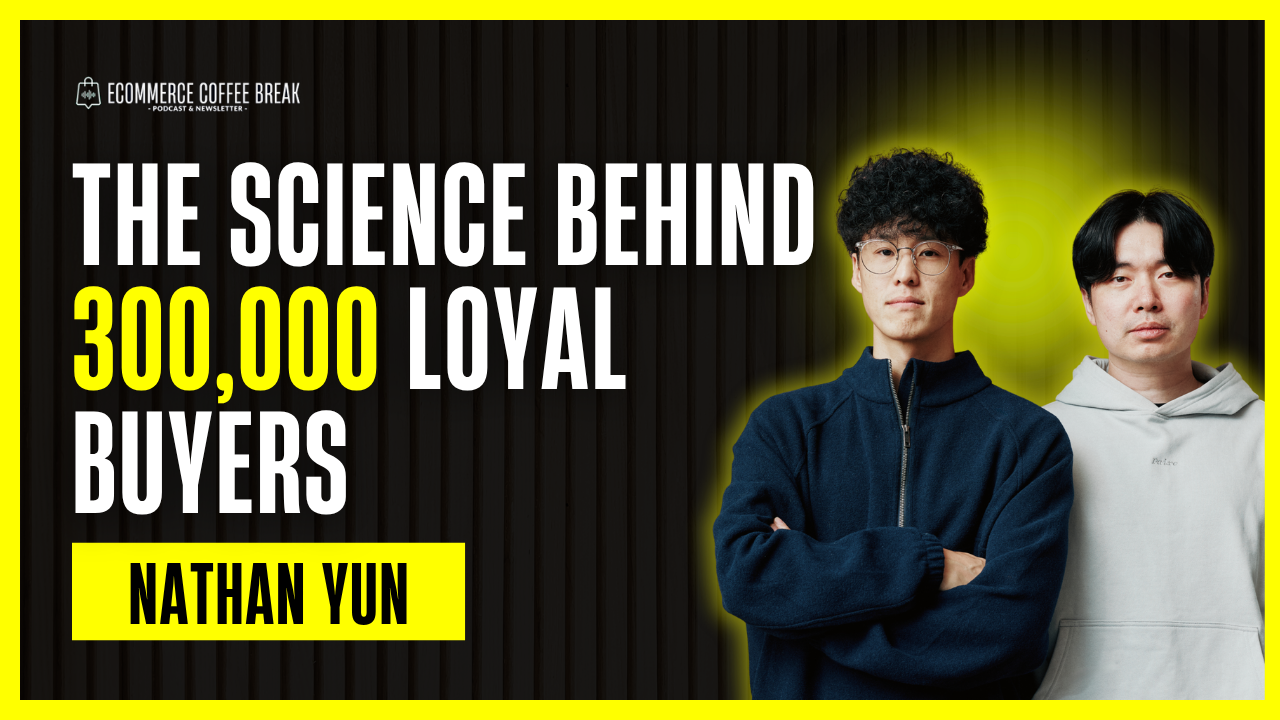


In this episode, we dive into building strong customer loyalty through product innovation rather than chasing trends.
Nathan Yun, co-founder and CEO of Paire, shares how focusing on fabric technology and solving real comfort problems helped grow his brand to over 300,000 customers.
He also reveals strategies for gathering customer feedback, upgrading products like tech updates, and expanding into new markets.
Topics discussed in this episode:
- How product innovation drives loyalty.
- What Paire learned from initial buyer feedback.
- Why brands should focus on customer retention.
- How fabric tech solves common apparel issues.
- What metrics Paire uses to measure repeat sales.
- Why customer surveys help guide new launches.
- How user feedback leads to new product ideas.
- What makes natural fibers perform better.
- How smaller brands can compete with corporates.
- Why continuous product updates retain buyers.
Links & Resources
Website: https://www.paire.com/en-us
LinkedIn: https://www.linkedin.com/in/nathan-yun-3597a988/
Instagram: https://www.instagram.com/paire/
TikTok: https://www.tiktok.com/@getpaire
Facebook: https://www.facebook.com/getpaire/
About Our Podcast Guests: Nathan Yun
Nathan Yun is the Co-Founder and CEO of Paire, the Australian apparel brand rethinking everyday essentials through innovative fabric technology. Since launching Paire in 2020, he has grown the business from three sock styles into a global brand with more than 300,000 customers and a product line spanning socks, underwear, activewear and outerwear. Nathan is passionate about building products that are smarter, more comfortable and made to last.
Listen & Subscribe on your Favorite Podcast App:
Apple Podcasts | Spotify | Amazon Music | Podurama | YouTube | iHeart Radio
Our Sponsors:
Xero is cloud-based accounting software that helps small businesses, including ecommerce sellers and DTC brands - manage invoicing, cash flow, bank reconciliation, and reporting from one place, on any device. Get 90% off for 6 months. Learn more at https://referrals.xero.com/ecb - T&Cs apply.
Bizrate Insights: Star ratings tell you how customers feel. Bizrate Insights reveals what’s driving those ratings, helping ecommerce brands create smoother shopping journeys, inspire confident purchases, and build lasting loyalty. Turn verified shopper feedback into clear priorities and better customer experiences. Learn more at bizrateinsights.com/coffee
Please support the show if you liked today's episode:
- If you love the podcast, please get someone else to listen, too!
- If you enjoyed this episode of the Ecommerce Coffee Break podcast, please head over to Apple Podcasts, leave a rating, write a review, and subscribe.
- Share the podcast with your family, friends, and co-workers.
- Tag the podcast on Instagram @ecommercecoffeebreak and let me know what you like about it.
- If you like the content and would like to support the podcast, you can buy me a coffee here.
- Become a guest on the show or sponsor an episode.
00:00:00:14 - 00:00:25:05
Claus Lauter
Quick one before we dive in. This episode is brought to you by Xero. Running an e-commerce or DTC brand? You know the accounting grind, multiple sales channels, invoices, reconciling every transaction by hand. Xero brings it all in one clean dashboard. Track cash flow, send invoices, and see where your business stands anytime, anywhere. As of the time of recording: Get a special Xero offer - 90% off for six months using this link. Check it out at referrals.xero.com/ecb. Ts & Cs apply.
This episode is sponsored by Bizrate Insights. Star ratings tell you how customers feel. Bizrate Insights reveals what’s driving those ratings, helping ecommerce brands create smoother shopping journeys, inspire confident purchases, and build lasting loyalty. Turn verified shopper feedback into clear priorities and better customer experiences. Learn more at bizrateinsights.com/coffee.
00:00:54:02 - 00:01:12:05
Claus Lauter
Hello and welcome to another episode of the E-commerce Coffee Break podcast. A lot of brands spent their time chasing the next trend, but when it comes to everyday products, customers want something that works better, feels better and lasts longer. So today we're looking at a big question can product innovation build stronger customer loyalty than simply following the latest trend?
00:01:12:06 - 00:01:25:03
Claus Lauter
To break this down, I'm joined by Nathan Yun. He is the co-founder and CEO of Paire as Australian apparel brands that has grown from three stock styles into a global brand with more than 300,000 customers. Nathan, great to have you on the show.
00:01:25:04 - 00:01:27:00
Nathan Yun
Thanks, Claus. It's great to be here.
00:01:27:00 - 00:01:32:23
Claus Lauter
Nathan, let's jump right into it. Why do so many brands focus on trends instead of making better products?
00:01:33:02 - 00:02:05:22
Nathan Yun
I think in a nutshell, following trends is easier. It's like the shortcut to launching products. It's a very simple copy and paste template, and I feel like a lot of entrepreneurs probably just find that easier, to be honest. Whereas we try to take the harder way, we try to take the scenic route, and by investing a lot more in a better product with better materials, it actually takes a much longer time and effort to make.
00:02:06:00 - 00:02:18:09
Claus Lauter
So we're talking about everyday products. You're in apparel. You're doing things that everyone needs in their life. What's wrong with brands building everyday products to the wrong playbook?
00:02:18:13 - 00:02:44:21
Nathan Yun
Honestly, there's nothing wrong. There's no right or wrong in any businesses. If any business can be around for a few years, there's definitely a reason for them to exist. For pair, we just do things slightly differently. When I first started looking at the fashion industry. What I realized is there isn't a product out there that is sustainable, functional and comfortable all in one.
00:02:44:23 - 00:03:05:00
Nathan Yun
You can get a lot of products that are sustainable, but there's nothing functional about them. Or you can get very functional products and there's nothing sustainable about them. And one thing in common is you most likely can't get anything that's really comfortable. So when I started going to the category, what I wanted to focus is what if we can get the best out of all worlds?
00:03:05:00 - 00:03:34:06
Nathan Yun
And that's really the start of the pair journey. We wanted to create something that hasn't existed yet in the market. And yeah, it took us a year to R&D, our first product, and most of our products today take 1 to 2 years of R&D and rigorous testing and failures before we launch them. And that's how we approach essentials, and that's what makes us different.
00:03:34:08 - 00:03:43:13
Claus Lauter
Now one can say is it's just a pair of socks, but you just gave a couple of reasons why it's not that easy. What did your first customers teach you about your product?
00:03:43:15 - 00:04:04:11
Nathan Yun
You know, when it comes to socks, for example, there are a lot of problems that people don't realize. First of all, if you're wearing short socks, they slip off your heels. If you're wearing them in winter, they might be very cold or very hot in summer. There's a very annoying seam on your toes that could very be very irritating.
00:04:04:13 - 00:04:33:02
Nathan Yun
There are often not enough arch support, and one of the worst problems with socks is they're mostly made with polyester or simply cotton, which soaks up the sweat and bacteria from your from your sweat, and it becomes very smelly, which is one of the most common problems. When we looked at all those issues, we thought, what if we make the best sock in the world that can solve all the sock problems?
00:04:33:04 - 00:05:01:08
Nathan Yun
So we went to the drawing board and reinvented socks pretty much from the fabric. We developed our own yarns. It took us almost a year to develop a brand new kind of yarn that no one else uses, even till today. Perry is still the only brand in the world that uses a merino and organic cotton blend at a fiber level, and what our sock does is it actually solves all the problems I just mentioned.
00:05:01:08 - 00:05:31:16
Nathan Yun
And we wanted to see if there is a market for a product that is simply made better in terms of comfort and sustainability and functionality, and at a reasonable price. So we launched the product to the market, and our first, I guess, our first wave of customers have proved to us that, yes, there is a market for this kind of better quality, more functional, more comfortable kind of product.
00:05:31:18 - 00:05:49:18
Nathan Yun
There is a market for more intentionally made products rather than trending fashionable socks, and that really gave us a confidence to go down this route of fabrics and and improve the comfort and well-being of our customers.
00:05:49:20 - 00:06:17:01
Claus Lauter
Let's talk about the headache every online seller knows: multiple sales channels, inventory that never quite matches, invoices piling up, hours lost, reconciling instead of running your business. That's where today's sponsor Xero comes in. Xero is cloud accounting software built for growing e-commerce and DTC brands. Track cash flow in real time. Send and chase invoices automatically, reconcile bank transactions in a couple of clicks and see exactly where your business stands from a laptop or phone. It connects with the tools online sellers already rely on. At the time of recording, get a special Xero offer: 90% off for six months using this link head to referrals.xero.com/ecb
To see how Xero can simplify your books. Ts & Cs apply.
This episode is sponsored by Bizrate Insights. Your analytics can show you what shoppers do, but verified feedback reveals why BizRate Insights helps e-commerce brands understand the full customer journey from discovery and checkout through post-purchase and fulfillment so teams can create smoother experiences, drive more purchases, and strengthen customer loyalty. Move beyond just star ratings, and uncover the insights that show you where to focus next. Turn shopper feedback into clear, practical action at BizRate Insights.com/coffee
I like the approach because one of the first questions that people are looking into e-commerce or brands trying to scale is like, how can I make a quick buck? How can I scale?
00:07:14:09 - 00:07:35:10
Claus Lauter
And then I look around for trends and just throw another product and not looking into, is there already something that can be approved? Now there's a couple of things to it and I want to dive into. First of all, how can you have a better, probably more expensive product but still increase the loyalty of your customers? And I think that might be something that you have experienced in your scaling process.
00:07:35:10 - 00:07:38:13
Claus Lauter
How does that work for you or did that work out for you?
00:07:38:18 - 00:08:03:07
Nathan Yun
Very straightforward. I think if you look at every other industry that has certain brand loyalty, let's say an iPhone, a lot of customers go back to iPhone every other year because it simply is one of the best phones out there. And for some of them it will be Samsung, for example. But there are many brands out there who build a brand based on their quality, the comfort that you know that you will get, you're getting out of it.
00:08:03:07 - 00:08:24:10
Nathan Yun
And that is the mentality that we took. When it comes to pair, we are not simply launching another pair of socks. You would immediately notice the difference the moment you put it on, and it simply is the most comfortable sock that you would ever wear. And for most of our customers, you just can't go back to your normal pair of socks.
00:08:24:16 - 00:08:49:06
Nathan Yun
We heard this almost a thousand times by now. After five years of launching our business, many, many customers actually throughout their entire wardrobe of old socks and brought them to pair. And they will come back and buy more pair socks when their old ones run out, because a lot of our customers will be wearing socks almost every day, and they wear out much faster than their other socks without them realizing.
00:08:49:06 - 00:09:12:12
Nathan Yun
And it's just natural to come back to buy the best pair of socks. And I think it shows that people always have an appetite for great products that are genuinely just comfortable. And I think this is what a lot of apparel businesses undermine and a lot of apparel businesses. They focus on the look, the trend, the fashion, and there's nothing wrong with it.
00:09:12:12 - 00:09:35:06
Nathan Yun
There's definitely a huge market for it. But for pair, we rather focus on those who want to be more comfortable, who wants to have a uplift in their well-being, in their lifestyle, who wants to just put something on and nothing about it and feel very, very comfortable throughout the day? And that's our customer.
00:09:35:08 - 00:09:56:06
Claus Lauter
I like the approach. I'm a minimalist, so I do not buy fast fashion. I just replace things when I need to. And I love long living products. And I think what you just explained is a perfect scenario is like quality over quantity, quality over speed, and specifically in a parallel industry. Now you started with socks, but nowadays you're doing far more things.
00:09:56:07 - 00:10:03:18
Claus Lauter
Did the process that you had in the beginning with creating a product also applied to everything else that you continue doing afterwards?
00:10:03:22 - 00:10:27:11
Nathan Yun
Exactly. Great to hear that you're a minimalist and focus on quality more than quantity, because that is that's exactly what pair does. To answer your question. Yes, definitely. Two years into pair, we were looking at, you know, why was it successful. Because to very frank, we did $1 million in the first year without too much investment. And we realized there's a lot of traction.
00:10:27:11 - 00:10:57:12
Nathan Yun
So we wanted to expand. We want to grow the business. So we really looked into what we do best. And I know a lot of ecommerce businesses at this point will think that we are a gray sock brand. We should focus on socks, but we try to look beyond that fact. And we realized that our biggest leverage here is we can use fabric technology and material science to develop something brand new and developed a whole new kind of fabric or yarn that solves the next skin problem.
00:10:57:14 - 00:11:36:03
Nathan Yun
So we took that mentality and then we applied it on other categories. So the second category we went into is underwear. And now pair actually sells more underwear than socks. Two years later we launched more clothing like t shirts, hoodies, sweaters. We now have jackets as well and activewear. And this year our clothing category has overtaken on the wear category because we take the same approach for every category we go into, we look at all the problems that currently exist within this category, and we think about how can we solve it from scratch.
00:11:36:05 - 00:11:52:10
Nathan Yun
So we don't we never take any of the shelf materials. We always look at what are the biggest problems here and what kind of new materials do we need to develop in order to solve this very specific next skin category issue? And that's always the full pair.
00:11:52:11 - 00:12:11:12
Claus Lauter
Okay. That's so interesting. And I think for our listeners, it's interesting to hear that you start with one product and then you go from there to more and more products. But the first and most crucial and important step is to figure out the right product market fit and the quality and everything around this very product that the problem that the product solves, basically.
00:12:11:12 - 00:12:26:14
Claus Lauter
So now you're based in Melbourne in Australia, and that's probably where you started, but you have since then more than 300 customers and you're selling globally. What was the next step to scale once you figured out that there's a market fit?
00:12:26:20 - 00:12:55:05
Nathan Yun
There are a couple of ways to scale and a few paths that we are taking. One is obviously launching new products, which we have been we've expanded into much more outerwear this year and it's been doing really well. So that's a very good extra revenue stream. We expanded offline as well. Within Australia. We are opening in Sydney. We have opened in Melbourne already, so we will have four stores by the end of this year in just Australia.
00:12:55:06 - 00:13:20:08
Nathan Yun
And all our offline stores have been very successful and profitable, so we are looking to expand even further offline. And another very important part of this is international. So we are in us. We recently just launched us and we are in the UK as well. So a lot of international customers can order through and get our products, deliver it directly to them within a week.
00:13:20:08 - 00:13:26:00
Nathan Yun
And these are the three main growth drivers for us in the next two years.
00:13:26:02 - 00:13:43:06
Claus Lauter
I want to come back a little bit to the point of loyalty, because I think that's important. Nowadays, acquisition costs are very high, costs are very high. So it's important for a brand to bring back customers to buy more. What kind of systems and strategies do you use to measure loyalty?
00:13:43:07 - 00:14:10:01
Nathan Yun
I think the most common one is definitely return customer percentage. We look at repeat purchase frequency as well. So pair has a relatively high return customer rate every month. We have around 45% revenue coming from return customers. And overall like over five years time, we know that over 65% of customers will come back and make a second purchase.
00:14:10:03 - 00:14:31:08
Nathan Yun
And our annual purchase frequency is around 1.5 per customer, 1.5 to 1.7, depending on the year and depending on what we launched. But these are the metrics that we look at over the year, because these metrics have sitting way beyond most benchmarks. So we kind of stop looking at them. They just try to maintain them, to be honest.
00:14:31:09 - 00:14:55:07
Nathan Yun
But the many things we implement in terms of strategy, one is obviously email. It's one of the most efficient ways to retain and to do retention. We have a very intensive email flow structure. We have probably like ten flows in the back end that keeps customers from coming back. We always invest in new products that customers will be interested in.
00:14:55:07 - 00:15:15:22
Nathan Yun
In order to do that, we actually run quite a few surveys for our customers. I guess on one end we want to survey if they actually had a good experience with our current product. And that's the most straightforward way to do a survey. On the other side, we do survey our customers in asking them what they want to see us launch next.
00:15:16:00 - 00:15:35:02
Nathan Yun
And for example, we might have survey asking out of these ten categories, what do you want to see us launch next? And a few years ago the answer was underwear. And we will launch the second survey after that and say like, all right, with your underwear. What are your biggest problems? And then we try to solve all of those problems that we've gathered.
00:15:35:02 - 00:15:53:11
Nathan Yun
And then we tell our customers that, all right, based on all your responses and all your problems, we came up with this perfect underwear that's supposed to solve all your problems. And, you know, they were happy to try it. And if there are more issues, they will come back to us. We'll get the feedback and then we improve on our products.
00:15:53:17 - 00:16:16:12
Nathan Yun
Pair is very much like a tech company that upgrades our products every year. Our socks and underwear have been upgraded over the last five years, and is currently sitting at 4.0 and 5.0 versions. It's very much a collaborative process that happens between us and our customers. So I will say pair has a very good relationship with our customers.
00:16:16:15 - 00:16:28:02
Nathan Yun
They pretty much trust us with whatever we launch, but they also love giving us feedback and help us improve because they know we all. We always take on feedback and we do our best improving our products.
00:16:28:04 - 00:16:52:09
Claus Lauter
I think it's such a great example that you just gave. They're using the technology to make the product better, and building a community of customers who are basically your your development, your business development department, because they tell you what they need. And I think it's important just to listen to your customer. What kind of advice would you give someone out there who has like an everyday product and to approach the process of making it better?
00:16:52:09 - 00:17:20:01
Nathan Yun
I reckon talking to customers is one of the most important things for sure. I think in day one we look at every review. For example, we send. You should be sending emails out to us for reviews that should be already in place that process. But really read every review. We take very every review very seriously. And we love our customers because a lot of customers would actually write essays for us with their experience.
00:17:20:01 - 00:17:40:03
Nathan Yun
We actually got like a very long email from from a person talking about his experience with our socks in the early days, and we actually caught him. And then we wanted to have a lot of conversation about that. And later on, we actually developed a new product based on his feedback. I remember his feedback was our socks was a little too tight on the cuffs.
00:17:40:03 - 00:18:09:21
Nathan Yun
And then we did a lot of research. Turns out with Pacific conditions you can feel that salsa very tight. So we later launched a loose top version of our socks and it actually became a hit. It was a huge hit, the loose top version. But definitely always talks to your customers like like call them, ask me out for coffee, do more research around their feedback because, you know, if someone has this experience, that just means there's probably hundreds more out there that is sharing the same sentiment.
00:18:09:21 - 00:18:17:07
Nathan Yun
So you should always take every review and every feedback very, very seriously and improve on those.
00:18:17:09 - 00:18:37:12
Claus Lauter
So important to talk to customers. Sometimes I have coaching clients who basically refuse to talk to their customers because they are shy. And I say, that's the worst thing you can do. You need to pick up the phone. You need to talk to people to really find out what, what problem you can solve. Nathan, before our coffee break comes to an end today, is there anything you want to share with our listeners that we haven't covered yet?
00:18:37:14 - 00:19:06:21
Nathan Yun
I guess there's a lot of materials we use that are very interesting that I could briefly talk about because in a sustainable sense, we use some very cutting edge materials. For example, our activewear is made of 50% recycled cornstalks. I know there's a big natural fiber trend going on today. I just wanted to mention that, you know, we've been we've been doing a bio at this file based nylon for over three years already, and it's been very literal.
00:19:06:23 - 00:19:36:01
Nathan Yun
It's more moisture wicking than regular nylon activewear, and it holds up very well. We also launch, like a breeze little material for t shirts and socks, which uses an eucalyptus tree fiber blend with merino wool. We do all sorts of interesting materials with. By blending natural fibers, we focus a lot on solving solutions with natural materials rather than synthetic fibers.
00:19:36:02 - 00:20:06:10
Nathan Yun
It's a big part of our brand because we believe that nature knows best for our comfort and our skin, and there's always a way to to solve these issues. With natural fiber. It's just most bigger corporates and companies. They they don't bother investing in these areas because they're already doing so well with their existing range. So it left an opportunity for smaller brands like us who has the capability to develop their own fabrics to do something that we do.
00:20:06:10 - 00:20:13:18
Nathan Yun
And we're very excited and grateful that we have this opportunity to to share a lot of great materials and innovative materials with the world.
00:20:13:19 - 00:20:25:22
Claus Lauter
Great tip there for our listeners out there. Don't be scared if there's big corporates having a market in their hands, there's always a niche that you can cut out for yourself and just be better than them. Nathan, where can people go and find out more about you guys?
00:20:25:23 - 00:20:32:02
Nathan Yun
There's or you can use Instagram and find us at it's okay.
00:20:32:03 - 00:20:49:21
Claus Lauter
I will put the links in the show notes. Then you just one click away. Nathan, thanks so much for giving us an overview. You can create a product that's better than everyone else on the market, and scale a business from 0 to 300,000 customers. I hope a lot of people will check out your products. I definitely will and thanks for your time again.
00:20:49:22 - 00:20:52:07
Nathan Yun
Thank you very much, Claus.
00:20:52:09 - 00:21:13:23
Claus Lauter
That's all for this episode. Thanks again to Xero for sponsoring today's show. If you're tired of messy spreadsheets and manual, reconciling, Xero brings your invoicing, cash flow, and reporting into one simple dashboard. At the time of recording get a special Xero offer 90% off for six months using this link. Check it out at referrals.xero.com/ecb. That's referrals.xero.com/ecb. Thanks for listening. We will catch you next time. Ts & Cs apply.
This episode was sponsored by BizRate Insights. Every customer journey has opportunities to improve. BizRate Insights, turns verify chopper feedback into clear priorities, helping e-commerce brands make smarter decisions, strengthen customer relationships, and help customers coming back. Learn more at BizRateInsights.com/coffee.
Get notifications when new episodes are released.
In your inbox for free. Every Tuesday and Thursday in your inbox. No clickbait. No Spam. Unsubscribe anytime.