

Why returning customer rates should be the North star for Shopify stores

Why returning customer rates should be the North star for Shopify stores
New customers are great. Watching them hit your website for the first time as a result of some great ad creative is a real buzz. Watching them convert to that first sale as a result of your great onsite optimization is an even bigger buzz. However, watching them walk away without making a second purchase is a surefire way to kill that buzz.
How do you stop the buzzkill? By obsessing over your returning customer rates.
Returning customer rates explained
Let’s start at the very beginning - what are returning customers, and how do you calculate your returning customer rate?
Returning customers are exactly what they sound like. Customers who have repeat purchased from your store more than once. They are invaluable to you for a few key reasons:
- Firstly, with every repeat purchase a customer makes, the more they trust your products and your brand and the more likely they are to come back. The more times they return, the higher their lifetime value climbs as they start to spend more with each purchase and purchase more regularly
- Every returning customer is a customer that can act as a cost-effective acquisition channel for you. That could be in obvious ways such as referring their friends and family. It could also be in a much more subtle way such as mentioning your products on their social channels, or leaving reviews that then help to convert other customers
- Returning customers pay for themselves. A customer who uses a discount to complete their first purchase costs you - not just the margin on the discounted product, but the ad spend you used to acquire them. However, if that customer returns and buys again at full price, you start to recoup some of that up front cost. If they keep returning over time, you start to see a positive return on your acquisition investment.
Returning customers are usually defined as having purchased from your store at least twice. Your returning customer rate shows what percentage of your total customer base meets that criteria.
How to calculate your returning customer rate
Returning customer rates vary a lot from store to store. The types of products you sell, the industry you exist in and the demographics of the customers you’re selling to are just a few of the factors that can influence the likelihood of repeat purchase.
Regardless of this, returning customer rates should be your North star because they give you a real measure of your ability to retain customers. Conversely, this also helps you understand how reliant you are on acquisition. Put together, this jigsaw puzzle gives you the answers to whether or not you’re going to see a good return on your marketing investment, and how profitable your approach is likely to be.
Now, the maths. How do you calculate your returning customer rate? The formula is simple:
Your returning customer rate = (Number of returning customers / Total number of customers). And then multiply by 100 to turn it into a percentage. Many ecommerce platforms, including Shopify, will do this for you within you dashboards so don’t worry if you can’t find your calculator.
What if my returning customer rate is low?
If you find that your returning customer rate is lower than it should be, then there could be multiple reasons not to panic. First of all, look at recent seasonal events. Have you just run a mega Black Friday sale with discounts galore? It’s likely that a spike in sales from new, non-loyal customers can cause your returning customer rate to dip so take stock and make sure you’re looking at an average over a decent period of time. Are you selling a product that people only replenish once every three months, but looking at the returning customer rate for the past month? Make sure that you’re looking at a timeframe that matches your product and customer lifecycle.
Still not coming out where you think you should? Don’t despair. If you have customers or ex-customers then you have the potential to increase your returning customer rates and we’ll explain more in a minute.
What if my returning customer rate is actually ok?
Done the maths and decided you don’t have a problem so you don’t need to think about returning customer rates? Proceed with caution. The more you focus on acquisition and growth, the more likely your returning customer rate is to drop as you add more of those first-time buyers into the pot, but fail to do anything to retain them. Your healthy returning customer rate is definitely to be celebrated, but it also needs to be maintained in order to drive sustainable business growth.
Three quick wins to improve your returning customer rates
So now you know what your returning customer rate is, how to calculate it, and why you should be thinking about it. But what can you to really move the needle on it?
1. Secure more second purchases
In many ways, the second purchase is the hardest to secure. Sure your customer tried your product and liked it, but did it change their lives enough to make sure they didn’t go back to what they were using before?
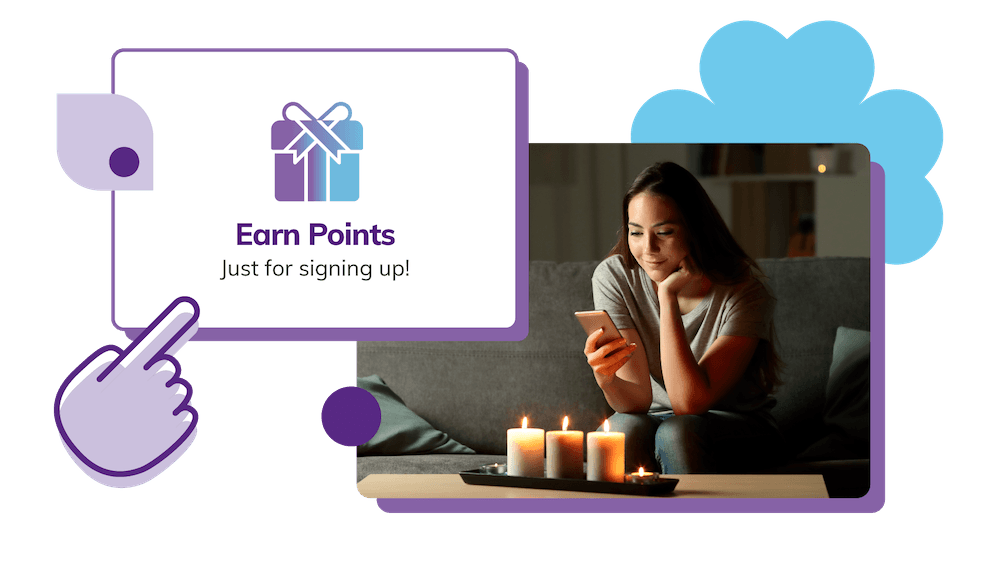
Ensuring that they come back that second time is crucial to maintaining a good returning customer rate and guest checkouts are the enemy here. It’s important to do whatever you can to incentivize and motivate account creation or loyalty program signups with the first purchase, to ensure that the lines of communication stay open and you can keep in touch over time.
Missed the boat? You get a second chance with your post-purchase emails. Make sure these are optimized to start building a relationship, motivating shoppers to return and create an account if they didn’t already.
This leaves you with far more options to re-engage and push for the second purchase.
2. Engage more in between purchases
Customers are far more likely to return and repeat purchase from you if they remember who you are! Creating a loyalty program that allows you to incentivize and promote engagement in between purchases is the most efficient way to keep in touch.
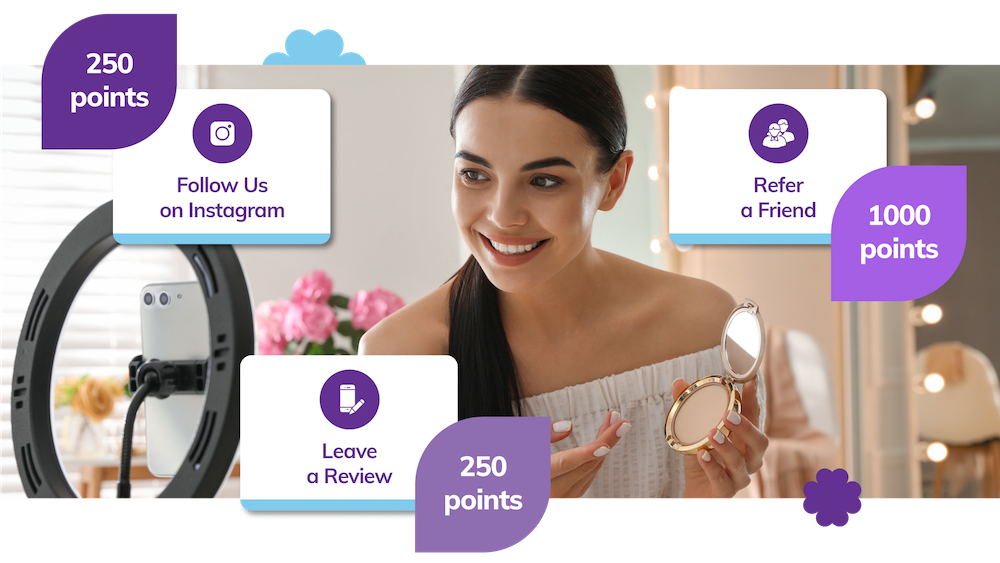
A loyalty program also allows you to award points for activities outside of purchases. You can offer points in exchange for reviews, social follows, birthdays and much more. How does this positively impact your returning customer rates? Well, not only do shoppers engage with your brand even when they’re not buying, they also build up a points balance faster, unlocking a reward that they return to redeem on a second purchase sooner!
Gamifying this process with tiered benefits and rewards that include great experiences like early access to sales or events only doubles down on this success.
3. Personalize your experiences
The biggest factor in repeat purchases is customer experience, and we know that customers today want their experiences to be personalized. It can be challenging to achieve this with increasing privacy rules, decreasing cookie effectiveness and everything else but the fact is, you need to know about your customer to retain them and keep them returning.
Loyalty program data is a really effective way of personalizing emails, SMS and other marketing communications. Including information such as points balances, available rewards and other elements that are entirely unique to that customers ensures they ge a 100% personalized email, in turn making them feel recognized and making them more likely to return.
Many brands also use their loyalty programs to successfully collect zero-party data by offering loyalty points in exchange for completion of a quiz or customer profile. As a brand, you get to ask customers what they like and what they need, and as shoppers they then get recommendations and content that’s relevant to their preferences. Win win for them, and for you and your returning customer rates.
What do you need to know before making your returning customer rate your North star?
If you’re thinking about shifting your focus to retention and returning customers, there are a couple of things you should consider.
First of all, which stakeholders do you need to take on your retention journey with you? Who needs to be told that you are shifting your focus to include both acquisition and retention?
Secondly, which of your existing tools and technologies can help you meet a dual purpose? From ESPs and SMS platforms to subscription providers and helpdesks there are lots of tools that integrate with a loyalty program and help you increase your returning customer rates at the same time as meeting separate goals.
An finally, what are your competitors doing? Are you ahead of the curve with your returning customer rate knowledge, or are you playing catch up? This knowledge will help you define how much effort you need to put into version one of a retention strategy, or give you great inspiration around what’s working for others.
Your new North star
So there you have it - an overview as to why your returning customer rate should be your North star if you want to drive sustainable business growth on Shopify. We wish you luck, and if you have any questions at all, LoyaltyLion is here to help!