

How To Get More New Customers With Google Ads | #266 Kris Beltins
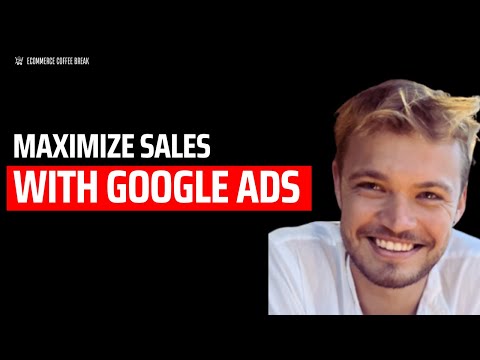


In this podcast episode, we discuss how to get more new customers with Google ads. Our featured guest on the show is Kris Beltins, Co-Founder & Partner at aimemedia.com
Topics discussed in this episode:
- Strategies for attracting new customers using Google Ads.
- Insights on using Google Merchant Center and the importance of conversion tracking.
- Aime media’s approach to auditing clients, and the future of AI in ad strategy.
- The significance of Google as a new customer revenue growth tool, stressing the need for ecommerce businesses not to overlook this platform.
Chapters/Timestamps:
02:02 Challenges in Google ads
02:52 Strategies to get more customers with Google ads
03:02 Importance of Google shopping feed
04:39 Steps after setting up Google shopping feed
10:53 Discussion on scaling Google ads
15:08 Insights on attribution models
17:56 Working with clients
21:19 Discussion on AI and ad strategy
Links & Resources
Website: https://aimemedia.com/
LinkedIn: https://www.linkedin.com/in/ecomkristaps/
Instagram: https://www.instagram.com/kristapsbeltins/
X/Twitter: https://twitter.com/ecomkristaps
About Our Podcast Guest: Kris Beltins
With more than 7 years of experience in the world of DTC eCommerce, Kris (Kristaps) has collaborated with well-known digital marketing agencies and a wide spectrum of eCommerce brands, generating annual revenues ranging from 7 to 9 figures. Today, Kris (Kristaps) is a co-founder of a Google Ads agency that has profitably spent over $20M in ad spend and helped over 50 brands grow across diverse product niches. At AIME Media, we help established DTC eCommerce brands scale using Google Ads.
Listen & Subscribe on your Favorite Podcast App:
Apple Podcasts | Spotify | Amazon/Audible | Google Podcast | YouTube
Please support the show if you liked today's episode:
- If you love the podcast, please get someone else to listen, too!
- If you enjoyed this episode of the Ecommerce Coffee Break podcast, please head over to Apple Podcasts, leave a rating, write a review, and subscribe.
- Share the podcast with your family, friends, and co-workers.
- Tag the podcast on Instagram @clauslauter and let me know what you like about it.
- If you like the content and would like to support the podcast, you can buy me a coffee here.
- Become a guest on the show or sponsor an episode.
Claus Lauter: [00:00:00] This is episode 266 of the E Commerce Coffee Break Podcast. Today I'm joined by Kris Beltins, co founder and partner at aimemedia.com, and we discuss how to get more new customers with Google Ads. So let's dive right into it. But before we get started, a big thank you to our sponsors for supporting today's episode.
Have you heard about Partner Hero? They're experts in support on the e commerce industry, known for their outstanding team building skills. Their main pillars, quality, people, and culture makes them a great fit for your company. Learn more on partnerhero. com or click the link in the show notes. Are you feeling overwhelmed by marketing stress?
Say goodbye to pressure and meet your new secret weapon, a remote marketing assistant. Easily scale up your business, boost productivity, and reclaim your time. The Game Changer. Get your own marketing wizard at half the cost. Visit smart ecommerce marketing. com and discover the magic. Check out the link in the show notes now.
This is the e commerce coffee break. A top rated Shopify growth [00:01:00] podcast dedicated to Shopify merchants and business owners looking to grow their online stores. Learn how to survive in the fast changing e commerce world. With your host Klaus Lauter and get marketing advice you can't find on Google.
Welcome to the
show. Hello and welcome to another episode of the e commerce coffee break podcast. So today we want to dive into Google ads and we haven't spoken about Google ads for a long time. So I'm really happy to talk about this today because it's such an important factor or part of every online business out there.
So with me on the show today, I have Kris Beltins. He's the co founder and partner of aimemedia.com. He has more than seven years of experience in the world of DTC commerce. He has collaborated with well known digital marketing agencies and a wide spectrum of e commerce brands, generating annual revenues ranging from seven to nine figures.
Chris as the co founder of a Google ads agency is probably the best person to talk to about Google ads today. So I'd like to welcome
Kris Beltins: him to the show. Hey, [00:02:00] Chris. Thank you for having me.
Claus Lauter: Chris, let's dive right into it. Google ads, big part of every business, but also a complicated part. Give me a bit of an overview specifically with DGC businesses, what they struggle the most with.
Kris Beltins: A lot of the times I speak with founders is that Google has kind of let them down in the past and they don't trust it anymore in terms of like people just taking over their account and setting up a brand search campaign. And pretty much calling it a day, which means that they only target their brand keyword and they don't actually bring any additional growth to the business.
Yeah, we see that a lot that happened a lot in the past, but these days. It's very possible to also grow your business with Google ads. So basically a lot of founders, a lot of people have been burned by that kind of mindset. So I think that might be one of the biggest struggles I see at least.
Claus Lauter: So let's talk about how to get more new customers with Google ads.
Google shopping feet is one part. Google Pmax came out, [00:03:00] Performance Max came out a while ago. Let's dive into this. Tell me about Google Shopping Feed. What's your take on that? How important is
Kris Beltins: it? Google Shopping Feed optimization is an incredibly important part of the whole journey. We also see a lot of accounts that just don't have it optimized at all.
And what I mean by an optimized feed is the very basics of it is to have your images optimized. Your product title is optimized, your product settings set up correctly and your reviews uploaded onto Google Shopping. So like you sort of take maximum advantage of that channel without even necessarily spending more money into it.
Like you already have your listings on the shopping channel. So. You might as well take the time to sort of maximize them and like, make them as good looking as possible. Things like making your image as visually appealing as possible, making your titles full of product keywords that people might be looking for.
Uploading your existing [00:04:00] customer reviews that you already. Put all this work into, into gathering them, uploading them also onto Google shopping and basically sorting out all the settings, all the back ends, all the attributes to provide Google as much information as possible about your product. That's a really important part of it all.
So I would definitely suggest starting with that if you're launching shopping ads, generally shopping ads should be around, especially 70 or 80 percent of the whole account. Efforts, basically, so I highly suggest that's like a very high reward that I tend to tick off your to do list.
Claus Lauter: So once you have your shopping feed ready and approved, what's the next step?
How do you start driving really traffic to your ads and then hopefully to your store?
Kris Beltins: We do the shopping feed optimization first, sort of alongside with fixing all the Google Merchant Center stuff because, uh, usually the accounts are full of errors or like full [00:05:00] of just things not enabled or not set up correctly.
So Google Merchant Center and product feed optimization. That should be number one for anybody who is trying to launch Google Shopping Ad. And what comes after that is also a very, very crucial part. Conversion tracking. Because if you don't have the conversion tracking set up correctly, if you're, let's say tracking, add to carts as purchases or like your account is optimized towards app downloads, if you don't even have an app, these kinds of things, it's painful to admit, but we see them more than I'd like to.
So yeah, this is like a very, very important part of it as well. So these three things are like feed optimization, Google Merchant Center, and conversion tracking is the very, very first thing. And after that, we go into the actual campaign setup, campaign build out. So let's say for a typical e commerce D2C brand, it would be definitely brand search because you still want to capture those branded [00:06:00] terms and protect yourself from the competition.
However, it shouldn't be more than like generally 10 to 15 percent of your spend overall in the account. Like, you don't want to put all your budget into it because that will not bring a lot of incremental revenue growth. So after that, some, um, other types of search campaigns, like generic non branded, let's say going for generic keyword terms that are like your product categories.
For example, if you're selling silver jewelry, campaigns that go for silver jewelry, keywords, men's silver jewelry, that make all sorts of variations. But the point of those campaigns is to catch those generic non branded keywords that are so valuable to your business growth. So that's a basic search setup.
You can get created with like competitor campaigns or DSA campaigns that are a little bit more automated. But typically it's, it's brand search and some sort of a search campaign that goes for generic keywords for [00:07:00] the search campaigns, the budget should be, I would say like maybe 20 to 30, sometimes 40 percent of the whole account spent and for the rest of the account, indefinitely shopping that takes over.
And it can be different variations. For example, you can use, as you've mentioned before, you can use performance max, which came out, I think more than a year ago by now. You can use a variation of performance max, like a feed only performance max, or you can go for the old standard shopping way. And it's really interesting how those three differ from one another.
Cause when performance max launched it, it was the talk of everybody. Like it was super popular. Everybody was like, yeah, that's the way to go. Automated campaigns, everything. And then after some time, people realize that like, it's a little bit of a black box, like you don't know as much information as you used to from like old campaigns, like [00:08:00] standard shopping or the typical search campaign, you didn't have any search terms, information, or like you really were just like launching ads in the blind.
These days, there are ways how you can already. See more data, like they released, Google released some more features and there are also some custom scripts that you can implement and see where your money is spent at. So that's pretty cool. But generally also people realize that based on the results, when we had more view into it, that performance max is really good at ROAS and showing you great numbers while.
Not really growing your business that much because it is really, it goes for embarking audiences. It really goes for the lowest hanging fruits. It gets those conversions. It does a great job at it, but if you're looking for new customer growth, if you're looking for a type of funnel growth, performance max is most likely not the way to go these days.
And I hear more and more people [00:09:00] moving their clients, their accounts away from that. So that's something to keep in mind, I suppose. That's generally good for the shopping. That's why we go into the standard shopping route. We, I would say that most of our efforts go into standard shopping. Optimizing feed, launching standard shopping campaigns, and dominating the shopping channel like that.
Because we have more control, you have more You know, it's a light box and you can really skew it towards new customer acquisition, like only generic terms, only like excluding all the random terms. Simply go for people who haven't heard of you before and get sales like that. And
Claus Lauter: now a quick break to thank the sponsors of today's episode.
As a prominent player in the e commerce support arena, Partner Hero specializes in delivering personalized customer experience solutions. With a clear focus on helping you not just meet but exceed your goals and requirements, they have become experts in e commerce support. Their commitment to tailoring solutions to your unique needs ensures that your support experience is nothing short of exceptional.
Partner [00:10:00] Hero is more than a CX company. They are your partner in success. Visit their website and learn more on partnerhero. com Are you feeling overwhelmed by marketing stress? Say goodbye to pressure and meet your new secret weapon, a remote marketing assistant. Easily scale up your business, boost productivity, and reclaim your time.
The game changer? Get your own marketing wizard at half the cost. Visit smart ecommerce marketing. com and discover the magic. Check out the link in the show notes now. That's a great insight from you in regards to Performance Max. And you're absolutely right. A year ago, everyone was completely over the top with Performance Max and making life so much easier.
And Performance Max will do everything for you. But Your experience, and I would agree to that, shows that doing it manually and going granular and really looking into the data will give you more results than leaving it to the algorithm, which gives you low hanging fruit, basically clickers that's not really buying from you.
I want to dive a little bit into scaling your Google Ads, not only on Google and the Google Ads network, but also [00:11:00] on YouTube. What's your take on that? That's
Kris Beltins: definitely a very interesting part of Google's game as well is because of this setup that I just went through. It's sort of the standard setup that for brands doing like more than 30k revenue per month that they can afford to spend a bit.
So that's like the typical setup for things like when you really have a lot of like more budget or you want to scale the account. We typically recommend looking into YouTube and specifically YouTube Shorts, also a relatively new function of Google or YouTube, but yeah, definitely YouTube Shorts where you can find a lot of growth opportunities.
And how that typically works is YouTube shorts is basically the same Design the same ux the same kind of look as uh, tiktok reels, you know meta So that's kind of the google's response to that meaning that the best practice is to take your already best performing assets from [00:12:00] Meta or TikTok that you know are, have been through some testing and you know that they are performing well, they are very catchy and they have a nice hook rate.
You can just upload them onto YouTube as well. So there's not like a lot of specifically designed creative testing or creative making there. It's like taking already existing ad sets that have performed well and uploading it onto YouTube and launching the YouTube search campaigns. Where the interesting part begins is when you need to test the audiences.
Cause like, as I said, when you launch YouTube Shorts, you don't need to do a lot of like new creative testing. You mostly play around with audiences because you want them to be separate people and separate audiences from those that you already reach with all these other platforms. So we typically create like one audience that is targeting like keywords that are relevant to your business.
We take the jewelry example from before. If the [00:13:00] audience is full with keywords that are relevant to your business, then Google's in market audience, you can, like, these are the audiences that they provide by default. They are like, I think the same, like on Meta and stuff. They just provide you with their already segmented audiences, people who might be interested in your product.
You can choose that and make an audience with that. And then third audience that we typically use is competitors. You probably know who your competitors are. So you just put all that information, their websites and their keywords in and you launch YouTube shorts as well. So for somebody who might be just starting out, I feel like that would be the most useful thing.
What is really important to keep in mind. With YouTube ads and YouTube short is that it can get really expensive and you Really need to let it run for a while. So like we typically recommend like four times Your cpa as a daily budget for just that campaign and [00:14:00] run it for At least a month without even looking at the return.
Google is not like other platforms. It really needs more time to optimize in general. Even when we're talking like shopping or search, it takes its time with the optimizations. But now with YouTube, it's even more painful sometimes because you, you really need to just like close your eyes for a month and then let it run.
And then after that, you can only say that you've tested it. If you've done it for at least a month or even two. At the solid budget, right? So yeah, that's pretty much how it looked like with YouTube
Claus Lauter: Okay. So that's a bit more of an advanced strategy. People are also already having a problem with the 50 conversions in seven days on beta.
But if you have to wait for a month before you can make a decision, that's really, really painful. I want to go a little bit into the attribution model. A lot of traffic is coming in the first place from other channels and then people before they buy, they might go to Google. So they see an ad, I don't know, in beta on [00:15:00] Instagram or whatsoever.
A few times that they start searching for the brand or whatever on Google and then somewhere the conversion happens. What's the best model or what's your take on what kind of attribution model to use to track conversions and to track where the traffic is coming from?
Kris Beltins: You're absolutely right. Like Google sometimes, maybe even most of the times is used as a second channel.
So I talked about new customer acquisition and it's possible. But still sometimes Google is used as just another click on the whole like customer journey So you need to take that into consideration and how we typically do it is through Attribution platforms like triple whale or North beam. So those platforms basically have their own Integrated pixel and they track where the customer journey has gone through.
Basically, where's the first click coming from? What happened later? What pages did they visit and where the actual conversion came from, which campaign, which had all [00:16:00] that stuff. So these days, more than ever, I think people look at the overall business situation, like the overall, like money in money out kind of a thing.
So my suggestion is look at TripleWhale, NordVeam, these kind of platforms, like study them, what happens throughout your customer journey, because that can also depend on your product a lot. If it's like a high ticket thing, like 1, 000 AOV, it's definitely going to take more than one click. If it's your classic, you know, e commerce 100 something AOV, it might be also just one click thing.
But yeah, take a look at those. And then we also just look at the overall store revenue. If we launch a new campaign and we're spending like 20, 000 extra per month, we better see a lift in Shopify, because if we don't, then it's a problem. And we had that in the beginning of PMAC that like we were spending a lot of money there and sometimes it was performing [00:17:00] really well, but sometimes we would increase the budget and we would have spent more, but their overall Shopify revenue would just stay the same.
And that's obviously a problem. So yeah, I feel like these days you need to be much more mindful of the overall business situation And you need to look into other solutions like these third party attribution tools. And the truth is somewhere in the middle. I don't think you can trust any data at face value anymore.
You need to jump through attribution models, like first click, last click, and just kind of see where you're at approximately. And can you keep going with these sort of numbers for your business as the best?
Claus Lauter: It shows you already, you know, we might have lost a few listeners with attribution model because it shows you how complicated and how technical Google ads over all this and it's not all Google ads, it's Google Merchant Center, it's Google Analytics and so on and so forth.
So there's more tools that us play into this whole game. Now, how do you help or where do you start working with your [00:18:00] clients when they come on board? What's the first thing you do with your clients?
Kris Beltins: So our process is always we do an in depth audit, either before we're already starting working with them, or after we've signed is the full audit of Google ads, analytics, what's, what's the situation there, Google merchant center, conversion tracking, feed optimization.
I think that might be like the very, very most important things. And then we just, we see where the biggest missed opportunities are. And typically it's with conversion tracking or Google Merchant Center errors, or the whole account being like on branded search. Then our SOPs start with fixing the conversion tracking, fixing the Google Merchant Center situation, and then going into the actual campaign strategy.
And campaign build out. So we see which campaigns need to be turned off, what needs to be done to [00:19:00] really achieve those goals that the client is looking for. It's a lot of cleaning up at the beginning. And then once we, you know, kind of have our setup ready, we let it run for a bit with some daily, weekly, monthly optimizations.
But typically we try not to disturb it too much. Like, as I said, Google needs time. So if we're going to launch a YouTube campaign, we're not going to touch it except for Docker optimization. Like, we're not going to pause and run it again. It's just letting it do its thing. So I would say that's typically the way we
Claus Lauter: work.
Okay. Are there any specific needs or verticals? Or in other words, who's your perfect
Kris Beltins: customer? That's a great question for Google as I just said. Because, uh Google is definitely not for every business, and there are certain types of niches that are working much better for Google. So, it's as simple as, when you're looking for something, when do you go on Google to search for it?[00:20:00]
Things like, let's say the same jewelry, bedding, solutions, wear, like that kind of stuff that or like something high ticket, like, you know, high ticket technology, something that you really need to search for and do your research for before buying, because it's not like Facebook or like Meta, where you just, you're scrolling and you're, you're patterning.
It gets interrupted and you're like, Oh, this, this is interesting. Like, let me check this out. Like that's a part of it, but on Google, people go to really do their research and to find the best software, the best company, the most reviews. So you really also need to take advantage of that and stand out in that sense.
But yeah, so the ideal client is like something niche, perhaps with a higher AOV and something that people search for on Google.
Claus Lauter: That makes perfect sense. Tell me a little bit about the, or your pricing structure, how does that work? We
Kris Beltins: charge based on ad spend. We have a flat fee plus we charge based on ad spend typically.
That's in a nutshell, but it [00:21:00] also depends on where your business is at. We only like to work with the established e commerce businesses who actually need Google and for who it makes sense to have Google. So we don't really like to take smaller accounts and that kind of stuff. So yeah, I think that's our pricing structure pretty much.
Claus Lauter: I want to touch a little bit on AI, because that's in everyone's mind right now. How do you think AI will influence ad strategy going into the future?
Kris Beltins: I think we will see more stuff like performance max. If you compare today's performance max to like standard search 10 years ago, you needed to do much more manual stuff than like changing the bidding and like that kind of stuff.
You still need to do it today a little bit, but mostly today the human touch is the actual thinking behind it and the strategy and the experience and knowing which buttons to press at what time and which buttons not to press. [00:22:00] So, I think we might see still a more, more like automated approach, but I think there's an opportunity more for like strategy thinking and like the overall, yeah, business growth basically.
Claus Lauter: Sounds good. Before we come to the end of the coffee break today, is there anything that you want to share with our listeners that we haven't covered yet?
Kris Beltins: I guess just the main part is that what I said at the beginning that Google is no longer just a tool for bottom of funnel. You can use it as an additional.
New customer revenue growth, a tool, and it's getting better and better with it every day with all the YouTube shorts and all the new stuff they're coming out with. So definitely don't sleep on it. I've been to conferences where they have like one talk about Google ads and 50 talks about Facebook ads.
So I feel like people sleep on Google sometimes. Okay,
Claus Lauter: that's kind of weird. I mean, Google ads are around for more than 20 years, and I think it should be a stable pillar within every marketing [00:23:00] strategy. Chris, where can people find out more
Kris Beltins: about you guys? LinkedIn is the best. Me and my partners are more active there.
So LinkedIn or our own website. But mostly LinkedIn.
Claus Lauter: Okay, cool. I will put all the links in the show notes, then you just one click away. Chris, thanks so much for your time today. I think that was a very good overview on how you can use Google to generate new traffic, new business. And as I said, it should be a part of every marketing strategy.
Thanks so much and have a great day. Thank you. Hey, SSIA, thanks for joining me on another episode of the e-Commerce Coffee Break podcast. Before you go, I'd like to ask two things from you. First, please help me with the algorithm so I can bring more impactful guests on the show. It'll make it also easier for others to discover the podcast.
Simply like, comment, and subscribe in the app you're using to listen to the podcast. And even better if you could leave a rating. Secondly, please take a moment to check out today's episode sponsors. They play a crucial role in keeping the show and our newsletter available to you for free. Thanks again and I catch you in the next episode.
Have a good one. Before you leave, don't forget to visit the [00:24:00] sponsor of today's episode. Are you feeling overwhelmed by marketing stress? Say goodbye to pressure and meet your new secret weapon, a remote marketing assistant. Easily scale up your business, boost productivity and reclaim your time. The game changer?
Get your own marketing wizard at half the cost. Visit smart ecommerce marketing. com and discover the magic. Check out the link in the show notes now. Have you heard about PartnerHero? They're experts in support on the e commerce industry, known for their outstanding team building skills. Their main pillars, quality, people, and culture makes them a great fit for your company.
Learn more on partnerhero. com or click the link in the show notes.
Episode Sponsors

Enhance your eCommerce business with PartnerHero. Our comprehensive support solutions, which include 24/7 customer assistance, expert marketplace insights, and self-service infrastructure, will empower your brand’s customer experience. We prioritize exceptional customer service, maintaining language standards, multi-channel support, and user/system assistance. Visit us at: https://pages.partnerhero.com/ecommerce-coffee-break Talk to us, and lets create a tailored customer support solution for you!

Get your own marketing wizard at half the cost. Boost your ecommerce business with a remote marketing assistant and say goodbye to marketing stress. Easily scale up, increase productivity, reclaim your time, and save up to 50% compared to US/EU hires. Visit https://smart-ecommerce-marketing.com today.
Get notifications when new episodes are released. Unsubscribe anytime.
In your inbox for free. Every Thursday. Consumed in 3 minutes or less. Join over 5,000 Ecommerce Merchants, Founders, and Marketers.