Partner With Us. Reach 70K Ecom Operators. Learn more Ecommerce Coffee Break Podcast and Newsletter

Ecommerce Coffee Break Ecommerce Coffee Break
  • HOME
  • PODCAST
    • Browse All Episodes
    • Playlists By Topic
    • Be a Podcast Guest
    • Suggest a Guest
  • NEWSLETTER
    • Subscribe
    • Past Issues
    • Advertise
  • PARTNERS
  • PARTNER WITH US
    • Be a Podcast Guest
    • Advertise/Sponsor
  • REVIEWS
    • Reviews
    • Rate on Apple Podcasts
    • Rate on Spotify
  • SUBSCRIBE
    • Email Newsletter
    • Apple Podcasts
    • Spotify
    • YouTube
    • iHeart
    • Amazon Music
    • Overcast
    • Castbox
    • Podurama
    • RSS Feed
  • ABOUT US
  • HOME
  • PODCAST
    • Browse All Episodes
    • Playlists By Topic
    • Be a Podcast Guest
    • Suggest a Guest
  • NEWSLETTER
    • Subscribe
    • Past Issues
    • Advertise
  • PARTNERS
  • PARTNER WITH US
    • Be a Podcast Guest
    • Advertise/Sponsor
  • REVIEWS
    • Reviews
    • Rate on Apple Podcasts
    • Rate on Spotify
  • SUBSCRIBE
    • Email Newsletter
    • Apple Podcasts
    • Spotify
    • YouTube
    • iHeart
    • Amazon Music
    • Overcast
    • Castbox
    • Podurama
    • RSS Feed
  • ABOUT US
24 Oct

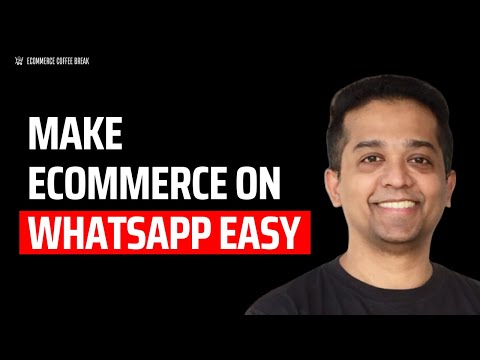
How to Make Ecommerce on WhatsApp Easy | #246 Arjun Paul
YouTube Video


In this podcast episode, we discuss how Shopify brands can use WhatsApp for commerce. Our featured guest on the show is Arjun Paul, CEO/Co-Founder of zoko.io.

  • Show Notes
  • Support The Show
  • Transcript

On the Show Today You'll Learn:

  • How WhatsApp is transforming the e-commerce landscape. 
  • WhatsApp’s evolution from customer support tool to e-commerce powerhouse. 
  • The organic power of WhatsApp in attracting customers and streamlining sales. 
  • Real-world examples of businesses making millions on WhatsApp. 
  • How businesses can automate sales, marketing, and customer support using WhatsApp. 
  • Practical steps to integrate WhatsApp into Shopify and start taking orders. 
  • Tips for messaging customers effectively on WhatsApp without spamming. 


Links & Resources

Website: https://www.zoko.io/
Shopify App Store: https://www.zoko.io/whatsapp-plugin-for-shopify
LinkedIn: https://www.linkedin.com/in/arjun-v-21939784/


About Our Podcast Guest: Arjun Paul

Arjun Paul, CEO / Co-Founder of zoko.io. Arjun is a Former Bridge engineer turned Product Manager and Tech Founder of a startup with unique technology that seamlessly integrates WhatsApp's commerce tools, Generative AI, and Shopify to help brands make millions on WhatsApp. Arjun has extensive experience using WhatsApp for commerce. He began by assisting his mom with a home based women's fashion business on WhatsApp eventually serving over 200,000 customers. Now with Zoko, a YCombinator-funded startup, he serves thousands of brands across 43 different countries. Arjun is always eager to share insights about the transformative potential of WhatsApp for business.


Listen & Subscribe on your Favorite Podcast App:

Apple Podcasts | Spotify | Amazon/Audible | Google Podcast | YouTube

Please support the show if you liked today's episode:

  • If you love the podcast, please get someone else to listen, too!
  • If you enjoyed this episode of the Ecommerce Coffee Break podcast, please head over to Apple Podcasts, leave a rating, write a review, and subscribe.
  • Share the podcast with your family, friends, and co-workers.
  • Tag the podcast on Instagram @clauslauter and let me know what you like about it.
  • If you like the content and would like to support the podcast, you can buy me a coffee here.
  • Become a guest on the show or sponsor an episode.
Claus Lauter: Hello and welcome to another episode of the e commerce coffee break podcast. Today, we want to talk about how WhatsApp can help you for commerce. Now, WhatsApp is around for a long time. I think I had a bit of a slow start when it comes to e commerce, but that's going to change now. So with me on the show, I have Arjun Paul. He is the CEO and co founder of zoko.io. He is a former bridge engineer turned project manager and tech founder of a startup with unique technology that seamlessly integrates WhatsApp commerce tools, generative AI, and Shopify to help brands make millions on WhatsApp. Arjuna has an extensive experience on using WhatsApp for commerce. He began by assisting his mom with. Her home based fashion business on WhatsApp, eventually serving over 200, 000 customers. Now with Soko, a Y Combinator funded startup, he serves thousands of brands across 43 countries. So let's welcome him to the show. Hi, Arjun. How are you today? Hey  Arjun Paul: Gloss, thanks for having me. Claus Lauter: As mentioned, WhatsApp, I think that's my impression, had a bit of a slow start when it comes to e commerce. Some versions use it for customer support, but then a long time, nothing really happened, but that has changed. And I think there are specific countries where WhatsApp really has picked up. Tell me a little bit on how you got into this whole area of WhatsApp. Arjun Paul: I started helping my mom, she had a Facebook page. So her and a friend's wife, they were in business together, they would stitch clothes, post pictures of it on a Facebook page. And the local ladies would message them, ask them, hey, what's the price and then basically buy from them over the Facebook page, right. the business started to grow. And she wanted to reach More people, which meant running ads on the Facebook page. So that's how I got, roped into helper on ads, which are still pretty complex for a regular person to run ads on Facebook, right? And so then one of the things I noticed on the Facebook page, the interactions is that conversations would almost always move organically to WhatsApp. , because people would, , comment and then a WhatsApp number will get shared and then conversation will move there. So next week when she had new stuff to post, she started sharing it on groups instead of posting on Facebook, right? She'll post on Facebook, but also share on WhatsApp groups. But then organically, there's more response on WhatsApp. So then the business slowly shifted towards WhatsApp. And at one point we were sending 250, 000 messages across 500 WhatsApp groups, 10 folks manually. There's no API at that point.  We were making like 80, 000 a year doing that. So no website, no payment system, everything was cash on delivery and like no accounting system. As long as we made more money than we were spending, we're like, okay, this is working out great. But it kind of shows you the power of WhatsApp, right?  Because my mom or a lot of people, the first introduction to the internet was through WhatsApp, right? So they don't see these limitations of, oh, there's no checkout, there's no payment, who asked for all these things, and they were actually doing a lot of business there, right? And so that's how I, so at that time I quit my job and wanted to start something on my own. I'm a bridge engineer by trade. So it was about buying a company and running it. But then this kind of caught my attention. Like there's a huge potential here. This could be a business. And funny thing is. even at the time I wasn't thinking about it as business, but other businesses started reaching out to us asking, Hey, how are you reaching all these people on WhatsApp, right?  What happened there was my co founder now, Arumel, who's also a neighbor and he's a brilliant engineer. So he came and saw what we were doing. And he said, Hey how stupid can you be to manually message 250, 000? We had to like reformat phones after every broadcast because it would fill up with images. So he built an unofficial API on WhatsApp to automate this whole process, right? So that's how we were doing it consistently every week. And then other businesses said, Hey, can you help us do that? And we'll pay you to do that, right? So then we started charging like 500 a month for unlimited WhatsApp. businesses and we got quite a few customers and we're making quite a lot of money at that point doing this. So we realized that this could be a business. But then WhatsApp did not have an API and it was always a constant battle between us and WhatsApp, them trying to block us, us trying to find 50 other ways. To keep sending the messages. And that's how we got into this business and WhatsApp came out with their API. And that first month we released our product and been legit, with the SAS usage based model and all that stuff. And we build a real business. one point we got into Y Combinator.  YC gave us the advice find a hundred customers who love you. You're making money, but that doesn't mean anything, but forget about monetization money and all that stuff. Find a hundred customers who really love you guys. And we realized. Out of the customers that we had that Shopify core was great because we were helping them do actually make money on WhatsApp, not just one way messaging or anything.  They could make money. In fact, we scraped 1. 5 million Shopify source at that point and saw that. Close to 300, 000 of them had the WhatsApp widget installed on their website, They could have had any world class product like Intercom or Zendesk or Freshdesk, but they chose to put WhatsApp on their website. A widget, it could do nothing, right? Your message will come on somebody's phone. When you get a 50 messages, you don't know who was messaging. What did they buy from me? Because we know that problem, we send out 250, 000 messages. A lot of messages come back. We can't even check what it is. Right. So we knew that problem intimately. Right. So we were actually solving that for them. Right. So. First thing we did is we'll give you unlimited capacity to talk on WhatsApp. You'll never lose a message, right? Everybody. So you have full control of your WhatsApp. Then you can have a hundred agents on one WhatsApp number talking to customers. Right? In fact, we have quite a few customers who have over a hundred. What's that number talking to customers, helping them buy products, right? That capacity is the first thing that we deliver to customers. So then as soon as you get control, customers will get ambitious, right? They'll say, okay, the whole point why I'm talking to customers is to actually sell them stuff. So give me this one, two and three features that will help product discovery collect payments all that stuff. Right? So then, the. would organically think, Hey, I'm sending out these emails and SMS. Nobody's opening those. And can I move some of those communications to WhatsApp, right? So that is how the sales, marketing, and customer support on WhatsApp evolved. That ambitious use of WhatsApp. And you'll see that in certain countries. what we call WhatsApp first countries, right? Where if you are a Shopify merchant or any e commerce merchant in these WhatsApp first countries, that is where 80 smartphones have WhatsApp on it, then you have no choice, right?  You have to be on WhatsApp and you have to do business on WhatsApp. In fact, you can just test it out by, if you're not. using WhatsApp already. Just turn on cart recovery, one, just one feature cart recovery, on WhatsApp and just see that are you making at least 5x more money than you're doing it on email, right? Very high bar, like 500 percent more on WhatsApp or not. If yes, you should look at products like us, right? Can you do more? once we get a customer on a demo, it's very easy for us to convert because, it's very easy for us to show value, your dollars without having a PhD, you can understand I'm making more money on wines than I'm spending on the product. So I should probably keep using this product. .  Claus Lauter: Right. Okay. I love the startup story. You basically found a problem and a niche and then build a solution around it. And what I didn't know is that you really can have like hundreds of agents on one number. I think that's a limitation that a lot of merchants have in their mind is like, yeah, I only have one phone and that will probably explode after a week. What I'm interested in is the automation part of it. With sales, with marketing, with customer support, a lot of. Automation obviously comes in. How do you deal with that? How can you help merchants to make their life easier?  Arjun Paul: we as a company, we weren't focusing on automation, like basic chatbots, because where did we come from? We've been doing 250 target customers didn't care much about automation, right? In Europe. Yes. People care a lot about automation because simply because they don't have the people to talk. But in India, I think about what were those 300, 000, cause that's one in five Shopify stores that we tested. Why did they have WhatsApp in the first place? , what do you call automation is something they may have arrived at now, but initially they only want one. Low hanging fruit is I just want to be able to talk to my customers and I don't want to miss my customers. Right? So that's where we started with, and, till about six months ago, if you asked about, chatbots, we'd say, no, we don't do chatbots. There are lots of other companies who do chatbots because we personally haven't seen a chatbot that works really well, right? Like incredibly well or blows our mind somewhere it'll get stuck and ultimately end up with the agent itself. But with ChatGPT, things kind of changed, right? We turned believers into this automation thing, and we started with an ambitious use case saying, stick with the money part, follow the money. Can we make a sale on WhatsApp? And we introduced a ChatGPT driven bot, right? Basically, if a customer messages, it'll talk to you. It'll show you products from WhatsApp. It'll collect your address. It'll collect payment, send you a notification that it's done, and basically take money from you and put it in the bank, right?  And it's possible today. So we released that on a major brand's, site. within 18 days, 2 percent of their orders was done by the ChatGPT bot. From start to finish. I'll send you a video right after this, just to see, like how it navigates , all the questions. Like customer says, I don't want this product. Can you do you have this other thing? Oh, can I change my address to this? It'll do everything, right? So then it is useful. And the funny thing is. The merchants, because it's a big brand, there are lots of other people who are handling these conversations and all that stuff. They'll see these conversations and say, yeah, that's exactly how it's supposed to work. They don't care that there is, AI or any of that stuff, right? So at that level, if because there is automation, yeah, we think now, this whole new thing will open up there. Fully automated order taking can WhatsApp. And if you spend, a couple of days on it. Support is like the lowest hanging fruit. You can easily automate a lot of the support, right? But we, as a company, we are a little bit more ambitious about what should we achieve. We'll start with the money first. And because one thing we noticed. To be successful as a company, you have to be close to the revenue, Like, even if you're the world's best support system, you're still a cost center. So people will see you as a cost center, right? But if you start with the revenue, being closer to revenue, they'll think twice about, moving away from you because you're bringing in a lot of revenue, right? Our plan is to eventually address the support function, but we'll crack this sales thing first.   Arjun Paul: Yeah,  Claus Lauter: no, I absolutely agree on that sales first, revenue first, otherwise you will not survive very long as a company. Now talk me through the process on zoku. io into Shopify what's the process then going forward that you can really take orders on WhatsApp?  Arjun Paul: It's a relatively simple process. You have to install Shopify plugin. You have to have a Zoco account and then Facebook makes you jump through a few hoops to get verified, get activated on WhatsApp. You have to be in compliance with your commerce policy. For example, if you sell muscle supplements, you may not get approved to use the API. Right. But if you're selling fashion or clothes, you are showing that like if you're selling pets, you cannot be approved. But if you're selling pet food, you're okay basically, they'll review all that before they let you in. so you have to go through those process. as part of a signup process, we Take care of all that stuff, right? And then, you have to install the Shopify plugin, and then install a private app. A private app is where a lot of our automations, that's the thing. For example, if you place a COD order and you will ask you for a reconfirmation automatically, if you confirm, we mark. The Shopify order has confirmed. Then when you return, we'll mark that. So all that requires that private app integration. So it'll take 10 minutes to do that. Basically input the keys and then you're set to go, right? So usually customers install these apps and then set up their order notifications. So anything you're sending, communicating on email, you'll start to communicate on WhatsApp. And then the second level is you'll set up your marketing automations like cart recovery, upselling, reselling, all that stuff. So money starts to come in. And then once you get a handle of that, you'll get ambitious about, okay, can I build Clavio like flows on WhatsApp? Can I send messages to a certain segment of people or all that? So depending on your what do you call it? Level of advancement within the shop. If I ecosystem, you will start to set up more and more automations and all that stuff, right? But immediately you can get control over WhatsApp. You can set up your basic notifications and your marketing money starts to come in and then you can get more ambitious with what do you call it? That clavio like thinking about email. You can bring that to WhatsApp and make more revenue. And we helped all these customers onboard them for the first 30 days. And our onboarding team's goal is. You have to make, end of 30 days, you have to make three times more money than you spend on Zoco. Then we know then, it will take a lot of convincing for them to leave us. So that, so we handhold them for the first 30 days to hit this target. And then on an as needed basis, we give them support.  Claus Lauter: Okay. In regards of messaging the customer, what's your experience? Because obviously there's a difference. If you're sending SMS messages out, people are more sensitive and receiving a number of messages on SMS, compared to email. What's your stance there on how often should you message? What's up? Messages.  Arjun Paul: It depends on the type of notifications, right? And also depends on the market.  For example, if my mom was late by a day on sending her updates, people would message her and ask, why haven't I seen any updates? So that's India. very different behavior there. But in Germany, I wouldn't dare send unsolicited messages to anybody. it's very different on the market. So you have to be aware of that. What do you call it? With geography and which market you have to know your customer. So that's one, but then it's always good to have proper optic. Proper opt in and customers should know that you are collecting the WhatsApp in order to send you these kind of messages, right? So a good foot in the door is to start with the order notifications, which everybody will appreciate. They'll actively give you their number, right? So start by having pop ups with WhatsApp numbers being collected instead of email. And then. On the checkout process, make sure they know that if your number exists on WhatsApp, we'll send you updates on WhatsApp, right? So that's a good stepping stone into this. So then once, , they're okay with that, ask them for opt in, to receive marketing messages, right? Which our system handles all that. We'll tag you as opt in. Then if you send a marketing broadcast, we'll auto opt out people who have opt out. So then you don't have to worry about it. So if anybody clicked opt out at some point, it will not go to them. So you don't have to worry about it. So start sending that out. one thing I can tell you is we work with about 2000 stores, and we already have access to the entire buying population of India's WhatsApp numbers. Within a year. So this will scale very quickly, like much more than you think. but initially you should be patient and say, don't try to become like the world's best marketing company on day one. So slowly as you collect your list will be. Clean, better, double opted in and you'll start to make money eventually, right?  That's what we recommend and that's what we help as part of the onboarding process, set these expectations, know what to do. 'cause the initial reaction is just blast it out, , just blast it out on WhatsApp and then you'll make money. But what happens is you'll also see that the health of your account goes out, right? WhatsApp is a very good process actually. So what they do is, On day one, they don't let you go crazy. They'll put you on what's called a limited tier of a thousand messages, right? So then if you hit your tier and your health is green, they'll automatically upgrade you to 10, 000. And then if you hit that limit and your health is still green, that means people are not blocking you. You're not going crazy. Then 100, 000 and then unlimited after that. So if you behave well, you can literally send one click of a button. You can reach entire India's population in one click. But. You have to as long as you're sending the right kind of messages.  Claus Lauter: Well, I like this process. Keeps every marketer within their boundaries and not going crazy. And I think it's, very important, as you said to have a clean list and to have happy customers instead of building up a reputation as a spammer that doesn't help your business there. Now tell me a little bit about the pricing. How does that work?  Arjun Paul: Yep. So we have a few tiers. What do you call it? We started like 35 a month, and it can go up to like 400 a month. And then depending on, what kind of, let's say if you do more than if you have more than 5, 000 conversations a month. You have to upgrade to the next plan, so we have a stepped plan, which will let you upgrade, what do you call it? Upgrade to the higher plans. Then one, advantage from a price point for us is that, we don't mark up WhatsApp rates, right? A lot of companies, what they do is they'll add their own markup on WhatsApp, right? So you pay a lot for your messaging. So with us, It's easier for you to get an ROI on your WhatsApp marketing, and we charge you a subscription fee for giving you this, agent platforms, the ability to segment, run automated rules, these advanced automations, we basically leave. Anything we have exposed the entire Shopify API in a visual manner. So you can build the craziest flows you want so you get a lot of those advantages and we charge you if you build a flow will charge you like 5 a month for a flow, right? What happens is that even the smallest customers, they can actually use it. , once you start to see revenue and you want to jack up your marketing, you have to upgrade to the biggest plan, but even in the biggest plan, you only pay 400. Even if you send a billion messages, you have a predictable cost next month, right?  Claus Lauter: Okay. No, that's very important. Before we come to the end of our coffee break today, is there anything that you want to share with our listeners that we haven't  Arjun Paul: covered yet? If you're not using WhatsApp in a WhatsApp market, you should start using WhatsApp, I think everybody's sold on this now.  It's only channel, right? You have to be on email. Basically, you have to be on. Customers will choose what they like, right? So there will be a good chunk of customers who like WhatsApp. So you shouldn't ignore them. You should be on WhatsApp so that's the first stepping stone, right? Especially if you're not doing cart recovery, please do cart recovery on WhatsApp. It's free money just sitting there, like clockwork. One in five cards get recovered. It's free money flowing in. You don't have to do anything. You just turn it on and money will start coming in. Right. So that you have to do, whether you do it through Zoco or anybody else, you should be doing that on, WhatsApp.  There are certain types of businesses that are great fits for WhatsApp as a channel. Great fits for two way communication. So if your product requires a lot of attention, for example, premium watches, custom made clothes, cosmetics we have seen because Women are super careful about what they put on their face, right? They'll spend a lot of effort into buying the right product. And once they find it, they'll stick to that, right? That's great process to happen on WhatsApp, right? Because they'll have a question. They'll have a follow up question. You can answer it. You can show them products. So once that customer is there, then it's a customer for life, right? So think about the nature of your product and the nature of your customers and see if WhatsApp is a great fit. If it is. You're sitting on gold there, competition cannot beat you. You'll have these customers for life. So it's great for that. Think about whether your product or the nature of your customers is a great fit for right? This two way communication, which you can't have on email. You can't have on SMS. It's only can happen on WhatsApp, right? So think about that. But these are like the low hanging fruits , don't overthink, just do it, right?  Other than that, you have to discover, the gold inside WhatsApp as a channel.  Claus Lauter: Yeah, I think you're 100 percent right. A golden side. , that's, I think in a nutshell, what WhatsApp is. I think it's a channel that is very personal to people, has a high opening rate, and not as saturated as email. And I think you're much more flexible than doing SMS marketing with WhatsApp. So I think it's a great channel. And I love to see that really growing. Where can people find out  Arjun Paul: more about you guys? Yep. So our website, zoco. io. So that's the best place to reach us. And we have a WhatsApp button there. So just message us on WhatsApp. For all customers, we do live demos, get all your questions answered, that'll be the best place to find out about if you message us and say that you, are coming through this podcast mention Claus's name and we'll be happy to give you a 20 discount on your subscription fee for three months or a hundred dollars credit, whatever works for you. Claus Lauter: Thanks so much, Arjun. I'm sure that listeners will appreciate that. Thanks for giving us an overview about WhatsApp. As I said before, I think it's a very strong marketing channel and sales channel and every merchant out there should definitely look into it. Thanks so much for your time today.  Arjun Paul: Thank you. Great speaking to you.    

Episode Sponsors

Partner Hero

Enhance your eCommerce business with PartnerHero. Our comprehensive support solutions, which include 24/7 customer assistance, expert marketplace insights, and self-service infrastructure, will empower your brand’s customer experience. We prioritize exceptional customer service, maintaining language standards, multi-channel support, and user/system assistance. Visit us at: https://pages.partnerhero.com/ecommerce-coffee-break Talk to us, and lets create a tailored customer support solution for you!

Lantern Shopify App - Help your customers find the product they need, faster and easier.

Explore Lantern, the Shopify app that will revolutionize your store’s shopping experience. Utilize AI-generated quizzes, intuitive flow builders, and precise result paths to decode your shopper's needs. Gather emails and use platforms like Klaviyo, to seamlessly curate tailored interactions, deepening the bond with your customers. No coding, just pure strategic enhancement. Visit trylantern.com and message their support with “I want my coffee break time” for an extended 30-day free trial, or visit the Shopify app store.

Get notifications when new episodes are released. Unsubscribe anytime.

In your inbox for free. Every Thursday. Consumed in 3 minutes or less. Join over 4,500 Ecommerce Merchants, Founders, and Marketers.

Podcast Disclaimer

DISCLAIMER: The content in this podcast episode is provided for general informational purposes only. By listening to our episode, you understand that no information contained in this episode should be construed as advice from Claus Lauter, idube Pte Ltd, or the individual author, hosts, or guests, nor is it intended to be a substitute for research on any subject matter. Reference to any specific product or entity does not constitute an endorsement or recommendation by Claus Lauter, idube Pte Ltd. The views expressed by guests are their own and their appearance on the program does not imply an endorsement of them or any entity they represent. The views expressed by the Claus Lauter, idube Pte Ltd, do not represent the views of their employers or the entity they represent. Claus Lauter, idube Pte Ltd, expressly disclaims any and all liability or responsibility for any direct, indirect, incidental, special, consequential, or other damages arising out of any individual’s use of, reference to, or inability to use this podcast or the information we presented in this podcast. We feature sponsored interviews with guests who paid an appearance fee that supports the maintenance of the blog or podcast. Affiliate links – if you click on my affiliate links and sign up for the products and services I trust and recommend, then I will earn a commission. Although we may receive a commission from the affiliate, the cost of the product for you will always be the same or often discounted. All affiliate products are vetted by me and my team, and we support and recommend these products because we find they are worth it.
Tags:Digital CommerceecommerceentrepreneurfoundersgrowthmarketingpodcastshopifyWhatsApp BusinessWhatsApp EcommerceWhatsAppMarketing
  • Share:
Ecommerce Coffee Break Podcast

Search Site

LISTEN ON

Apple Podcast itunes Spotify

YouTube Logo Overcast Logo

Castbox Logo Podurama Logo

iHeart Radio Subscribe by Email

Latest Episode

How to Build Customer Loyalty Through Product Innovation — Nathan Yun | How Product Innovation Drives Loyalty, What Paire Learned From Buyer Feedback, Why Brands Focus on Customer Retention, How Fabric Tech Solves Apparel Issues (#506)
12Oct,2026

SUPPORT OUR PARTNERS

XERO
Bizrate Insights
Free Ecommerce Guides

Rankings & Awards

FeedSpot Logo
Global-Podcast-Rank

Who should we interview next? Who would make a great guest? Let us know.

Suggest a Guest

The Ecommerce Coffee Break — The B2B Media Platform Built to Connect the Ecommerce Industry. Discover the sales and marketing strategies top ecommerce brands actually use to grow revenue faster.

Get the Free Newsletter for Ecommerce Operators
  • Home
  • About
  • Episodes
  • Partner with Us
  • Newsletter
  • Rankings & Awards
  • Media Kit
  • Community
  • Guest Application
  • Content Hub
  • Contact
  • Free Resources

LISTEN ON

  • Apple Podcasts
  • Spotify
  • Amazon Music
  • YouTube Music
  • Castbox
  • RSS Feed
  • iHeart Radio

Follow on Social

LinkedIn Claus Lauter Facebook Claus Lauter Twitter Claus Lauter Instagram Claus Lauter YouTube Claus Lauter

☕ 100% powered by caffeine and curiosity. Disclaimer: The Ecommerce Coffee Break is independent media not affiliated with or endorsed by Amazon™, Shopify™, or any third party.

© 2019–2026 idube Pte Ltd. All Rights Reserved.

  • Home
  • Privacy
  • Terms
  • Disclaimer
  • Cookie Policy
  • Imprint
  • Sitemap
Manage Consent
To provide the best experiences, we use technologies like cookies to store and/or access device information. Consenting to these technologies will allow us to process data such as browsing behavior or unique IDs on this site. Not consenting or withdrawing consent, may adversely affect certain features and functions.
Functional Always active
The technical storage or access is strictly necessary for the legitimate purpose of enabling the use of a specific service explicitly requested by the subscriber or user, or for the sole purpose of carrying out the transmission of a communication over an electronic communications network.
Preferences
The technical storage or access is necessary for the legitimate purpose of storing preferences that are not requested by the subscriber or user.
Statistics
The technical storage or access that is used exclusively for statistical purposes. The technical storage or access that is used exclusively for anonymous statistical purposes. Without a subpoena, voluntary compliance on the part of your Internet Service Provider, or additional records from a third party, information stored or retrieved for this purpose alone cannot usually be used to identify you.
Marketing
The technical storage or access is required to create user profiles to send advertising, or to track the user on a website or across several websites for similar marketing purposes.
  • Manage options
  • Manage services
  • Manage {vendor_count} vendors
  • Read more about these purposes
View preferences
  • {title}
  • {title}
  • {title}
Manage Consent
To provide the best experiences, we use technologies like cookies to store and/or access device information. Consenting to these technologies will allow us to process data such as browsing behavior or unique IDs on this site. Not consenting or withdrawing consent, may adversely affect certain features and functions.
Functional Always active
The technical storage or access is strictly necessary for the legitimate purpose of enabling the use of a specific service explicitly requested by the subscriber or user, or for the sole purpose of carrying out the transmission of a communication over an electronic communications network.
Preferences
The technical storage or access is necessary for the legitimate purpose of storing preferences that are not requested by the subscriber or user.
Statistics
The technical storage or access that is used exclusively for statistical purposes. The technical storage or access that is used exclusively for anonymous statistical purposes. Without a subpoena, voluntary compliance on the part of your Internet Service Provider, or additional records from a third party, information stored or retrieved for this purpose alone cannot usually be used to identify you.
Marketing
The technical storage or access is required to create user profiles to send advertising, or to track the user on a website or across several websites for similar marketing purposes.
  • Manage options
  • Manage services
  • Manage {vendor_count} vendors
  • Read more about these purposes
View preferences
  • {title}
  • {title}
  • {title}

Become a smarter online seller in 3 minutes

Free weekly newsletter read by 15,000+ Shopify merchants, Amazon sellers, and DTC brands.

Join 100% free • Twice a week • Unsubscribe anytime