

How First-Party Data Became the Acquisition Strategy Separating Ecommerce Winners From the Rest
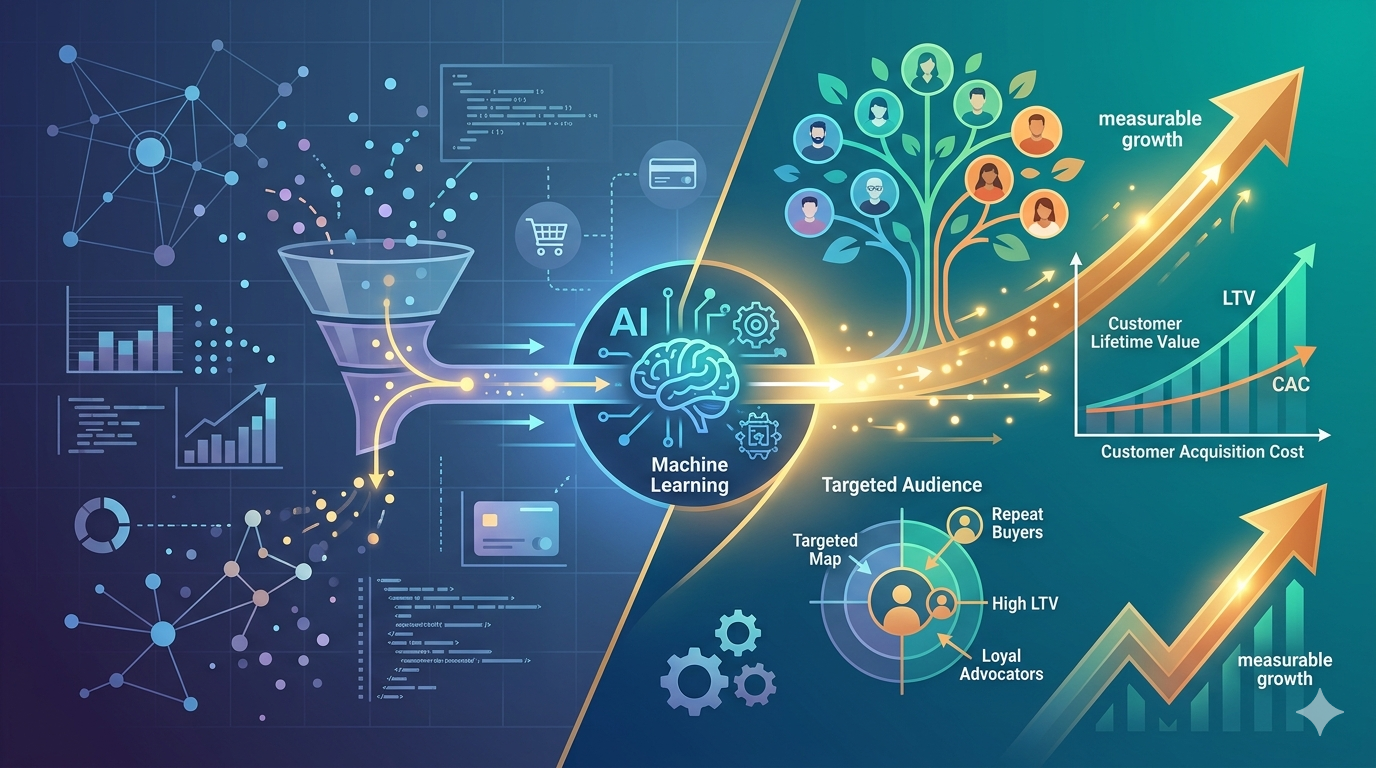
The Silent Shift in Ecommerce: Why Better Signals Beat Bigger Budgets
Over the last couple of years, the ecommerce landscape has silently shifted, and not enough people are talking about it openly.
Brands that used to grow by outspending their competitors are finding that playbook increasingly expensive and unreliable. The ones pulling ahead aren't doing it with bigger budgets, smarter creatives, or a new channel nobody else has found yet. They're doing it by being more deliberate about something most brands treat as an afterthought: the quality of what they feed into their acquisition channels.
This is a strategic conversation that starts with an honest question most ecommerce teams don't ask often enough: "What are we actually teaching our ad platforms to optimise for?"
No more differentiators: Everyone has the same tools.
A few years ago, having a sophisticated campaign setup was itself an edge. Better automation, smarter attribution, more advanced audience structures gave brands a real competitive advantage.
Now that window has closed. Tools have become democratised and playbooks are now publicly accessible. Campaign features that once required specialist knowledge can now be found in default settings. Your competitors are using the same platforms, the same structures, and likely the same optimisation strategies.
When execution becomes streamlined, the key differentiator moves upstream. It's no longer about how well you run your campaigns, but about the quality of what you put into them. What does the algorithm actually know about who your best customers are? That's the question most brands find genuinely difficult to answer.
What a “better signal” actually means in practice
Here's the hard truth about what's happening in most ecommerce ad accounts: every conversion is treated the same. A first-time buyer who came in on a discount and never returned, and a recurring customer who has bought six times, has an LTV three times the average, and refers friends. To the algorithm, both are identical. Both are a purchase event. Both shape equally what the platform thinks a valuable customer looks like.
When you optimise for conversions without telling the platform which conversions matter most, you get volume but not quality. And over time, campaigns built on weak signals trend toward low-intent buyers who convert quickly but don't stay or return, and can't justify the acquisition cost (CPA) you paid for them.
This is the roadblock more budget can't break through. It's not a channel problem, a creative problem, or a bid strategy problem. It's a signal problem, and the fix has to happen at the source.
The good news is that most brands already have everything they need to fix it. Every purchase, every return, every repeat order is data that belongs to you. Not Meta, not Google, not any platform that can change its algorithm overnight. The question is whether you're using that data as the asset it actually is, or letting it sit in dashboards while your campaigns optimise blindly.
The data you own is the signal that works
Owning first-party data and activating it are two completely different things, and the most common scenario is brands getting stuck at the first one.
The typical setup looks like this: purchase history lives in Shopify, email behaviour in Klaviyo, ad performance in Meta or Google, with none of these systems communicating with each other in any meaningful way. Teams look at each in isolation, draw conclusions that are only partial truths, and make decisions based on an incomplete picture. The data exists but has never been connected into something the algorithm can actually learn from.
When that gap is closed, the difference is significant. When brands start feeding their platforms enriched signals, the whole dynamic of acquisition shifts. The algorithm stops chasing volume and starts chasing value. It finds people who behave like your best customers. Creatives resonate more because they're reaching people who were already a closer fit. Conversion rates improve, and the customers acquired through those campaigns stay longer, spend more, and generate the LTV that makes the acquisition cost genuinely worth it.
This is exactly what Clustie is built to do. It connects directly to Shopify, runs AI-driven analysis across actual customer behaviour (purchase history, frequency, recency, product affinity, repeat patterns) and builds predictive audience segments that sync directly into paid media platforms. Not more data. Better signal. The difference sounds subtle. The impact on acquisition efficiency isn't.
Instead of reacting to declining performance, brands using Clustie start anticipating it. Acquisition stops feeling like a guessing game with an expensive price tag and starts feeling like something that can be directed with intention and real results.
A compounding advantage nobody can copy overnight
A brand that has been consistently collecting, structuring, and activating its customer data for two or three years has built something a competitor starting today simply cannot replicate quickly. The data gets richer every month, the patterns get clearer, and the acquisition signals get stronger. Campaigns that run on good signal generate better data for the next one. It's a loop that keeps working in your favour.
Think about what that means at scale. A brand with two years of clean, connected, activated customer data isn't just running better campaigns. It's running campaigns that are actively getting better, while other brands are still trying to figure out why their ROAS keeps softening despite doing everything else right.
Brands that haven't started taking their data seriously are further behind than they realise. And the gap widens every time a new privacy restriction tightens, every time a platform changes how it shares data, every time the cost of relying on third-party signals goes up again. First-party data has inestimable value.
This is why the most important conversation in ecommerce right now isn't about which platform to use or what creative format is performing this quarter. Those conversations matter, but they're downstream of a more fundamental one: what do you actually know about your customers, and are you putting that knowledge to work?
What it looks like when all it’s working
The brands getting this right don't all look the same, but they share a few things in common. They've stopped measuring acquisition purely by who converted and started measuring by who stayed, returned, and grew in value over time. That shift in how they define success changes what they optimise for and, by extension, what they ask their platforms to find. They connected their systems deliberately rather than letting data accumulate in silos, and that decision compounds quietly in the background, month after month.
Activating data through Clustie allows brands to turn real purchase behaviour into predictive segments, feeding those into paid media as enriched signals. The result is an acquisition process that feels less reactive and less dependent on what a platform decides to do with a broad brief, and more like a genuine conversation between what the brand knows about its customers and what the algorithm does with that knowledge.
That's the shift that actually changes the trajectory of your results and, ultimately, your brand's growth. Not a new channel, not a bigger budget, not a better creative framework. A clearer, more honest picture of who your customer is, and the infrastructure to put that picture to work everywhere it matters.
This is the thinking behind an upcoming conversation on Ecommerce Coffee Break, where Tiago Costa (Clustie's CEO) sits down with a brand founder who has been through this transition, from broad to data-led, AI-driven growth. Tune in [PODCAST LINK] to hear how it happened in practice.
If you’re ready to stop guessing and start growing with better signal, visit clustie.ai to see how Clustie helps eCommerce brands turn their customer data into their strongest acquisition advantage.
Guest post by Tiago Costa, CEO and co-founder of FULLVENUE and Clustie. Tiago works with e-commerce and DTC brands across Europe, Middle East, USA and Australia to turn first-party data into measurable growth through AI-driven acquisition and segmentation.