

AI Product Photography for Ecommerce: Generate Custom Images
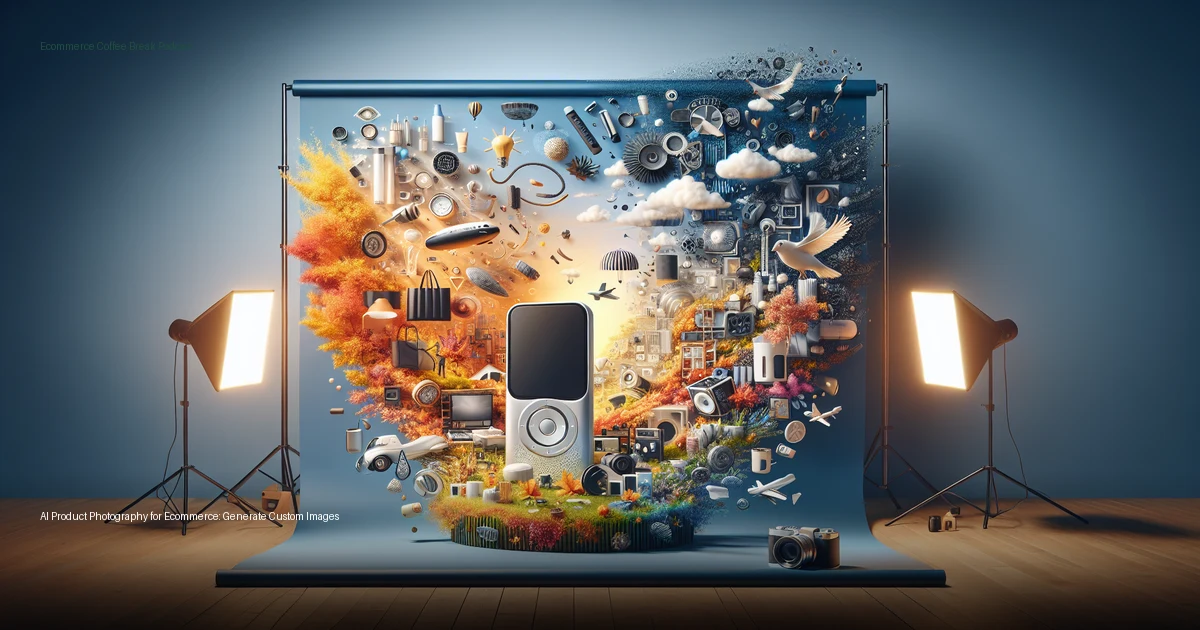
AI product photography for ecommerce allows merchants to automatically generate custom backgrounds, seasonal campaigns, and personalized product visuals without traditional photo shoots or graphic designers. This technology maintains your original product while creating unlimited variations for different audiences, holidays, and marketing campaigns.
Why Visual Generative AI Is Essential for Modern Ecommerce
The ecommerce landscape has shifted dramatically since generative AI entered mainstream adoption. What once required substantial marketing budgets and professional design teams can now be accomplished by individual merchants through AI-powered tools.
Dr. Yair Adato, co-founder and CEO of Bria.ai, explains the fundamental change: “Until today it was only for big brands with a lot of budget and marketing teams and production. Now they can do that by simplifying an app in Shopify. Simple as that.”
The timing couldn’t be more critical. Studies indicate that product listings with six to seven images hit the optimal engagement sweet spot, dramatically improving conversion rates. However, creating this volume of high-quality visuals traditionally required significant time and financial investment that many merchants couldn’t justify.
AI product photography for ecommerce solves this challenge by enabling rapid creation of multiple product variations. Merchants can test different backgrounds, seasonal themes, and environmental contexts to determine what resonates best with their audience – all without additional photography costs.
Implementing Automated Background Generation for Product Catalogs
The most immediate application of visual generative AI lies in background replacement and generation. This process differs significantly from simple template-based solutions because AI creates authentic lighting, shadows, and reflections that make products appear naturally placed in new environments.
Here’s how the process typically works:
- Product Isolation: Upload your existing product images to an AI tool that automatically removes backgrounds while preserving fine details like product edges and textures.
- Prompt Creation: Describe the desired environment using natural language. Instead of complex technical specifications, simple prompts like “Christmas living room setting” or “outdoor forest environment” generate appropriate backgrounds.
- Quality Refinement: Generate multiple variations and select the most compelling options. AI systems typically produce several alternatives per prompt, allowing you to choose the best fit for your brand aesthetic.
- Batch Processing: Apply successful prompts across multiple products to maintain consistency throughout your catalog.
The key advantage is speed and consistency. What previously required individual photo shoots for each seasonal campaign can now be accomplished in minutes. A summer collection can be instantly adapted for fall themes, or region-specific backgrounds can be generated for international markets.
“If you know that there is Easter coming up, you can easily change the entire store for Easter for two, three days. Without budget, without the designer, without no one,” notes Dr. Adato, highlighting the unprecedented flexibility this technology provides for campaign management.
Creating Personalized Marketing Materials at Scale
Beyond basic background replacement, AI product photography for ecommerce enables creation of complete marketing collateral including social media posts, email campaign visuals, and advertising materials. This expanded capability transforms how merchants approach content creation across multiple channels.
The process involves taking your core product images and generating:
- Social Media Variations: Different aspect ratios optimized for Instagram stories, Facebook posts, Pinterest pins, and other platform requirements
- Seasonal Campaigns: Holiday-themed visuals, seasonal color schemes, and event-specific imagery without additional photography
- Audience Segmentation: Lifestyle imagery targeting different demographic groups, geographic regions, or use cases
- A/B Testing Assets: Multiple creative variations to test which visual approaches drive better engagement and conversion
This capability becomes particularly powerful for merchants selling across diverse markets or demographic segments. Rather than creating one-size-fits-all visuals, AI enables true personalization where customers in different regions might see products in familiar, culturally relevant contexts.
The technology also supports rapid iteration. If a particular campaign isn’t performing, new creative variations can be generated and deployed within hours rather than waiting for new photography or design work.
Ensuring Legal Compliance and Ethical AI Usage
One critical consideration when implementing AI product photography for ecommerce involves copyright, trademark, and ethical usage concerns. The rapid advancement of generative AI has outpaced legal frameworks, making it essential to choose platforms that prioritize responsible development.
Key factors to evaluate include:
- Training Data Sources: Verify that the AI platform uses properly licensed images for training rather than scraped web content that may violate copyright
- Attribution Systems: Choose platforms that fairly compensate original creators and maintain transparent attribution practices
- Output Ownership: Understand your rights to the generated images and whether they can be used commercially without additional licensing
- Safety Measures: Ensure the platform includes bias detection and safety filters to prevent inappropriate or harmful content generation
Dr. Adato emphasizes this responsibility: “People will start to ask themselves when we see more and more generative AI: is the system safe? Is this system respecting copyright? Is the system respecting artists and creators? I think that it’ll be more and more important in the next few months.”
When selecting AI tools, prioritize platforms that partner with legitimate stock photo companies, implement fair compensation models for creators, and provide clear usage rights for generated content. This approach protects your business legally while supporting ethical AI development.
Integration Strategies for Shopify and Ecommerce Platforms
The practical implementation of AI product photography for ecommerce typically begins with platform-specific applications or web-based tools that integrate with existing workflows. Most solutions offer both standalone functionality and ecommerce platform integration.
For Shopify merchants, the integration process usually involves:
- App Installation: Install the AI photography app from the Shopify App Store and connect it to your product catalog
- Product Selection: Choose products for enhancement directly from your existing inventory without requiring new uploads
- Automated Processing: Background removal often happens automatically and free of charge, while background generation typically requires credits or subscription access
- Direct Publishing: Generated images can be added directly to product listings or saved for use in marketing materials
Pricing models vary, but many platforms offer unlimited usage tiers rather than per-image charges, making it easier to predict costs and encouraging experimentation. Basic plans often start at just a few dollars monthly, making the technology accessible even for smaller merchants.
For merchants using other ecommerce platforms, web-based tools provide similar functionality with manual upload processes. The key is maintaining organized workflows to ensure generated images align with your brand standards and product accuracy requirements.
Key Takeaways
- AI product photography for ecommerce enables merchants to generate unlimited product variations, seasonal campaigns, and personalized visuals without traditional photography costs or timeline constraints.
- The optimal product listing contains six to seven images, a target that becomes achievable through AI generation of backgrounds, lifestyle contexts, and marketing materials.
- Successful implementation requires choosing AI platforms that use properly licensed training data and provide clear usage rights to ensure legal compliance and ethical operation.
- Integration with Shopify and other ecommerce platforms streamlines the process from product selection to automated background generation and direct publishing to product catalogs.
- Flat-rate unlimited pricing models make AI photography tools accessible for merchants of all sizes while enabling extensive experimentation with different visual approaches.
- The technology particularly benefits seasonal campaigns, international market customization, and rapid A/B testing of visual content across multiple marketing channels.