Partner With Us. Reach 70K Ecom Operators. Learn more Ecommerce Coffee Break Podcast and Newsletter

Ecommerce Coffee Break Ecommerce Coffee Break
  • HOME
  • PODCAST
    • Browse All Episodes
    • Playlists By Topic
    • Be a Podcast Guest
    • Suggest a Guest
  • NEWSLETTER
    • Subscribe
    • Past Issues
    • Advertise
  • PARTNERS
  • PARTNER WITH US
    • Be a Podcast Guest
    • Advertise/Sponsor
  • REVIEWS
    • Reviews
    • Rate on Apple Podcasts
    • Rate on Spotify
  • SUBSCRIBE
    • Email Newsletter
    • Apple Podcasts
    • Spotify
    • YouTube
    • iHeart
    • Amazon Music
    • Overcast
    • Castbox
    • Podurama
    • RSS Feed
  • ABOUT US
  • HOME
  • PODCAST
    • Browse All Episodes
    • Playlists By Topic
    • Be a Podcast Guest
    • Suggest a Guest
  • NEWSLETTER
    • Subscribe
    • Past Issues
    • Advertise
  • PARTNERS
  • PARTNER WITH US
    • Be a Podcast Guest
    • Advertise/Sponsor
  • REVIEWS
    • Reviews
    • Rate on Apple Podcasts
    • Rate on Spotify
  • SUBSCRIBE
    • Email Newsletter
    • Apple Podcasts
    • Spotify
    • YouTube
    • iHeart
    • Amazon Music
    • Overcast
    • Castbox
    • Podurama
    • RSS Feed
  • ABOUT US
  • Home
  • Content Hub
  • European Market Entry Strategy for US Ecommerce Brands

Content Hub

25 Apr

European Market Entry Strategy for US Ecommerce Brands
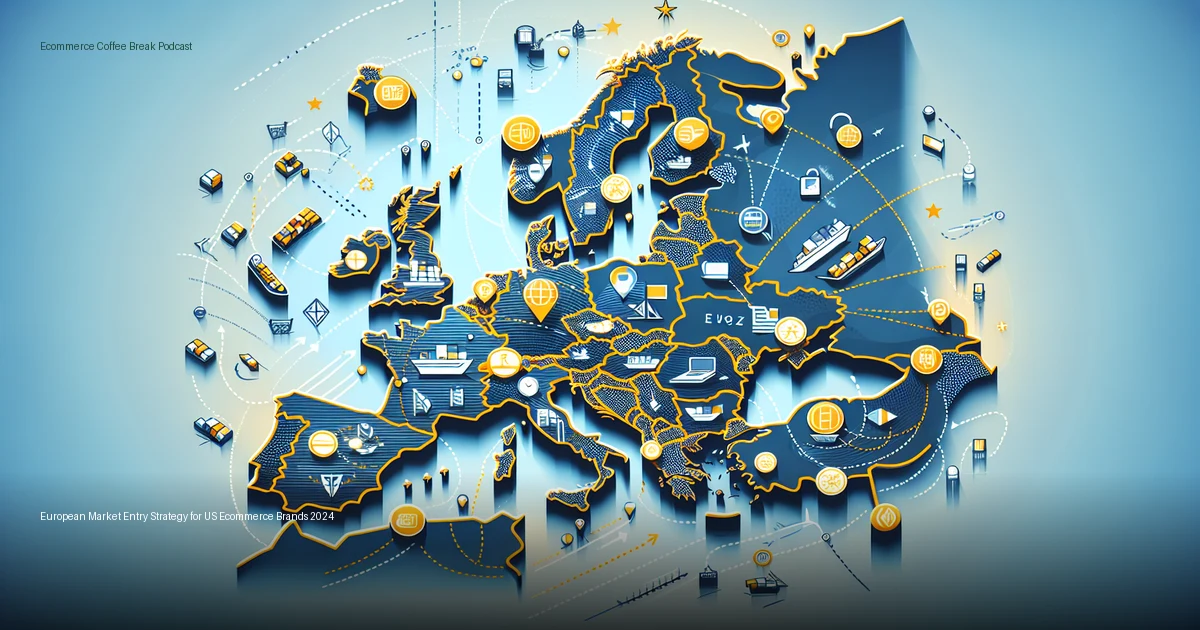
A successful european market entry strategy for US ecommerce brands requires three critical components: obtaining proper legal documentation (EORI and VAT numbers), establishing local fulfillment infrastructure, and implementing multilingual customer service across target markets. Starting with Netherlands-based fulfillment provides the most cost-effective entry point due to favorable VAT deferment policies and strategic shipping access to major European markets.

Legal and Regulatory Foundation for European Expansion

Before any US ecommerce brand can begin selling in Europe, establishing the proper legal framework is non-negotiable. The european market entry strategy begins with securing two essential requirements: an EORI (Economic Operators Registration and Identification) number and VAT registration. These documents typically take around one month to obtain, though expedited processing is available.

Product compliance represents another critical hurdle that many US brands underestimate. Regulatory differences between the US and Europe can be dramatic—some products require complete reformulation to meet European standards. As Björn van Brakel from SalesSupply explains, they’ve worked with clients selling superglue products that were “very successful and easy for us to ship here in the US. But the rules and the regulations in Europe were completely different. So they had to change almost all the ingredients of their product in order to be able to sell this in Europe.”

Electronics face particular scrutiny, with different battery regulations, while transportation products like electric scooters may be prohibited entirely in certain European markets. Conducting thorough regulatory research before product launch prevents costly delays and reformulation requirements later.

Strategic Location Selection and Fulfillment Infrastructure

The Netherlands emerges as the optimal starting point for most US brands entering European markets. This european market entry strategy leverages several key advantages: VAT deferment benefits that improve cash flow, proximity to major shipping infrastructure including the Port of Rotterdam and Amsterdam Schiphol Airport, and strategic location near the German border enabling efficient distribution across Europe.

Local fulfillment infrastructure delivers immediate competitive advantages. Shipping costs demonstrate the dramatic difference: a 40-50 pound package from the US to Germany can cost over €100, while the same shipment from Netherlands to Germany costs approximately €10. This 90% cost reduction significantly impacts conversion rates and customer satisfaction.

Transit times from Netherlands-based fulfillment typically reach German customers within 1-2 days, matching local competitor delivery expectations. As order volumes grow, brands can expand to additional fulfillment centers in Italy, Spain, France, and Germany while maintaining the Netherlands hub for consolidated returns processing.

Multilingual Customer Service and Cultural Localization

European customer service expectations vary dramatically by country, making language and cultural adaptation essential components of any european market entry strategy. Italian customers frequently prefer cash-on-delivery payment options, while Dutch customers expect iDEAL payment integration. German customers often require local phone support, while Scandinavian markets may prefer digital-first communication channels.

Shared customer service models offer cost-effective solutions for testing multiple markets simultaneously. Rather than hiring dedicated agents for each country, US brands can utilize shared multilingual support covering 6-7 European countries. This approach includes native-speaking agents located in each target country, providing authentic local expertise and cultural understanding.

Training processes typically require multiple sessions covering product knowledge, company policies, and market-specific requirements. The key advantage of working with established European partners is access to agents already familiar with local market expectations and regulatory requirements.

Marketplace Diversification Beyond Amazon

While Amazon operates across European markets, a comprehensive european market entry strategy must include local marketplace leaders. Each European country maintains strong local platforms that often outperform international competitors. In the Netherlands, bol.com dominates market share, while other countries feature their own “local heroes” that US brands should consider.

Multi-marketplace strategies require robust fulfillment partnerships capable of supporting various platform requirements simultaneously. Integration capabilities become crucial when managing inventory across multiple channels while maintaining accurate stock levels and order processing.

Beauty, fashion, and electronics represent the strongest performing categories across European markets currently. These industries benefit from established consumer demand and relatively straightforward shipping requirements compared to regulated products like supplements or complex electronics.

“Europe has so much potential. It’s also good for you in terms of the risk spreading to start the market in Europe, because it’s a very mature market in general. So I will say definitely look into it,” emphasizes Björn van Brakel, highlighting the strategic value of European expansion for US ecommerce brands seeking market diversification.

Key Takeaways

  • Netherlands provides the optimal entry point for US ecommerce brands due to VAT deferment benefits and strategic shipping access to major European markets.
  • EORI and VAT registration typically require one month to complete and represent mandatory requirements before beginning European sales operations.
  • Local fulfillment reduces shipping costs by up to 90% compared to US-based shipping, significantly improving conversion rates and customer satisfaction.
  • Shared multilingual customer service models enable cost-effective testing across 6-7 European markets simultaneously without dedicated staffing commitments.
  • Product regulatory compliance varies dramatically between US and European markets, sometimes requiring complete reformulation before market entry.
  • Local marketplace leaders often outperform Amazon in individual European countries, making multi-platform strategies essential for maximum market penetration.
How long does it take to start selling in Europe from the US?
The typical european market entry timeline requires approximately one month for legal documentation (EORI and VAT numbers), plus 2-3 weeks for fulfillment and customer service setup. The primary timeline constraint is usually shipping initial inventory from manufacturers to European fulfillment centers.
 
What are the biggest challenges US brands face expanding to Europe?
The primary challenges include navigating different languages and cultural buying behaviors, meeting varying regulatory requirements by country, and managing complex payment preferences like cash-on-delivery in Italy or iDEAL in Netherlands. Product compliance differences can also require significant reformulation in some cases.
 
Why is Netherlands recommended as the best starting location for European expansion?
Netherlands offers VAT deferment benefits that improve cash flow, houses major shipping infrastructure including Port of Rotterdam and Schiphol Airport, and provides strategic proximity to Germany enabling 1-2 day delivery across Europe’s largest market. This combination creates the most cost-effective foundation for broader European expansion.
 
This article is based on insights shared by Björn van Brakel on the Ecommerce Coffee Break Podcast. Listen to the full conversation: How to Successfully Expand your E-commerce Brand Across Europe
Tags:cross border ecommerceecommerce localizationeuropean market entryinternational fulfillmentVAT compliance
  • Share:
Ecommerce Coffee Break Podcast

Search Site

LISTEN ON

Apple Podcast itunes Spotify

YouTube Logo Overcast Logo

Castbox Logo Podurama Logo

iHeart Radio Subscribe by Email

Latest Episode

How to Build Customer Loyalty Through Product Innovation — Nathan Yun | How Product Innovation Drives Loyalty, What Paire Learned From Buyer Feedback, Why Brands Focus on Customer Retention, How Fabric Tech Solves Apparel Issues (#506)
12Oct,2026

SUPPORT OUR PARTNERS

XERO
Bizrate Insights
Free Ecommerce Guides

Rankings & Awards

FeedSpot Logo
Global-Podcast-Rank

Who should we interview next? Who would make a great guest? Let us know.

Suggest a Guest

The Ecommerce Coffee Break — The B2B Media Platform Built to Connect the Ecommerce Industry. Discover the sales and marketing strategies top ecommerce brands actually use to grow revenue faster.

Get the Free Newsletter for Ecommerce Operators
  • Home
  • About
  • Episodes
  • Partner with Us
  • Newsletter
  • Rankings & Awards
  • Media Kit
  • Community
  • Guest Application
  • Content Hub
  • Contact
  • Free Resources

LISTEN ON

  • Apple Podcasts
  • Spotify
  • Amazon Music
  • YouTube Music
  • Castbox
  • RSS Feed
  • iHeart Radio

Follow on Social

LinkedIn Claus Lauter Facebook Claus Lauter Twitter Claus Lauter Instagram Claus Lauter YouTube Claus Lauter

☕ 100% powered by caffeine and curiosity. Disclaimer: The Ecommerce Coffee Break is independent media not affiliated with or endorsed by Amazon™, Shopify™, or any third party.

© 2019–2026 idube Pte Ltd. All Rights Reserved.

  • Home
  • Privacy
  • Terms
  • Disclaimer
  • Cookie Policy
  • Imprint
  • Sitemap
Manage Consent
To provide the best experiences, we use technologies like cookies to store and/or access device information. Consenting to these technologies will allow us to process data such as browsing behavior or unique IDs on this site. Not consenting or withdrawing consent, may adversely affect certain features and functions.
Functional Always active
The technical storage or access is strictly necessary for the legitimate purpose of enabling the use of a specific service explicitly requested by the subscriber or user, or for the sole purpose of carrying out the transmission of a communication over an electronic communications network.
Preferences
The technical storage or access is necessary for the legitimate purpose of storing preferences that are not requested by the subscriber or user.
Statistics
The technical storage or access that is used exclusively for statistical purposes. The technical storage or access that is used exclusively for anonymous statistical purposes. Without a subpoena, voluntary compliance on the part of your Internet Service Provider, or additional records from a third party, information stored or retrieved for this purpose alone cannot usually be used to identify you.
Marketing
The technical storage or access is required to create user profiles to send advertising, or to track the user on a website or across several websites for similar marketing purposes.
  • Manage options
  • Manage services
  • Manage {vendor_count} vendors
  • Read more about these purposes
View preferences
  • {title}
  • {title}
  • {title}
Manage Consent
To provide the best experiences, we use technologies like cookies to store and/or access device information. Consenting to these technologies will allow us to process data such as browsing behavior or unique IDs on this site. Not consenting or withdrawing consent, may adversely affect certain features and functions.
Functional Always active
The technical storage or access is strictly necessary for the legitimate purpose of enabling the use of a specific service explicitly requested by the subscriber or user, or for the sole purpose of carrying out the transmission of a communication over an electronic communications network.
Preferences
The technical storage or access is necessary for the legitimate purpose of storing preferences that are not requested by the subscriber or user.
Statistics
The technical storage or access that is used exclusively for statistical purposes. The technical storage or access that is used exclusively for anonymous statistical purposes. Without a subpoena, voluntary compliance on the part of your Internet Service Provider, or additional records from a third party, information stored or retrieved for this purpose alone cannot usually be used to identify you.
Marketing
The technical storage or access is required to create user profiles to send advertising, or to track the user on a website or across several websites for similar marketing purposes.
  • Manage options
  • Manage services
  • Manage {vendor_count} vendors
  • Read more about these purposes
View preferences
  • {title}
  • {title}
  • {title}

Become a smarter online seller in 3 minutes

Free weekly newsletter read by 15,000+ Shopify merchants, Amazon sellers, and DTC brands.

Join 100% free • Twice a week • Unsubscribe anytime