

Customer Experience Personalization Strategies for Ecommerce Brands
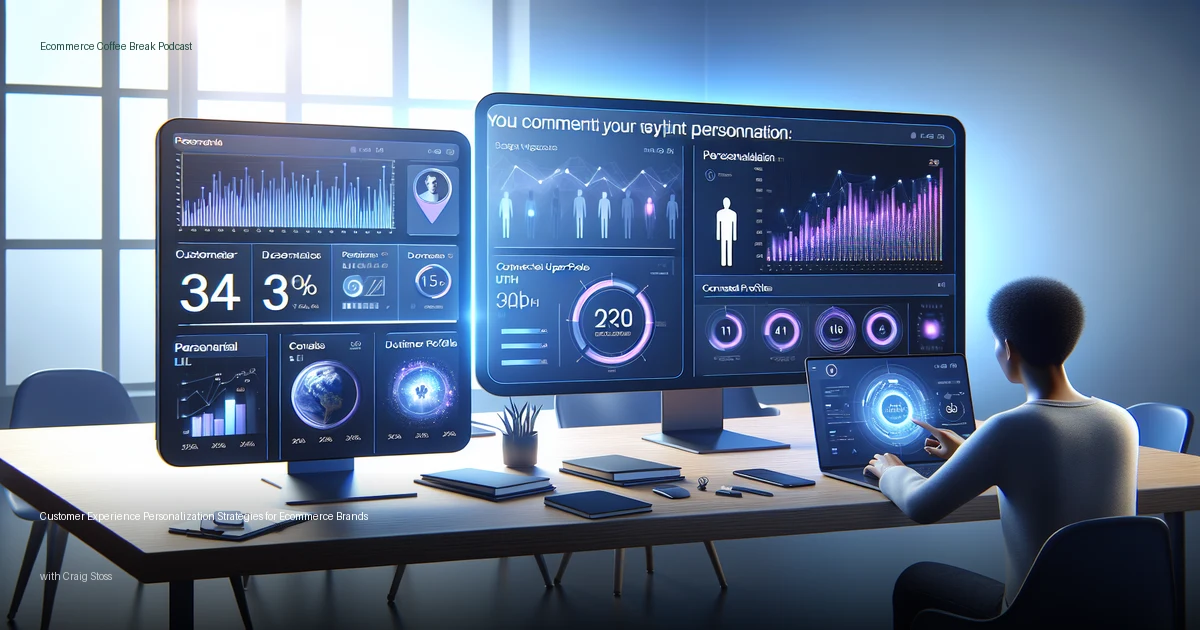
Customer experience personalization transforms casual browsers into loyal customers by leveraging data to create tailored interactions at every touchpoint. Successful ecommerce brands use customer history, preferences, and behavior patterns to deliver relevant experiences that feel human rather than transactional. The most effective approach combines emotional appeal with clear problem-solving messaging while maintaining personalization throughout the entire customer journey.
Balance Emotional Appeal with Clear Product Communication
Many ecommerce brands fall into the trap of over-indexing on emotional marketing while forgetting to clearly communicate what their product actually does. Craig Stoss, Director of CX Transformation Delivery at PartnerHero, explains that effective customer experience personalization starts with this fundamental balance: “Sometimes brands focus on trying to get you to feel something before they tell you what you’re actually trying to sell them. You have to balance those two things.”
When implementing customer experience personalization, consider these essential elements:
- Lead with problem-solving clarity: Visitors need to immediately understand what problem your product solves and why your brand is uniquely positioned to help them
- Layer in emotional connection: Once the value proposition is clear, use personalized messaging based on customer data to create emotional resonance
- Recognize customer context: Use browsing history, previous purchases, and demographic information to tailor both the problem statement and emotional appeal
- Test messaging combinations: A/B test different ratios of functional versus emotional messaging for different customer segments
For example, a returning customer who previously purchased skincare products might see personalized messaging like: “Welcome back! Ready to expand your anti-aging routine?” followed by clear product benefits, rather than generic brand messaging about feeling confident.
Leverage Customer Data for Meaningful Personalization
The most powerful customer experience personalization happens when brands use readily available data to create genuinely helpful interactions. Stoss shares a compelling restaurant analogy: “The host said to me, ‘Mr. Stoss, thank you for returning to our restaurant. We noticed that you purchase this type of wine. It’s no longer in our cellar. Here’s 3 similar wines that we’ve selected for you.'”
Ecommerce businesses have even richer data opportunities than brick-and-mortar establishments. Here’s how to implement data-driven personalization:
Purchase History Personalization:
- Welcome returning customers by name and reference their previous purchases
- Suggest complementary products based on purchase patterns
- Provide proactive updates on products they’ve bought (“How’s that shirt holding up?”)
- Offer early access to similar products or restocks
Behavioral Personalization:
- Customize homepage content based on browsing categories
- Adjust product recommendations using view history and time spent on pages
- Personalize email frequency and timing based on engagement patterns
- Create targeted content paths for different customer journey stages
Demographic and Location-Based Personalization:
- Show relevant inventory based on local weather or events
- Adjust messaging tone and style for different age groups or interests
- Display locally relevant shipping options and delivery timeframes
- Customize promotional offers based on regional preferences
“You have the data or you can have the data to do those types of things. That is a very important part of personalizing your customer’s experience. And again, showing that you value them as a person, not just someone who spends money.” – Craig Stoss
Implement Smart Automation Without Losing Human Touch
Modern customer experience personalization relies heavily on automation, but the key is making automated interactions feel genuinely helpful rather than robotic. Recent advances in AI technology have transformed what’s possible in automated customer experience.
Stoss notes the evolution: “The newer technologies remove almost all of that robotic decision tree experience. We’ve moved away from keyword matching because now these bots recognize human language much more clearly. They understand synonyms. They understand that you might say ‘my order was broken’ and someone else might say ‘the box was destroyed’ and those are the same thing.”
Effective Automation Strategies:
- Conversational AI: Implement chatbots that understand natural language and can access customer history to provide personalized responses
- Predictive Support: Use purchase data to proactively reach out about potential issues (shipping delays for previous customers, size exchanges for apparel buyers)
- Smart Routing: Automatically direct customers to appropriate support channels based on their issue type and customer value
- Personalized Self-Service: Create dynamic help centers that show relevant articles based on customer purchase history and common issues
The goal is helping customers solve problems in their own language while maintaining brand voice and personality. This approach particularly shines during high-volume periods when human agents are overwhelmed.
Scale Personalization for Peak Shopping Periods
Customer experience personalization becomes most critical during busy seasons when competition for attention intensifies and support volumes spike. The challenge is maintaining personal touch while handling significantly increased traffic.
Preparation Strategies:
- Predictive Staffing: Use historical data to forecast support volume and staff accordingly, whether with human agents or enhanced automation
- Proactive Communication: Send personalized updates about shipping delays or inventory issues before customers need to ask
- Segmented Support Channels: Route VIP customers or complex issues to human agents while handling routine inquiries through AI
- Dynamic Content: Automatically update website messaging and product recommendations based on inventory levels and customer segments
Consider implementing a hybrid approach where high-value customers receive white-glove human support while first-time visitors get efficient AI assistance that can escalate seamlessly when needed.
Key Takeaways
- Customer experience personalization requires balancing emotional appeal with clear communication about what products actually do and what problems they solve.
- Ecommerce businesses have rich data opportunities including purchase history, browsing behavior, and demographics that can create meaningful personalized experiences.
- Modern AI automation can provide personalized support without feeling robotic by understanding natural language and accessing customer context.
- Successful personalization shows customers they’re valued as individuals, not just revenue sources, which directly impacts retention and loyalty.
- Peak season preparation should include both human staffing strategies and enhanced automation to maintain personalization at scale.
- The most effective approach combines technology capabilities with genuine customer problem-solving to create memorable brand interactions.