

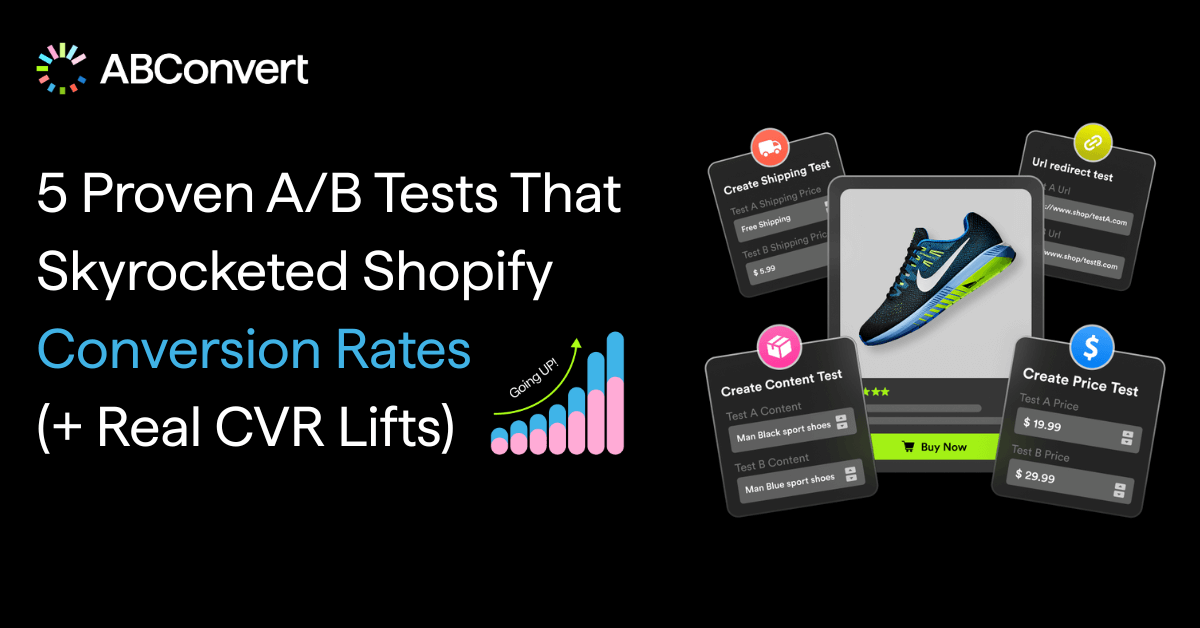
5 Proven A/B Tests That Skyrocketed Shopify Conversion Rates (+ Real CVR Lifts)
Why A/B Testing Is the Smartest Way to Boost Conversion Rate on Shopify
Before you dive into complex funnels or expensive conversion rate optimization (CRO) tools, start with what’s proven: A/B testing. Shopify also emphasizes CRO A/B testing as a core growth lever.It’s the fastest, most scalable way to figure out what actually improves conversion, without the guesswork. A/B testing lets you validate ideas with real shoppers in real time. For instance: adjusting product page copy, testing prices, or optimizing layouts. For Shopify brands and agencies alike, it's the single most effective way to turn insights into action, and action into profit. The best part? You can start simple and scale fast.
How Long-Form Product Descriptions Improve Shopify Conversion Rates
Let’s start with content. In one experiment, a brand selling premium home goods compared two versions of their product page: one minimalist with bullet points and a clear CTA, and another with a much richer experience. The long-form version featured detailed descriptions, high-quality product imagery, use cases, customer testimonials, and even a video explaining how to use the product.
The Result: 1.68-Point CVR Lift from Rich Content
Conversion jumped from 0.03% to 1.71%. That’s a 1.68-point lift. Achieving growth didn’t need a new product launch, ad spend, or major redesign. It came down to simply giving customers more context and reassurance at the moment of decision.
Why Long-Form Content Works for High-Consideration Products
High-consideration purchases often need more information. When shoppers don’t feel fully confident, they hesitate or bounce. You can help customers take that next step by building trust. Do this by providing helpful content, customer stories, and visuals that reduce uncertainty. If you're seeing low engagement or high bounce rates on your product pages, try enriching the experience rather than simplifying it.
Practical Tips to Test Long-Form Product Pages Today
Start small. Add a testimonials section, a short founder note, or a comparison chart to your best-selling product. If you already have video assets or FAQs, integrate them above the fold. Use tools like heatmaps or scroll tracking to see if customers actually engage with the extra content. Check out the 11 best free heatmap tools compiled by VWO to jumpstart your tests.
Price Anchoring A/B Test: Adding a Mid-Tier Option to Drive More Sales
Pricing isn’t just about numbers, it’s about perception. A Shopify store adjusted its pricing layout by adding a third, middle-tier option between their budget and premium offerings. Before the test, customers were choosing between two extremes. One is a low-cost basic version and the other is a high-end premium.
The Result: A 5x Increase in CVR with Tiered Pricing
The introduction of the mid-tier option had a huge impact. Conversions increased from 0.02% to 1.00%. Customers began gravitating toward the new option, which seemed like the "smart compromise" that was not too cheap and not too expensive.
Why Pricing Psychology Like the Goldilocks Effect Works for CRO
This is the "Goldilocks effect" and is a classic example of price anchoring at work. When you provide context with multiple price points, you subtly shape how customers value each option. Without a reference point, they may hesitate. But with a range, they can make comparisons. Customers often end up spending more than they originally planned, simply because the middle choice feels reasonable. If you only offer one or two pricing options, this is a low-effort, high-impact test worth running.
Practical Tips to Run a Pricing Tier Test Today
If you're only offering two pricing options, try adding a third. Use this to direct users toward your highest-margin product by framing it as the best value. Label it as “Most Popular” or “Best Deal” and track shifts in selection. Make sure each tier is clearly differentiated by value or features.
Testing Delivery Messaging to Reduce Friction at Checkout
Shipping and delivery information can make or break a sale. This Shopify test introduced a simple change: adding a delivery estimate directly on the product page with the line, “Get it by [date].”
The Result: 36% CVR Increase with Clear Shipping Information
That small copy change resulted in a 36% increase in conversion rate. It built trust and reduced hesitation without changing anything else about the offer.
Why Clear Delivery Copy Boosts Confidence at Checkout
Uncertainty kills conversions. Shoppers want to know not just what they’re buying, but when they’ll get it. Especially during holidays or peak seasons, shipping speed becomes a key deciding factor. By giving visitors a clear timeline, this brand reduced anxiety and increased confidence at checkout.
Practical Tips for Testing Shipping Messages on Shopify
You don’t need a complex logistics system to test this. Even something as simple as adding a static estimated delivery window (“Arrives in 3–5 days”) can help. If you use Shopify apps for shipping estimates, you can personalize this further. Run an A/B test with and without the delivery messaging to measure the difference.
Bonus: test variants like “Order in the next 3 hours to ship today.”
Clearance Pricing A/B Test: Using Urgency to Boost Conversions
Few forces in ecommerce are as powerful as urgency, and this test proved it. A Shopify brand tested marked-down pricing for end-of-season inventory. They added badges like “Last Chance” and used visibly strike-throughs on the original prices.
The Result: 5x CVR Boost for End-of-Season Products
This test resulted in a lift from 0.01% to 0.50% in conversion rate, which is a 5x increase. It was driven by a combination of discount psychology and urgency messaging.
How Scarcity and Timing Trigger Faster Purchases
What happened here was a perfect blend of scarcity and savings. Besides offering a discount, the presentation told a story: this product is going away, and you won’t get another shot at it. That message resonated with customers who might have otherwise waited or passed.
Practical Tips for Testing with Urgency
Urgency works best for products that are limited, seasonal, or trending. You can create this feeling with countdown timers or low-stock alerts. Even a simple message like “Only 5 left in stock” can help. Use Shopify apps or metafields to show these updates automatically. Be honest and specific. Fake urgency breaks trust. Real urgency that is based on true stock or timing gives people a reason to buy now, without feeling pressured.
Micro Price Drop A/B Test on High-AOV Products
Not all pricing wins come from deep discounts. One Shopify test focused on high-AOV products ($100+) and made a micro-adjustment. They dropped the price by just $5–$10 to push it under a psychological threshold.
The Result: 25% CVR Increase from Psychological Pricing
The result was a 25% lift in conversion rate. By going from $104 to $99.99, the product felt more accessible. Ultimately, more shoppers completed their purchase.
Why Small Price Tweaks Convert More High-Intent Buyers
Humans don’t evaluate prices rationally. They anchor on round numbers and feel more comfortable when something "looks like a deal." That one-cent difference between $100 and $99.99 feels emotionally significant. This slight comfort can be the difference between abandonment and checkout for high-consideration items.
Practical Tips for Running a Price Threshold Test Today
Pick your top-viewed product over $100 and create a variant that brings it under a threshold like $99.99. Use Shopify apps for A/B testing to compare performance. Focus on mobile where pricing sensitivity is often higher. This kind of A/B test is especially useful for SKUs that have high traffic but underperforming conversion rates. You don’t need to slash margins, only test where that sweet spot lies. A minor drop might give you enough volume boost to more than make up for the small reduction in price.
Why Fast, Structured A/B Testing is the CRO Advantage You’re Missing
What ties these wins together? They all result from fast, structured tests with clear tracking. Each test delivers actionable insights that feed directly back into the business. That’s the kind of feedback loop you want to build.
That’s the real power of A/B testing. You move from opinions to evidence. You trade assumptions for clarity. And you create a repeatable system for growth that compounds over time. The truth is, most brands don’t need more tools, they need more decisions. A/B testing gives you the data to make those decisions with confidence.
If you're an agency or a DTC brand ready to take testing seriously, there’s never been a better time. These success stories weren’t complicated experiments. They were lean, fast, and focused on real customer behavior.
Want to test your first idea in minutes? Book a live demo of ABConvert and see how leading stores run 5–10x more experiments, faster.
This is a guest post by Jeffrey, founder & CEO of ABConvert.
If you’re still guessing your way through conversion decisions, it’s time to rethink your strategy. With customer acquisition costs climbing and tariff pressure squeezing margins, more traffic alone won’t drive growth. You need to get more from what you already have. That’s where smart, data-backed Shopify A/B testing for conversion rate optimization becomes your most powerful growth lever. At ABConvert, we’ve analyzed tens of thousands of Shopify A/B tests run across price, content, templates, and shipping strategies. While not every test wins, certain patterns keep showing up in tests that consistently lift conversion rates (CVR). Let’s break down five of the most effective tests we’ve seen, with real conversion impact and practical ideas you can put to work today. Watch our featured interview with Jeffrey here.