

Smarter ecommerce pop-ups strategy for higher revenue
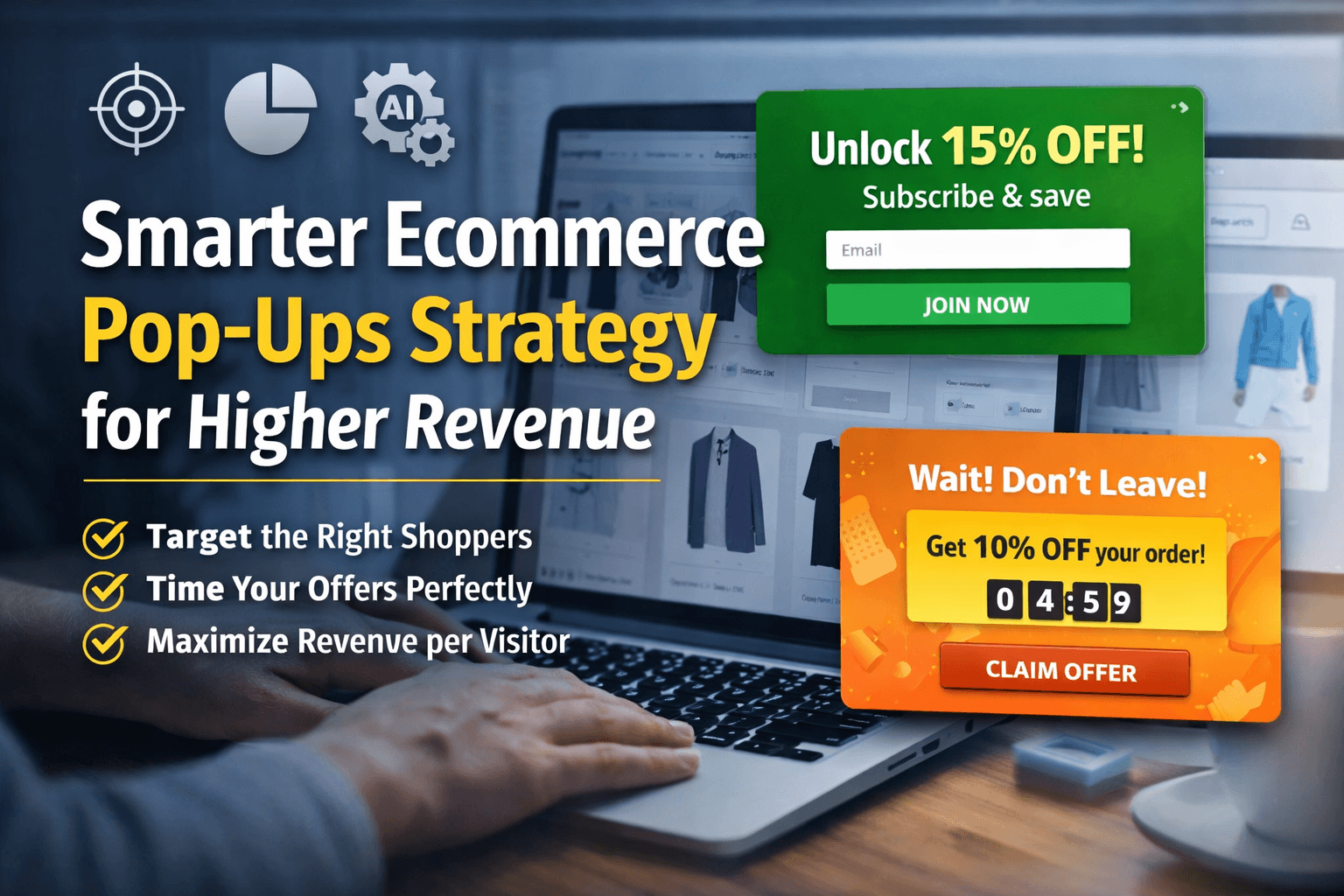
A smart ecommerce pop-ups strategy focuses on timing, targeting, and personalization instead of showing the same discount to every visitor. When done right, pop-ups guide customers through the shopping journey, increase revenue per visitor, and build long-term relationships instead of short-term conversions.
1. Stop Showing the Same Pop-Up to Everyone
Most ecommerce brands make the same mistake: one pop-up, one offer, shown to everyone. Usually, it’s a simple “10% off for your email.” According to Taras Talimonchuk, CMO of Claspo, the problem isn’t the discount itself—it’s the lack of targeting. “There is no problem with a 10% discount. The problem is showing it to all visitors,” he explains. This approach trains customers to wait for discounts and reduces your margins. Instead, segment your audience from the start:
- New visitors: Offer a first-time incentive or brand intro
- Returning visitors: Focus on trust, reviews, or urgency
- Existing customers: Highlight loyalty perks or upsells
Even this basic segmentation can dramatically improve results. The goal is simple: match the message to the visitor’s intent.
2. Align Pop-Ups with Traffic Source and Intent
A high-performing ecommerce pop-ups strategy starts before the visitor even lands on your site. Every visitor comes with a different expectation:
- Someone from a TikTok ad expects something different than a Google search user
- An influencer referral has different intent than a cold ad click
Taras highlights that brands should align pop-ups with the original message:
- Match the offer shown in ads
- Continue the same messaging on-site
- Avoid disconnects between promise and experience
This is where tools like Claspo use UTM parameters and behavior tracking to adjust messaging in real time. For example:
- A visitor from a “summer sale” ad should see a summer-focused message
- A visitor browsing multiple products may need a quiz or guidance instead of a discount
This creates a consistent journey—and higher conversion rates.
3. Use Behavior-Based Triggers Instead of Guesswork
Timing matters more than the offer itself. Most brands rely on basic triggers like:
- Time on site
- Exit intent
But Taras points out that even these need deeper segmentation. Not all exit intent is the same:
- A user leaving with an empty cart is very different from one abandoning a full cart
- A user browsing categories behaves differently than one viewing product pages
This is where a smarter ecommerce pop-ups strategy stands out. You should adapt based on behavior:
- Hesitating users: Use quizzes or interactive content
- Cart abandoners: Use urgency or reminders—not games
- Engaged browsers: Offer product recommendations
Modern tools even automate this using AI and A/B testing. Claspo, for example, can test multiple messages and automatically push the best-performing version. This removes guesswork and improves results over time.
4. Optimize for Revenue per Visitor (Not Just Email Signups)
Many marketers focus on the wrong metric. They celebrate high opt-in rates—but ignore actual revenue. Taras emphasizes a better approach: Track revenue per visitor, not just conversions.
Taras explains that high-converting pop-ups often attract discount hunters who buy once and never return, while lower opt-in offers can generate more long-term revenue.
This shift changes everything. Instead of asking:
- “How many emails did we collect?”
You start asking:
- “How much revenue did this pop-up generate over time?”
This leads to smarter decisions:
- Fewer blanket discounts
- More personalized experiences
- Stronger retention strategies
And ultimately, higher lifetime value.
Key Takeaways
- Showing the same pop-up to all visitors reduces margins and weakens targeting effectiveness.
- Aligning pop-ups with traffic source improves conversion and user experience.
- Behavior-based triggers outperform generic timing-based pop-ups.
- Revenue per visitor is a more meaningful metric than email opt-in rates.
- Gamification works best for early-stage engagement, not high-intent buyers.
- AI-powered A/B testing helps optimize messaging automatically over time.
- Share: