

How To Drive More Sales With Push Notifications | #239 Roger Beaman
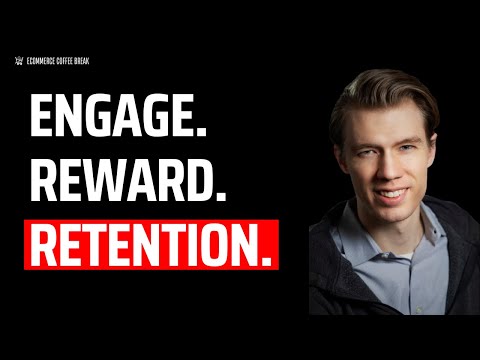


In this podcast episode, we discuss strategies for increasing repeat purchases and referral revenue with an innovative retention platform. Our featured guest on the show is Roger Beaman, Co-Founder & CEO at novel.com.
On the Show Today, You’ll Learn:
- Why are referrals thriving in eCommerce, and what data backs this.
- How do wallet passes offer better push notifications for brands.
- What are the conversion rates for post-purchase flows, referrals, and second purchases.
- How do location-based pushes benefit eCommerce and retail.
- How Shopify merchants can streamline customer logins for better retention.
- What strategies improve conversion rates for post-purchase flows and referrals.
Links & Resources
Website: https://www.novel.com/
Shopify App Store: https://app.novel.com/vendor/login
LinkedIn: https://www.linkedin.com/in/rogerbeaman/
X/Twitter: https://twitter.com/sirRodgePodge
About Our Podcast Guest: Roger Beaman
An economist turned engineer turned serial entrepreneur, Roger has three patents to his name for contributions in the fields of engineering and machine learning and has created over $100mn in enterprise value through companies he has started. He co-founded Novel where he presently serves as CEO and was previously the founder & CEO of Smartrr,an e-commerce subscription billing platform. Roger has also served as a personal advisor to executives of multibillion-dollar companies including Recharge Payments.
Listen & Subscribe on your Favorite Podcast App:
Apple Podcasts | Spotify | Amazon/Audible | Google Podcast | YouTube
Please support the show if you liked today's episode:
- If you love the podcast, please get someone else to listen, too!
- If you enjoyed this episode of the Ecommerce Coffee Break podcast, please head over to Apple Podcasts, leave a rating, write a review, and subscribe.
- Share the podcast with your family, friends, and co-workers.
- Tag the podcast on Instagram @clauslauter and let me know what you like about it.
- If you like the content and would like to support the podcast, you can buy me a coffee here.
- Become a guest on the show or sponsor an episode.
Claus Lauter: Hello, and welcome to another episode of the e commerce coffee break podcast. Today, we want to talk about retention. Retention, very important for every merchants out there with rising ad costs. You want to make sure that you get customers the easiest possible way in your marketing, and then you keep the marketing declines that you already have.
Now there's different ways to do that. And there is a very new way in which I found very interested and we want to dive a little bit deeper into this today with me on the show is Roger Beaman. He's the co founder and CEO of novel. com. He's an economist turned engineer, turned serial entrepreneur. Roger has three patents to his name for contributions in the field of engineering and machine learning, and has created over a hundred billions in enterprise values for companies he has started.
He has co founded novel where he's presently serves as CEO and was previously the founder and CEO of smarter and e commerce subscription building platform. Roger also served as a personal advisor to executives of multi billion dollar companies, including recharge payments. So let's welcome him to the show.
Hi, Roger. How are you today?
Roger Beaman: Hey, I'm great thank you for that. illustrious, , introduction clause. Thank you for having
Claus Lauter: me on. Yeah. Great to have you on the show. Roger, we discuss one of the most convenient retention platforms and everyone basically has it in their pocket, but they don't know about it.
And it's an amazing marketing channel. I've never heard anyone working on that. Maybe give me a bit of a overview of what we're talking
Roger Beaman: about here. Absolutely. I would say that the world's most convenient retention platform. What we're building a novel is, a way for brands to leverage what is 1 of the fastest growing retention channels in retail, which is Apple and Google wallet passes.
What this gives to brands, there's a couple of things. One is a way, for their customers to do seamless referrals. We're seeing referrals work for the first time ever in e commerce. That's perhaps a fighting word statement, but I think it's true. We have some data to back that up.
It also gives brands a seamless way to send push notifications to their customers. And unlike apps, these push notifications are actually opt out rather than opt in. They're default turned on. Since this is part of a native app in Apple.
, Apple has made a change where apps get offloaded in the background if you haven't used them for a while. So they get automatically uninstalled. So that means that actually this hard fought push notification approval that you have to get for traditional apps is actually, hard to get and easy to lose.
And a push notifications via while passes that we enable are easy to get and hard to lose. So push notifications referrals. And then the 3rd thing is really that we are able to essentially have your customer be automatically logged in because we store that logged in state when they install the pass and that is subtly makes every single other retention strategy to that you have.
Become more effective.
Claus Lauter: Yeah. I think by now every marketer should be awake and very excited about what we're talking about today, because obviously the traditional channels, email marketing, SMS marketing, you have to opt in. You have first, obviously to get the content of the person, to Receive messages from you.
And then I always federated, SMS messages, you get them on a daily basis. But as you said, push notifications, if you have them on your phone, you will check on them. Now let's dive a little bit deeper in what can you do with Google wallet with Apple wallets? How do you facilitate this app in the best possible way?
Roger Beaman: I think right now already this kind of interesting thing that happens there's 4 broad categories of things that people do. There's email and SMS, right? So 2 engagement channels, right? And you described how people get customers to opt into those, right? And then there's loyalty and subscriptions, That's category. And so SMS, email, loyalty, and subscriptions, these are 4 things that people do to try to get customers to buy again. And in theory, they all make sense, but they all face their own challenges, so email and SMS, the spam filters are becoming more aggressive actually on both of those, right?
The tracking is getting more difficult. Apple has recently released these privacy updates, , so those channels are becoming less effective, that's already started to happen and it's going to happen more. Having a way to reach out to your customers makes sense, but those particular implementations are facing challenges
loyalty and subscriptions, the biggest point of friction, the issue with them, those two both make sense. Basically to make them effective or for apps to even differentiate and add like a marginal bump, they require the customer to log in. know from a past life that 9 times out of 10, the only reason that ecom customers ever log in today is to cancel their subscription.
That's the 1st time that they figure out how to log into your site. What we've done is, made a very seamless way to pull a communication channel and a loyalty channel under one umbrella. And that's important too, by the way, because a lot of times the way that people kind of hook and get a customer to opt in to , a S M S or email channel, right, is by offering a discount on the current purchase, There's this awkward relationship that doesn't exist, but feels like it should. Between the incentives that are offered via these engagement channels and loyalty or subscription program.
We've built a way that really allows those to become 1 you actually really think about the nitty gritty there, the reason that people also didn't offer discount codes and such via email or SMS as incentives, both to sign up and incentivize a repurchase, the reason that they just offer a discount code, rather than say, like, loyalty program points or some sort of incentive there.
Is because, of this friction of the customer having to log in right? And then wanting to avoid having that be a hump that the customer has to get over, like, for that next purchase. The fact that we remove that actually, it's subtle, but it actually, creates a very beautiful way to, unify what you're trying to do with your engagement strategy.
As well as what you're trying to do with your loyalty program and pull it all into one.
Claus Lauter: Now, give me a practical idea as a Shopify merchant, as a Shopify store owner. Obviously you have an app. How does it integrate? And how do I get shopper, a customer, into the app to sign up for this?
Roger Beaman: we are a Shopify app you can install our app and unlike an app, which often like setting up an app for your own, like phone app for your customers, which can often take like a month and then requires a lot of maintenance. You can launch a wallet pass for your e com brand using novel in, Perhaps 2 minutes, you can get this program up and running, right?
We integrate with all of your existing loyalty programs. So Yotpo, Revo, Smile. io you just have to plug in your API key and then we will basically suck in the points balance. We also offer our own native 1 as a fallback. you. Are not already using another loyalty program, right? Then with that, you have your loyalty balance set up and then to get customers to actually install the past.
What we recommend is turning on our post purchase flow. We also have a clavio integration, attentive and postscript, right? The thing that is the easiest plug and play. Is the post purchase flow to basically incentivize customers to make a second order. What we do is we have little pop up that happens in the order status page after a customer has bought and basically their customers are incentivized.
Usually, and brands can configure this with, say, 5 off of their next order if they install this wallet pass. And so then customers do and then they're given this, let's say, 5 dollar balance and then importantly, there is a push notification that customers will get. A little bit of time later, to incentivize them and remind them to spend that balance.
Perhaps that balance is going to expire and, spend your 5 dollars before you're going to lose it. And that, of course, plays on loss version, which, say human psychology thing. We are very afraid of losing money. So we see a lot of effectiveness there, put numbers against that funnel.
So for that post purchase flow, we see brands get anywhere from 30 to 50 percent of their customers to install their wallet pass. And one thing that's really remarkable is a lot of times brands are still figuring out their loyalty program. And so they're not necessarily even ready to offer a bonus for installing that wallet pass, right?
But even without a financial incentive, you see a lot of these high intent customers, post purchase. Still install that wallet pass just with the tease of you'll get access to exclusive offers and early notifications about new products , I would say it's around 30 percent of an install rate for every customer that goes through your purchase flow , if you haven't offered a financial incentive, for them to do it and then around 50%, if you do,
so that's conversion. Number 1, then for some brands, there's also the conversion for referrals and the conversion for referrals, depending on the financial incentives that they offer around that. We've seen some brands ranges from 15 to 30%. And then there can even be a viral effect that happens from that point, where the referral of the customers that get referred, refer their own friends.
It continues on that way. That really varies per brand. Some brands are a bit more bland, although, won't name any names, but some are a bit more ostentatious and really, and some go as far as to really gamify. That referral program and offer, special tears for people that are referred a lot, liquid death particularly comes to mind there.
They've got this whole cult program that they've got going on. We see referrals really, really work well, for a lot of brands. And 1 thing that just to call out the thing that we think makes that referral work particularly well, is that we just have a QR code.
That's right there on the wallet pass that can easily be shared by someone with their friends. We refer to them as conversational referrals. Because, in the past. It was the opposite of conversational to do a referral with existing loyalty programs. You would need to in the middle of a conversation go to the brand's website, log in, then often log in again, then scroll to the bottom of the page, then copy a link and then text it to your friend.
. All of that meant that it basically never happened. Whereas here, you can just have someone scan your QR code on your phone and immediately do a referral. So there's around that 30 to 50 percent conversion post purchase for customers to install your wallet pass 15 to 30 percent for referrals and then dependent.
It really varies for that. If you offer that financial incentive, the push to the 2nd purchase. the conversion rate there can vary a lot based on how you set up the mechanics around that, how long it takes for the balance to expire. And that's something that, brands, we see experiment a lot with, and they can really help discover, , what is their optimal time to 2nd purchase there?
can see that range anywhere from, 30 to 70% when they send that nudge to make that 2nd purchase because that balance is going to expire. All in all. the ROI that brands see is very high , pretty quickly and, it's all about turning one purchase , into two, either, from that customer or from one of their friends.
Claus Lauter: lot to go to uncover there. So obviously yes, these subscribe or subscription rate is really, really high. Compared to somebody signing up for an email newsletter where we talking about, I don't know. In a single digit area. Now we're talking about 30 to 50 percent going for the offer. Yeah.
I think idea is great to have a barcode. I see a lot of people sharing their WhatsApp number over barcodes and I think people are using. But now it's very straightforward, very simple makes it so much easier. Now, this whole app can become a part of your, or does this way of communication part of your remarketing strategy?
Obviously, how often do you recommend to send out a nudge or a push for keeping people in touch with your brand?
Roger Beaman: We didn't even talk about push notifications and just the kind of more traditional engagement use case. It's interesting because push notifications are actually free, whereas email and SMS, cost money.
Brands could go crazy with that. the more that you do it, the more you saturate the customer. What we see most brands do is just stick with the cadence of what they're already doing for email and SMS for now.
They see an infinite ROI in the sense that, it's free to send it, that's what we see brands do for now given that it is free, in the future, we see them take it up more about, for example, my phone was goal of push notifications from our brands this past weekend with Labor Day sales it looked very similar to a email subject line.
So that's what we see. A lot of brands do. Okay.
Claus Lauter: I saw that you have also location based pushes. so you can tailor made it to where the customer is based. Tell me a little bit more about that. How does
Roger Beaman: that work? I'm glad that you brought that up.
That's actually something that it goes beyond the replacing what an app might do for a brand, and goes a step further because it's actually something new altogether that is only possible via wallet passes. Yeah, the experience of a location based push notification is actually pretty interesting.
It's not the same as a transactional push. That's just a one off message that then disappears. It actually stays on your phone while you're , within range of that location based push, right? And so the use cases, they're actually pretty different.
A super hot topic now is brands going from e comm into retail, particularly depending on the category that they're in, right? If you're in beverage, then you pretty much raise VC funding, build a brand online so that you can then get into retail, that's the end game. People talk about retails, if it's 1 thing, there's really 2.
Thank you. Thank you. Discrete retail plays there's you're having your own standalone stores like a Jones road beauty does and then there's also selling within, big box retailer or small convenience stores another 1 of our brands does right? They just got into Walmart.
They're rolling out across the nation. So location based pushes basically, the thought there. So is to basically just get in front of your customer, like, when they're shopping, if you've got your own locations, which is more of an urban thing often, right?
Jones road, it would probably be less likely to have that, as a standalone in outside of urban, right in the big box retailer case. What you do is you basically, you get it on your customer's phone and it reminds them to buy your product, right?
While they're shopping and looking at their grocery list on their phone. It's a reminder nudge to buy your product. And then you can also. Offer, perhaps like incentives, right? Through that, right? That's the play for sort of the big box retailer and say the Midwest play right?
Like the Walmart play. and then the more urban play, right? Like, when you've got your standalone store, right? Is to just get customers to walk in. Like your milk bar. And people are constantly checking their phones, right? For better or for worse, we live on our phones, right?
We're, like, chained to our devices. If you ever have to deal with, you're getting your phone fixed , and you spend a couple hours without it and it feels different like to feel disconnected.
So. We're chained to our phones. We're constantly checking them. you can imagine, right? Like you're walking by milk bar store, right? Like a milk bar. And then they can give you a nudge. Maybe you didn't even know that the store is there. It's a block over and they can give you a nudge and say, come on in.
Because you're on our special membership tier, you get a free ice cream with whatever else you purchase. so that's more of the play, for retail when you've got a standalone store.
Claus Lauter: I think that's a very interesting feature. A lot of DTC brands, as you mentioned, are going into brick and mortar and that's definitely something that they should have on their list of marketing tools.
Now you mentioned a couple of brands you're working with. Who's your perfect customer? Is there a specific niche or industries that you're working more with?
Roger Beaman: The most ideal answer, given that we're an e comm enablement, player, it would be all of them,
cause that's the largest to them. I do think that we work better. I actually think that we've got A bit of a Swiss army knife I am going to give that canned answer of all of them, but I do genuinely think that it's true.
the reason that I think that that's true is because we have different features for different stages of business. For example, when you're just getting started, I think referrals are huge because spreading word of mouth. it's your cheapest acquisition, no matter what stage you're at.
. But basically the thing that you want most when you're just getting started is for, people we're in recognition to grow and people to share and tell their friends about your brand. So I think referrals are the killer feature early on for a brand that's just getting started, obviously you don't have retail at that point.
. So location based. Pushes aren't a thing, right? And push notifications will perhaps matter later, but you might not even have the bandwidth to invest in a fully blown retention strategy, but just turnkey referral engine is quite appealing at that time.
Later on for like mid and later stage brands, the engagement channel is key. Because that's really when they've gotten to the point of, optimizing, right? they're not caring like early on. I don't think, people even focus on performance marketing as performance marketing, right?
Like, you're caring about at a certain point, like, you're caring about finding product market fit. You're caring about top line, not bottom line, once you've gotten to caring about bottom line, which is like mid or later stage, right? Then you've got something that works and you're tuning the engine.
That's when I think push notifications and the more traditional performance marketing and performance, like, push notifications are free, but often that's paired with a discount or some sort of incentive , the feature that matters a lot there.
And then the, the latest stage, like, when you've gotten into retail, I think the location based notifications, that is the killer feature there. And that's, I guess a bit of a spoiler, but we're focused on expanding that significantly we've built the bridge from e com to, your customer's phone.
The next logical step is for us to focus much more on building the bridge from retail to your customer's phone , in a more robust way. Look out for more there. What one thing to just share too, obviously the, like across all of these stages, getting a second purchase is important.
And so that automated flow for your balance is going to expire, I think is hyper effective across all.
Claus Lauter: no, absolutely. A very interesting strategy there. How does the onboarding process look like? There's a Shopify app. Is there any additional steps that the merchants has to go through?
Roger Beaman: They basically install we offer a 30 day trial for an hour. Pricing is 59 a month. And then just 10 per 1000 passes that are active that your customers have installed so we think that's. Pretty merchant friendly pricing. It might be too merchant friendly.
We might have to raise it in the future. That's the model there. For actually installing and getting set up, that can take place in 2 minutes the brand just has to install and then upload a brand asset for. the banner image on the past as well as the logo as well as the logo for the push notification icon.
And then they can set up, there's optional, more fun things they can do, set up tears for different gamify. Having it so that when customers do certain things, maybe spend a certain amount or for a certain number of people, they get elevated to a next tier.
Maybe there's a VIP press pass that they give to, the journalist they're trying to entice. , so there's a lot of fun things that brands can do from that point that take a bit more time. The kind of base case of just. Uploading a few brand assets, making the colors match your brand and then turning on the post purchase flow.
That really just takes 2 minutes to get going. Once you see it and you see it working, each purchase that you have. Without that post purchase flow turned on is a missed opportunity, because, you could have had this re engagement channel get built, along with that. Yeah, no, I
Claus Lauter: 100 percent agree.
It's always worse to get people as on many channels as possible. And if it's very straightforward and you have this very high sign up rates, then it's a no brainer. Where can people find out more about you guys?
Roger Beaman: I would say on our website, novel. com we're pretty active on socials these days. So with future launches and things like that, you can certainly check there. Any questions that you have also, feel free to just reach out and message me on LinkedIn I'm not always quite as in the weeds as I used to be , but either myself or a team member that I loop you in with, should be able to answer your questions.
Excellent. I will put
Claus Lauter: the links in the show notes. Then you just want to click away. Roger, thanks so much for giving us an overview of this very interesting communication channel. I think there's a lot of potential in there. And this is that you're in a hyper gross mode right now. I think a lot of versions have already found out about you and for our listeners give it a try.
I think it's a very innovative, way to get your people in your customers into a retention way. Thanks so much for your time today. Thank you, Klaus.
Get notifications when new episodes are released. Unsubscribe anytime.
In your inbox for free. Every Thursday. Consumed in 3 minutes or less. Join 4,000+ Ecommerce Merchants, Founders, and Marketers.
Episode Sponsor
Sponsor Options: We offer a range of sponsorship options for the show. To find out how you can reach your target audience through the Ecommerce Coffee Break Podcast click here.