

How to Source Products and Plan Production Runs — Lara Guevara | Why First Orders Risk Mistakes, Why Alternative Vendors Matter Most, How Third-Party Audits Save Money, What Supply Chain Optimization Requires, Why Fractional Support Fits Growth (#508)
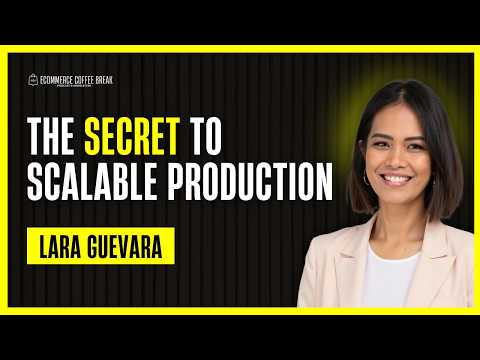


In this episode, we dive into the hidden supply chain pitfalls that can quietly kill a direct-to-consumer brand when scaling from small batches to mass production.
Lara Guevara, CEO and founder of Move Supply Chain, shares how proper product development, supplier auditing, and project management can help brands avoid costly mistakes, optimize inventory, and protect their bottom line.
She also reveals strategies for finding alternative vendors, managing shipping risks, and navigating the complexities of scaling global supply chains.
Topics discussed in this episode:
-
How first production runs can become expensive mistakes for growing DTC brands.
-
What steps are involved in the traditional new product development process compared to fast-paced DTC.
-
Why calculating true landed costs prevents unexpected financial surprises.
-
How alternative vendors protect businesses against global supply chain disruptions.
-
What third-party audits do to catch product rejects before they ship.
-
Why visiting suppliers in person builds long-term business relationships.
-
How project management tools like PERT charts shorten production lead times.
-
What split shipments accomplish to keep inventory moving while avoiding air freight costs.
-
Why fractional supply chain support offers flexibility for emerging brands.
-
What founders can do to educate themselves on supply chain optimization early on.
- Learn more about Move Supply Chain: https://movesupplychain.com/
- Start your 7-Day Supply Chain Trial: https://7daytrial.movesupplychain.com/
Links & Resources
Website: https://movesupplychain.com/
LinkedIn: https://www.linkedin.com/in/laarniguevara/
X/Twitter: https://x.com/larasupplychain
Instagram: https://www.instagram.com/movesupplychain
About Our Podcast Guests: Lara Guevara
Lara Guevara is an Industrial Engineer with 17 years of supply chain experience across enterprise and DTC brands. As Founder and CEO of Move Supply Chain, she gives fractional supply chain leadership to pre-launch through $15M brands across the US, UK, EU, and Australia, backed by her Philippines-based team working directly with manufacturing partners in China and Vietnam. She hosts the Supply Chain Moves podcast and writes Unboxed Weekly, a newsletter on sourcing, inventory, and fulfillment.
Listen & Subscribe on your Favorite Podcast App:
Apple Podcasts | Spotify | Amazon Music | Podurama | YouTube | iHeart Radio
Our Sponsors:
Xero is cloud-based accounting software that helps small businesses, including ecommerce sellers and DTC brands - manage invoicing, cash flow, bank reconciliation, and reporting from one place, on any device. Get 90% off for 6 months. Learn more at https://referrals.xero.com/ecb - T&Cs apply.
Bizrate Insights: Star ratings tell you how customers feel. Bizrate Insights reveals what’s driving those ratings, helping ecommerce brands create smoother shopping journeys, inspire confident purchases, and build lasting loyalty. Turn verified shopper feedback into clear priorities and better customer experiences. Learn more at bizrateinsights.com/coffee
Please support the show if you liked today's episode:
- If you love the podcast, please get someone else to listen, too!
- If you enjoyed this episode of the Ecommerce Coffee Break podcast, please head over to Apple Podcasts, leave a rating, write a review, and subscribe.
- Share the podcast with your family, friends, and co-workers.
- Tag the podcast on Instagram @ecommercecoffeebreak and let me know what you like about it.
- If you like the content and would like to support the podcast, you can buy me a coffee here.
- Become a guest on the show or sponsor an episode.
00:00:00:14 - 00:00:25:05
Claus Lauter
Quick one before we dive in. This episode is brought to you by Xero. Running an e-commerce or DTC brand? You know the accounting grind, multiple sales channels, invoices, reconciling every transaction by hand. Xero brings it all in one clean dashboard. Track cash flow, send invoices, and see where your business stands anytime, anywhere. As of the time of recording: Get a special Xero offer - 90% off for six months using this link. Check it out at referrals.xero.com/ecb. Ts & Cs apply. This episode is sponsored by Bizrate Insights. Star ratings tell you how customers feel. Bizrate Insights reveals what’s driving those ratings, helping ecommerce brands create smoother shopping journeys, inspire confident purchases, and build lasting loyalty. Turn verified shopper feedback into clear priorities and better customer experiences. Learn more at bizrateinsights.com/coffee.
00:00:51:11 - 00:01:03:17
Lara Guevara
It's making sure that you have a product to sell because it's gone viral. You know it's better that you have a smaller margin than upset the customers that is waiting for your product. You have to wait out.
00:01:03:18 - 00:01:13:00
Claus Lauter
Why can a first production run be a great mistake even if you have a great product?
00:01:13:02 - 00:01:33:21
Claus Lauter
Hello and welcome to another episode of the E-commerce Coffee Break Podcast pictures. You have a great product idea. You find a supplier, the numbers look good. So you'll place your first order with the supplier. But what happens when those 500 units turn into an expensive mistake? You can end up with too much inventory, higher cost than expected, long lead times, or a product your customers simply don't want.
00:01:33:22 - 00:01:49:16
Claus Lauter
So today we're looking at what you need to check before you say yes to that first production run. To break this down, I'm joined by Lara Guevara. She is the founder and CEO of Move Supply Chain, where she helps brands improving sourcing, inventory, logistics and margins. Lara, great to have you on the show.
00:01:49:17 - 00:01:52:22
Lara Guevara
Nice to have it here also. Hello everyone.
00:01:52:23 - 00:02:00:09
Claus Lauter
All right. Let's jump right into it. Why can a first production run be a great mistake even if you have a great product?
00:02:00:10 - 00:02:23:04
Lara Guevara
Yes. So you know, in DTC 500 pieces seems, you know, small amount, small quantity. And the way that you create that new product development is you sample it or you ask you source supplier, you ask for you like the product, you order 500 and you sell it. You know, your marketing is good, your finance is good at this point.
00:02:23:04 - 00:02:57:04
Lara Guevara
And then the time will come that you if this is successful, the time will come that you have to order ten x or 5000 pieces. And that's where the real problem is, because you did not prepare ordering for long term, but just for the 500. So what I always see and always try to guide our owners, especially the 1 to 10 million annual revenue, is that when you create a new product development, make sure that you are checking everything, the process.
00:02:57:04 - 00:03:10:06
Lara Guevara
That's why I'm going to discuss it later. The right process from the beginning. Because if it's successful for 500 and you cannot order ten x of it, and it's going to be a huge cost at the end.
00:03:10:08 - 00:03:34:01
Claus Lauter
I've done production myself with my own online store back in the time, and I was a bit of a pain in the neck at some point because I didn't have any experience. I didn't have anyone to guide me like you guys do. So walk me through the typical process. If somebody is a small medium enterprise, goes into production, tries to outsource, what's the usual steps that are involved to get it up and running?
00:03:34:02 - 00:04:10:12
Lara Guevara
Yeah. So this is the biggest problem that I see. But you know I'm saying biggest problem. But I cannot blame DTC world entirely. And the mistake is that they order a sample from online source that they got or they met from a fair, and then they like the sample, they produce it, they sell it. And coming from an an enterprise site where new product development takes 6 to 12 months, and then transitioning to DTC, which you have to develop in, you know, 4 to 8 weeks, that's totally understandable.
00:04:10:13 - 00:04:35:23
Lara Guevara
Like you have to be fast, quick, fast paced DTC. But the thing is, if you if you keep making if you keep sampling first before doing the market research, then the cost that you're trying to spend here is not, you know, cannot be validated yet. So instead of doing the market research first and making sure that you have customers to pay for it.
00:04:36:00 - 00:05:11:01
Lara Guevara
What most DTC brands do is order 500 and sell it and check it. So and that's, you know, somehow that's why I said it's not I don't entirely blame them because they don't have the time and the money to prepare for the usual new product development timeline. But what I would at least suggest if that, if we cannot, you know, if we cannot afford a very good timeline like an enterprise companies do, is at least we make sure that what we're doing step by step is arranged.
00:05:11:02 - 00:05:50:22
Lara Guevara
Like, for example, if you're ordering mock at 500 pieces, you have asked the vendor if they can make five, 1000 pieces, 3000 pieces, 5000 pieces. That's the process. And summarizing it. The process is actually the number one because we in DTC we can rearrange the process. There's no fixed SOP. Step one to step. Then we have to be very smart in making sure the lead time shortened from, you know, six months to two months, but at the same time making sure that everything is documented, everything is discussed with a vendor before you even start.
00:05:50:23 - 00:06:00:02
Lara Guevara
That's very important, at least if you cannot follow a longer timeline or the entire correct process of NPD.
00:06:00:04 - 00:06:19:23
Claus Lauter
I see a couple of risks there. The one is obviously that the timeline doesn't work out for you. It just takes too long for the production, but also you can overstock or under stock. And obviously there is cash bound in there. And I think there's there's a ton of risks for DTC brands if they do it wrong. Can you talk me through the most common risks that you see with brands.
00:06:20:00 - 00:06:45:08
Lara Guevara
Yes. So they think 500. And if your unit cost is probably a dollar for for an easy example and you order 500, $500 for a Po is no, no, it doesn't have a risk at all. But if your if your product has high if if it's used, you know you have to compute for dimensional wait instead of just wait if it's a queue for example but a dollar.
00:06:45:08 - 00:07:09:22
Lara Guevara
So you have to ship it. You don't. You have to consider the the shipment from factory to port, port of China to port of us, us to warehouse. And then this is where most DTC founders are blinded. They think that's the cost landed cost. You know, they compute for the unit cost, freight costs, everything tariff. And then it sits in the warehouse, 500 pieces.
00:07:10:00 - 00:07:36:15
Lara Guevara
You know how many pallets are being used? How many. What is the cost of that in your invoice? If that stays for six months, it doesn't end in $1. For a 500 pieces, you have to compute for a landed cost. And even if you can't pay it, you know, maybe it's better to just throw it away. Then pay the warehouse for, for, you know, for, for six months of paying pallets.
00:07:36:15 - 00:07:53:00
Lara Guevara
So there's a lack of understanding in the unit cost, cost of goods sold, which is the Cogs is going to make you pay more than just a $500. That is the Po. And that's the biggest risk.
00:07:53:01 - 00:08:13:20
Claus Lauter
I totally agree, I see this with a lot of brands that totally underestimate the costs that are piling up. And indeed, you see often these are cash driven, cash flow driven businesses with small margins. And then this can go back or can backfire really, really quickly. Now if you have a product that really gets traction, that goes viral, obviously you want to scale very, very quickly.
00:08:13:20 - 00:08:24:12
Claus Lauter
You want to get from the 500 to 1000 to the 5000 to 10,000 risks. And the process looks completely different at this level. Talk me through it. What what do you see there?
00:08:24:18 - 00:08:57:16
Lara Guevara
First, if you don't have vendors, which most founders don't have in the first bow, they, you know, they get one. They don't need an alternative vendor at that time. So it means that you've tested the product it's going to sell. When you do the second round of ordering, you have to make sure you have alternative vendors and ideally not in the same country and which is country, so that we, you know, we can make sure, you know, the tariff situation last year, the war this year it's going to you know, we don't know what's going to happen in a supply chain disruption.
00:08:57:16 - 00:09:22:22
Lara Guevara
So finding an alternative vendor is the number one guidance that I give. If we want to scale up. And you know we can start with, you know, just getting three alternative vendors within the same country. And if the product further sells, then that's the time that we go to another country and source more. It's not just giving us opportunity to save the negotiation part.
00:09:22:23 - 00:09:44:10
Lara Guevara
You don't have leverage if you don't have a. But most importantly, it's the you know, it's making sure that you have a product to sell because it's gone viral. You know, it's better that you have a smaller margin than upset the customers that is waiting for your product. You have to wait out. So number one is alternative vendor.
00:09:44:10 - 00:09:58:17
Lara Guevara
We have to make sure that we have an alternative before we place that big bow. And it will give you a lot of advantages like again the negotiation in cost opportunity risk assessment, etc..
00:09:58:19 - 00:10:24:10
Claus Lauter
Let's talk about the headache every online seller knows: multiple sales channels, inventory that never quite matches, invoices piling up, hours lost, reconciling instead of running your business. That's where today's sponsor Xero comes in. Xero is cloud accounting software built for growing e-commerce and DTC brands. Track cash flow in real time. Send and chase invoices automatically, reconcile bank transactions in a couple of clicks and see exactly where your business stands from a laptop or phone. It connects with the tools online sellers already rely on. At the time of recording, get a special Xero offer: 90% off for six months using this link head to referrals.xero.com/ecb
To see how Xero can simplify your books. Ts & Cs apply. This episode is sponsored by Bizrate Insights. Your analytics can show you what shoppers do, but verified feedback reveals why BizRate Insights helps e-commerce brands understand the full customer journey from discovery and checkout through post-purchase and fulfillment so teams can create smoother experiences, drive more purchases, and strengthen customer loyalty. Move beyond just star ratings, and uncover the insights that show you where to focus next. Turn shopper feedback into clear, practical action at BizRate Insights.com/coffee. Now vendors is actually a problem because there are so many out there, so finding the right one is a problem. And a lot of founders, a lot of brands might go just for the cheapest one.
00:11:26:02 - 00:11:32:05
Claus Lauter
So basically they pick them on price and that might be a huge mistake. What's your take on this?
00:11:32:06 - 00:11:54:22
Lara Guevara
Yes. So this is a very interesting story because I came from an enterprise. I worked for KFC, big brands. And so when we accredit a vendor, even if it's in the other country, we go there, we go to us, to Brazil, a credit audit, QA in DTC that's, you know, before pandemic, which I was already part of DTC, I can do that.
00:11:54:23 - 00:12:26:19
Lara Guevara
Pandemic happens. Everything was tested and checked online photos and videos. But, you know, it has to be at least something. So this is what I recommend. We have to make sure that at least we have a good access to the products that we have. You know, access, meaning a good number of photos, good number of videos. And now there are so many third party auditors in different countries.
00:12:26:19 - 00:12:51:17
Lara Guevara
You pay v trust, for example, is the one I trust in China. In Vietnam and India, you pay them $200 for a full mandate. They will check everything pre shipment. So for a $200 you are going to avoid shipping it to the US knowing that it's a reject. And the worst part is that your customer receiving it a reject.
00:12:51:17 - 00:13:15:00
Lara Guevara
So so so many people that you know 200 is not something that they are willing to pay for, but they they're willing to pay for the shipment, you know, the sending to the last mile. So at least that because, you know, we are getting smarter with AI, with third party support, with so many things that can make it easier and faster.
00:13:15:05 - 00:13:40:19
Lara Guevara
We just have to make sure that we are protected at some point. And that's one thing that can protect you. Really, really important is an audit. And you know you don't have ideally you go there. Ideally you visit at least once a year. And I highly encourage this because the the especially Chinese vendors and Vietnamese vendors, they are very keen to relationship.
00:13:40:20 - 00:14:14:17
Lara Guevara
You know, I've experienced this is a fun story. I've been negotiating the payment terms from 30, 70, to a certain vendor in China for three years. We weren't we were not successful. We met, we had discussions, you know, table visiting. And then we were we got like a 10% deposit at 60% before shipment, and then the remaining 30% 60 days after delivery.
00:14:14:17 - 00:14:38:08
Lara Guevara
And the vendor only waited for for us to, to meet, you know, and I was telling him because we're already close like Kyle. Why, how come that you you didn't allow us to it can't understand it too. Like they said. Yes. On the spot during dinner while we were, we were eating dinner and so I that's when I realized that what I heard is true.
00:14:38:09 - 00:14:59:10
Lara Guevara
Like relationship. They want they they want to see you. They want to meet you. They want to build something with you long term. And so I highly encourage that, that they visit, if they cannot at least a third party support that. I'm saying just to make just for this vendor to feel that, oh, this is going to be a long term business and I want it, I will support this.
00:14:59:12 - 00:15:27:12
Claus Lauter
Yeah, I couldn't agree more. I have the same. And I just spoke to a founder the other day giving them the same recommendation that you just told me. It's so important to have this personal contact and a lot of companies in, let's say, Europe or Northern America, and they don't understand this. They see it as a typical business transaction, and they don't see the the social, cultural aspect of making business in Southeast Asia in other places.
00:15:27:12 - 00:15:47:11
Claus Lauter
So that's very important. If you want to work on a long term basis and get a better price with somebody who is based somewhere else. Now, obviously, as you mentioned before, time is crucial there. And then this brings me to shipping and getting the product from A to B. And you help also with this. How do you help DTC brands there.
00:15:47:12 - 00:16:10:05
Lara Guevara
We always want to start with the root cause. The root cause why we're paying for airfreight is because we're delayed. And that's already, you know, plan B. But if I will be given a chance to teach DTC owners how to do it, use part, use a Gan chart, use a project management tool to make sure that you are aware of the entire development process.
00:16:10:06 - 00:16:31:04
Lara Guevara
Like for example, in apparel, it's rarely that you get a golden sample in one sampling pass. There really has to be some edits there. And you know, when a vendor creates samples in China, it may be ready in five days. It has to reach us in five days. The founder has to check. And then there are so many issues they have to redo it.
00:16:31:04 - 00:16:56:08
Lara Guevara
So sampling alone, if you don't consider the right lead time, it can it. It's easily three four weeks or more, you know. But if you don't consider that and, and you just, you know, consider like a one sampling round, then you, you ended up be having three, three sampling round. And that's where the shipment became a via air shipment.
00:16:56:08 - 00:17:18:05
Lara Guevara
And so laying out all the dependencies. That's why I highly recommend Pert is because the Pert is the Pert will show you like dependencies. And of course you know even payment. Simple, simple 2 to 3 days delay. You send a wire, they receive it after three days or two days. You thought that after you send it, they're going to start.
00:17:18:05 - 00:17:49:09
Lara Guevara
They won't start. They will start after they receive it in your in their bank account. And so those issues layer up. You thought it's just a one day to day, three days delay. It became two eight weeks of delay. And so that's yeah that's where the huge cost of air freight comes in. So I would start there. But if you're already in the process of, you know, shipping now and almost production ready of production is done, then you correct it next time.
00:17:49:09 - 00:18:10:17
Lara Guevara
But if you're in the production right now, I want you to make sure that you compute for the split shipment at least, what's going to be via air, what's going to be via because you don't have to send it via 100%. You just want enough percent to sell while waiting for the virus to arrive. So that's the split shipment.
00:18:10:17 - 00:18:43:13
Lara Guevara
And then the third one is, of course, the network of the freight forwarders. You just you most of the founders, I know, they just rely on the freight forwarder partners of their vendors. They don't have their own networks. And that's very dangerous because you cannot control it. And it's a lot of things happening right now. The tariff, the you know, the delays in shipment, port congestion, if you don't know who is sending your product and there's a middleman in it, you're blinded.
00:18:43:14 - 00:19:08:00
Lara Guevara
If you know the freight forwarder and you get the vol number or any tracking, and you can track it for in so many API free apps right now, then you have idea what part of the ocean your product is in. And so it's not just money that you save, it's also the peace of mind. So there are so many projects that you can do depending on what situation you're in right now.
00:19:08:00 - 00:19:18:23
Lara Guevara
There are different solutions, but make sure that, you know, we start in the root cause and always, always, always develop and improve as you go.
00:19:19:01 - 00:19:39:17
Claus Lauter
So you just shared a gold nugget there and I hope our listeners have picked that up. I learned something split shipping. I have never done this, and that should have been something that I should have done back in the time, so that your help would be very helpful for my business back in the time. So talk me through how move supply chain helps the customers.
00:19:39:17 - 00:19:42:04
Claus Lauter
Who's your perfect customer? How does it work?
00:19:42:06 - 00:20:09:11
Lara Guevara
I before move supply chain I run a staffing company for five years, also a US based. So my experience came from really the DTC owners. And so move supply chain. We are embedded team a fractional support to DTC owners. We want to make sure that we're not just diagnosing the issues of supply chain, but also execution part where we are included.
00:20:09:15 - 00:20:39:18
Lara Guevara
You know DC in enterprise, they can hire probably ten full times at the same time in DTC. They will squish it to one end to end generic supply chain person so that it can do A to Z and it can work. In the beginning I've seen that six months, 12 months will pass. Then you need an expert in inventory planning, demand planner, logistics for casting, sourcing and new product development.
00:20:39:18 - 00:21:05:13
Lara Guevara
And that one person that you hired full time is not capable of doing end to end. And so that's where we come in. If you need experts in different aspects of supply chain, we fix the team for you. If you need 20 hours of inventory, then hours of sourcing, then we'll create the team and deploy it. And at the back of that team deployment we have supply chain managers.
00:21:05:13 - 00:21:26:00
Lara Guevara
We have project managers that support the team. We have trainings. We go to China, Vietnam. We are really traveling to see the vendors. We go to US and Australia and UK to meet our clients. And it's something that we've seen work for over two years of doing supply chain support in move.
00:21:26:01 - 00:21:31:04
Claus Lauter
Who's the perfect customer? Are there specific industries or verticals that you work more with than others?
00:21:31:06 - 00:22:00:01
Lara Guevara
The biggest for us right now is the combination of apparel and CPG brands. So that's the biggest. And the others probably 40% apparel, 30% CPG, and then 30% all finished goods like water bottles, something like that. And so it's also very the perfect customer are the pre to 15 million, which means the founder is doing everything or they hire their first hire and they cannot do it anymore.
00:22:00:05 - 00:22:01:08
Lara Guevara
That's where we come in.
00:22:01:09 - 00:22:07:18
Claus Lauter
Okay. Walk me through a typical onboarding process of a new customer. How long does it take? What steps are involved.
00:22:07:20 - 00:22:35:09
Lara Guevara
So we learned so much on this. You know typically the onboarding part is where the delay is. If the founder does not have the data that we need, we can only work if there's data. So what we change differently, especially start of the year, is to guide our clients where to get those data that we need. So for 12 months you know Shopify get it here, send it to us.
00:22:35:10 - 00:23:02:10
Lara Guevara
You know. And then once that full data set is complete, we review it first before we even kick off so that no time is wasted. And we already have questions to ask. And then we schedule that 30 minutes 45 minute kick off. The the client will meet all the teams that will be deployed together with the supply chain manager and the.
00:23:02:12 - 00:23:25:23
Lara Guevara
Project manager, and then that's where it will start. We are connected in slack. We have apps that we are also connected. They are embedded in their team. So we represent their brand. When we source for them, we use their brand name. We we're not an agent who put a percent of commission on top of sourcing something. We worked as a team member.
00:23:25:23 - 00:23:37:13
Lara Guevara
So we it's it's important that the founder or the owner understand this so that, you know, we can work seamlessly and without issues.
00:23:37:15 - 00:23:56:13
Claus Lauter
And I think product is obviously the core of every business, of every DTC business there. And it is probably the most complex part of a business because marketing is one thing, but having a product, getting it from A to the customer at the end of the day in a good time and a good quality. So many moving parts in there.
00:23:56:15 - 00:24:00:15
Claus Lauter
Is there any kind of homework that a merchant needs to do before they can get started with you?
00:24:00:15 - 00:24:21:00
Lara Guevara
So I think it's it's more of making sure that, you know, the pain points that you're having right now. And most of the founders that we that we talk to, they know what they know. You know, they cannot explain it. And so we I, we would always direct them to our newsletter, to our YouTube channel to learn more about supply chain.
00:24:21:01 - 00:24:51:00
Lara Guevara
Because, you know, supply chain in DTC is super under optimized. And we are going to be a huge help. If you already have an understanding what's the problem in your supply chain? If you don't have an awareness, then it will sound like we're just doing, you know, not important tasks in your in your company. And it takes like a certain level as a founder to understand the importance of supply chain, because I have understood this the hard way that founders prioritize marketing.
00:24:51:00 - 00:25:08:00
Lara Guevara
And that's fine as long as you know when to add supply chain before it even breaks. So yeah, I think try to get as much free education videos, learnings about supply chain and then reach out.
00:25:08:02 - 00:25:28:01
Claus Lauter
Yeah, I have done this very steep learning curve myself, as I said before, and I'm a marketer by by core. And for our listeners, if you don't have this background in supply chain, it's always good to reach out sooner than later to somebody who knows what they're doing than to learn it yourself, obviously, is that you will be part of the team.
00:25:28:01 - 00:25:29:16
Claus Lauter
How does your pricing work?
00:25:29:19 - 00:25:56:09
Lara Guevara
The pricing works is that we first understand the number of hours that this vendor, this customer needs. So for example, they only need a new product development for 20 hours a week and also an inventory planner for 20 hours a week. And then we choose the best talent. So we have 50 plus talents right now. So for example, this is an apparel brand and we want to get a new product development that has experience in apparel.
00:25:56:10 - 00:26:15:08
Lara Guevara
Of course we combine them, we use their rates and we add our admin fee. So that's how it works. Very simple. That's why if they say that okay we charge this is our proposal. It's $3,000 for for a new product development and an inventory planner. And then the DTC owner will say I don't have that budget right now.
00:26:15:08 - 00:26:52:23
Lara Guevara
So the way that we do it is that do you want to focus on new product development first, move to inventory planning after three months, because that's where our advantage is. We're very flexible. And so the costing will be a lot smaller because we're only now considering the the rates and the number of hours of the new product development person and then shift like for example, after a product has been developed and produced and you don't have new product development and you don't need new product development, get the inventory planner and optimize your, your, your inventory system.
00:26:52:23 - 00:27:06:03
Lara Guevara
And that's how it works. So we're very flexible. We are almost, you know, open costing for our clients. It's just the number of talents, the number of hours, their reads and then our admin fee. And that's it.
00:27:06:05 - 00:27:17:12
Claus Lauter
I like the approach because you get the right person for the right task in the at the right time. Lara, before our coffee break comes to end today, is there anything you want to share with our listeners that we haven't covered yet?
00:27:17:14 - 00:27:50:03
Lara Guevara
We are going to a lot of travel. We're going to a lot of traveling next year. Next next week we're going to Vietnam, China, UK and visiting our clients. I think what I, what I will guide you on is, you know, start, you know, start learning, start visiting, start exploring. And you know, if, if I will, I will share with you our, our YouTube channel and our newsletter for free learnings.
00:27:50:03 - 00:28:06:20
Lara Guevara
And you learn so much from that. I'm writing it myself. And if you want to just have a discussion, our discovery call is always open. You're not. We can have a deep dive in an hour about your supply chain, and it's going to be a good session again.
00:28:07:00 - 00:28:10:07
Claus Lauter
Okay. On that note, where can people go and find out more about you guys.
00:28:10:07 - 00:28:26:09
Lara Guevara
So it's move supply chain com. And we also have our YouTube channel supply chain Lara that's my name. And we have so many socials. But yeah you can you can type in move supply chain that.
00:28:26:11 - 00:28:40:18
Claus Lauter
Okay I will put the links in the show notes. Then you just want to click away. Lara, thanks so much for giving us an overview on how supply chain works the right way. I had to learn it the hard way, and I would recommend everyone out there to reach out to Lara and get an easier way. Thanks so much for your time today.
00:28:40:19 - 00:28:45:10
Lara Guevara
Thank you. Thank you. Claus. Thank you. Bye bye.
00:28:45:12 - 00:29:07:00
Claus Lauter
That's all for this episode. Thanks again to Xero for sponsoring today's show. If you're tired of messy spreadsheets and manual, reconciling, Xero brings your invoicing, cash flow, and reporting into one simple dashboard. At the time of recording get a special Xero offer 90% off for six months using this link. Check it out at referrals.xero.com/ecb. That's referrals.xero.com/ecb. Thanks for listening. We will catch you next time. Ts & Cs apply. This episode was sponsored by BizRate Insights. Every customer journey has opportunities to improve. BizRate Insights, turns verify chopper feedback into clear priorities, helping e-commerce brands make smarter decisions, strengthen customer relationships, and help customers coming back. Learn more at BizRateInsights.com/coffee.
Get notifications when new episodes are released.
In your inbox for free. Every Tuesday and Thursday in your inbox. No clickbait. No Spam. Unsubscribe anytime.